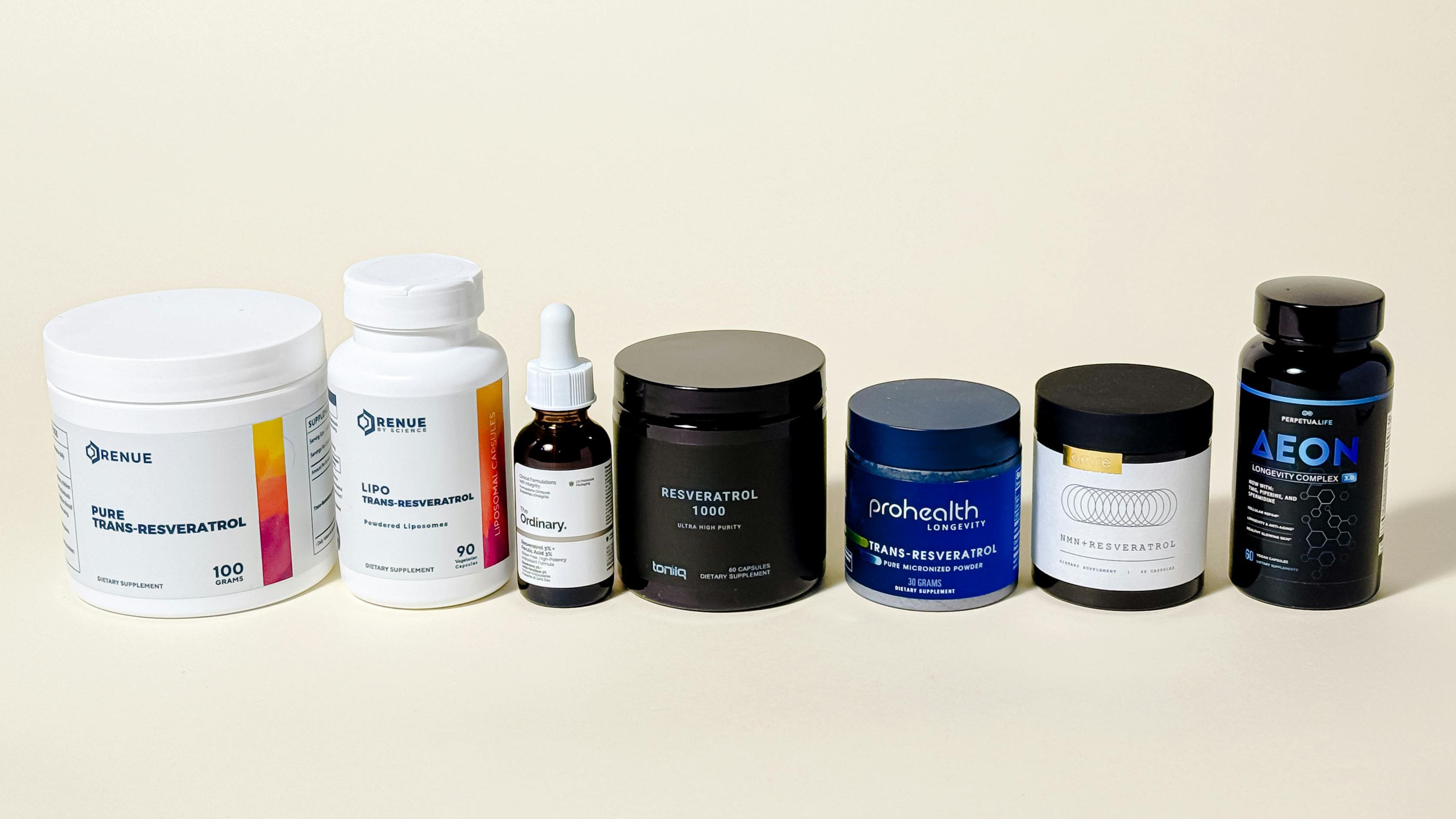
Best Resveratrol Supplement: The Bioavailability Problem and What to Actually Buy
Resveratrol's biggest problem is not its science — it is getting enough of it into your bloodstream. Standard resveratrol supplements have notoriously low oral bioavailability: they are rapidly converted in the intestinal wall and liver to glucuronide and sulfate metabolites, with plasma levels peaking within 1–2 hours and declining rapidly. This is why the dramatic lifespan extensions seen in animal studies (where resveratrol is often administered by injection or at enormous oral doses relative to body weight) are difficult to replicate in human supplementation trials. Choosing the right formulation makes a measurable difference.
Trans-Resveratrol vs Cis-Resveratrol: Only One Form Works
Resveratrol exists in two isomeric forms: trans-resveratrol and cis-resveratrol. Only trans-resveratrol is the biologically active form that activates SIRT1 and produces the studied health benefits. Cis-resveratrol is rapidly formed when trans-resveratrol is exposed to UV light or heat, and has significantly lower biological activity. Many lower-quality supplements contain a mixture of both isomers — or fail to specify. Always look for "trans-resveratrol" explicitly stated on the label, with a specified percentage purity (ideally ≥98% trans-resveratrol).
Source: Japanese Knotweed vs Grape Skin
The two main commercial sources of resveratrol are:
- Japanese knotweed root (Polygonum cuspidatum): The most concentrated commercial source — standardised extracts typically contain 50–99% trans-resveratrol. This is the source used in most clinical trials and the most cost-effective way to achieve therapeutic doses. Look for "Polygonum cuspidatum extract standardised to X% resveratrol" on the label
- Grape skin extract: Lower resveratrol concentration per gram, but contains additional polyphenols (including OPCs, anthocyanins) that provide complementary cardiovascular benefits. Better for whole-food spectrum supplementation but less efficient for delivering a specific resveratrol dose
Formulation Types: Bioavailability Ranking
1. Micronised Trans-Resveratrol (Best for Cardiovascular Evidence)
Micronisation reduces particle size significantly, improving dissolution rate and intestinal absorption surface area. Micronised resveratrol was used in the clinical trial that found 11.90 mmHg systolic blood pressure reduction at ≥150mg/day — the strongest cardiovascular evidence in the human literature. It is the most-evidenced format for cardiovascular outcomes and is the first choice for this indication.
2. Resveratrol with Piperine (Enhanced Absorption)
Piperine (from black pepper extract, Bioperine®) inhibits the glucuronidation enzymes that rapidly metabolise resveratrol in the intestinal wall, significantly increasing plasma levels of the unmodified active compound. Studies on piperine co-administration show substantial increases in oral bioavailability. This combination is appropriate when using standard (non-micronised) resveratrol and wanting to maximise absorption cost-effectively.
3. Quercetin + Resveratrol Combination
Quercetin inhibits the same Phase II metabolic enzymes as piperine — and also provides its own SIRT1-activating, anti-inflammatory, and senolytic activity. The Quercetin + Resveratrol combination is increasingly used in longevity-focused supplements and represents the best evidence-based synergistic pairing for overall anti-aging and cardiovascular benefit. Both compounds also have complementary NF-kB suppression and mitochondrial biogenesis effects.
4. Standard Resveratrol Powder (Lowest Bioavailability)
Plain resveratrol capsules without any bioavailability enhancement are the most widely sold and least effective per milligram of stated dose. They are not worthless — some resveratrol does reach systemic circulation — but they require higher doses to achieve equivalent plasma levels compared to enhanced formulations.
Dose Guide from Clinical Evidence
- Blood pressure reduction: ≥150mg/day micronised trans-resveratrol — this is the dose threshold that produced significant BP reduction in meta-analysis
- Metabolic/diabetes: 100–500mg/day; most positive trials used 150–500mg
- General longevity/anti-aging: 200–500mg/day in divided doses (morning and evening maintains more consistent plasma levels)
- Safety ceiling: Well-tolerated up to 1000mg/day across clinical trials; no serious adverse events reported
- Take with food: Fat improves absorption of lipophilic resveratrol; avoid taking with large quantities of grape juice which can increase competitive metabolism
What to Look for on Labels
- ✓ "Trans-resveratrol" specified with purity percentage
- ✓ Source specified (Polygonum cuspidatum, standardised to X%)
- ✓ "Micronised" or "with Bioperine/piperine" for bioavailability
- ✗ "Resveratrol complex" without specifying trans-resveratrol content
- ✗ Very low doses (under 50mg) — unlikely to reach clinical threshold
- ✗ No specification of isomer form — likely mixed or predominantly cis
References
- IJMS Systematic Review. (2024). Resveratrol for human health: 200 clinical studies. Int J Mol Sci, 25(2):747.
- MASI Longevity Science. (2025). Resveratrol and cardiovascular health — clinical evidence review.
- Rogina B, Tissenbaum HA. (2024). SIRT1, resveratrol and aging. Front Genet, 15:1393181.