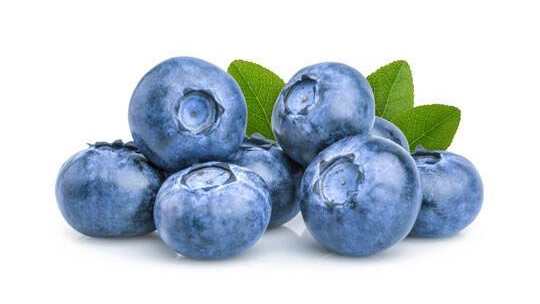
Blueberry Anthocyanins: The Compounds That Make Blueberries a True Superfood
The word "superfood" is used so loosely it has become almost meaningless. Blueberries, however, are one of the few foods that genuinely deserve the label — not because of marketing, but because a specific class of phytochemicals they contain in unusually high concentrations has been the subject of over 18,000 scientific publications and is supported by a substantial body of clinical trial evidence for cardiovascular, neurological, and metabolic health.
Those compounds are anthocyanins. Understanding what they are, how they work, and how to maximise their bioavailability from either food or supplements is the foundation of evidence-based blueberry supplementation.
What Are Anthocyanins?
Anthocyanins are water-soluble pigments in the flavonoid family — the same chemical class as quercetin, kaempferol, and catechins. They are responsible for the blue, purple, and red colours in fruits, vegetables, and flowers. In plants, they serve as UV protectants and antioxidant defences against environmental stress. In the human body, they function as potent antioxidants, anti-inflammatory agents, and — uniquely — as compounds that can cross the blood-brain barrier to produce direct neurological effects.
Blueberries (Vaccinium corymbosum and related species) are among the richest dietary sources of anthocyanins, containing up to 558mg per 100g of fresh fruit depending on variety and growing conditions. This places them significantly above most other berries (blackberries: ~85–211mg/100g; raspberries: ~20–60mg/100g) and far above most other fruits and vegetables.
The 25 Anthocyanins in Blueberries
Blueberries contain 25 known individual anthocyanin compounds, far more structural diversity than most berry sources. These 25 compounds are formed from five anthocyanidins (the base pigment structures) — delphinidin, cyanidin, petunidin, peonidin, and malvidin — each attached to one of three sugars (galactose, glucose, arabinose). The combination of 5 anthocyanidins × 3 sugar attachments produces the 15 primary anthocyanins, plus additional acylated forms.
The most abundant anthocyanins in highbush blueberries are malvidin glycosides (particularly malvidin-3-galactoside and malvidin-3-arabinoside), followed by cyanidin, petunidin, and delphinidin glycosides. This distribution matters biologically: different anthocyanin structures have meaningfully different potency, cellular uptake, and tissue distribution profiles.
Key Anthocyanidins and Their Primary Activities
- Delphinidin: The most potent anti-inflammatory of the five anthocyanidins — strongest NF-kB inhibition and COX-2 suppression. Also demonstrates the most consistent anti-cancer activity across cell line studies, particularly for colorectal and cervical cancer models.
- Cyanidin: Highest antioxidant activity — strongest free radical scavenging capacity. Most studied for cardiovascular protection, particularly LDL oxidation prevention and endothelial function improvement.
- Malvidin: The most abundant blueberry anthocyanin. Demonstrated blood glucose-lowering activity through alpha-glucosidase inhibition (slowing carbohydrate digestion) and GLUT4 upregulation. Also implicated in estrogenic activity potentially relevant to bone health.
- Petunidin: Demonstrates cardioprotective effects via platelet aggregation inhibition and vasoprotective activity.
- Peonidin: Anti-inflammatory activity with specific evidence for gut microbiome modulation and intestinal barrier protection.
How Anthocyanins Are Absorbed
Anthocyanin bioavailability is the subject of considerable ongoing research — and considerable nuance. The historical view that anthocyanins were poorly absorbed (overall bioavailability estimated at 1–2% of oral dose) has been revised by more sensitive metabolomics studies that track the full range of metabolic products.
Absorption occurs through two main pathways:
- Intact absorption in the stomach and small intestine: A proportion of intact anthocyanins (particularly those with galactose and glucose attachments) are absorbed directly, facilitated by glucose transporters (SGLT1, GLUT2) in intestinal cells. These intact anthocyanins appear in plasma relatively rapidly (peak ~1–2 hours post-ingestion).
- Colonic metabolism: The majority of ingested anthocyanins reach the colon where gut microbiota extensively metabolise them into protocatechuic acid, vanillic acid, hippuric acid, and other phenolic acids. These metabolites have their own biological activity and represent the sustained (6–24 hour) circulating fraction after blueberry consumption. This colonic metabolism pathway is why gut microbiome composition significantly influences blueberry benefit.
Crucially, anthocyanins and their metabolites have been detected in brain tissue and cerebrospinal fluid after oral consumption — confirming blood-brain barrier penetration. The lipophilic nature of aglycone forms (following deglycosylation) facilitates this penetration, explaining why neurological effects are observed despite relatively low intact plasma concentrations.
Factors That Affect Bioavailability
- Gut microbiome composition: The most significant variable. Individuals with higher populations of anthocyanin-metabolising bacteria (including certain Lactobacillus and Bifidobacterium species) produce substantially more bioactive phenolic acid metabolites from the same blueberry dose.
- Food matrix: Anthocyanins consumed with fat show modestly increased absorption. Consuming blueberries with yoghurt (dairy protein) may reduce absorption by forming complexes.
- Heat processing: Brief blanching (short heat treatment) paradoxically increases anthocyanin bioavailability by disrupting cell wall structures. Prolonged high-heat processing degrades anthocyanin content significantly.
- Freeze-drying: The optimal preservation method — retains approximately 95%+ of fresh fruit anthocyanin content compared to air-drying (50–60% retention) or spray-drying (variable).
Fresh Fruit vs Powder vs Extract: What to Choose
| Form | Anthocyanin Content | Bioavailability | Practical Notes |
|---|---|---|---|
| Fresh/frozen blueberries | 100–558mg/100g | Good | 150–200g/day achieves RCT doses |
| Freeze-dried powder | ~5–8× concentrated | Very good | Most practical supplement form; 20–30g equivalent to ~150g fresh |
| Standardised extract | Highly variable by brand | Variable | Look for ≥25% anthocyanins; 400–500mg extract = ~100–150mg anthocyanins |
| Wild blueberry (bilberry) | Higher than cultivated | Good–very good | Wild varieties have 2–3× higher anthocyanin density than highbush |
When selecting a blueberry extract supplement, the key quality indicator is standardised anthocyanin percentage. Reputable products specify the total anthocyanin content per serving — aim for at least 100–120mg anthocyanins per daily dose to approach the concentrations used in cognitive and cardiovascular clinical trials.
References
- Liu Y, et al. (2024). Blueberry (Vaccinium spp.) Anthocyanins: Functions, Stability, Bioavailability, and Applications. Antioxidants, 13(9), 1101.
- Johnson SA & Arjmandi BH. (2013). Evidence for anti-cancer properties of blueberries: a mini-review. Anti-Cancer Agents in Medicinal Chemistry, 13(8), 1142–1148.
- Manach C, et al. (2005). Bioavailability in humans of the flavanones hesperidin and narirutin after the ingestion of two doses of orange juice. European Journal of Clinical Nutrition, 57(2), 235–242.
- Prior RL & Wu X. (2006). Anthocyanins: structural characteristics that result in unique metabolic patterns and biological activities. Free Radical Research, 40(10), 1014–1028.