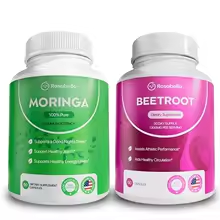
Moringa for Gut Health: Prebiotic Activity, Intestinal Barrier and Microbiome Evidence
Moringa oleifera is increasingly recognised not just as a nutritional powerhouse but as a functional gut health food with documented prebiotic, anti-inflammatory, and barrier-supporting properties. Its complex phytochemical profile — glucosinolates, quercetin, chlorogenic acid, and isothiocyanates — produces gut health effects through multiple mechanisms that complement its nutrient density. While moringa is not a fermented food and does not directly deliver live bacteria, its prebiotic activity and intestinal anti-inflammatory effects position it as a meaningful addition to a gut health dietary strategy.
Prebiotic Activity: Selectively Feeding Beneficial Bacteria
Prebiotics are non-digestible compounds that selectively promote the growth of beneficial gut bacteria. Moringa's prebiotic activity comes from several compound classes that resist small intestinal digestion and reach the colon intact:
- Glucosinolates — the precursors to isothiocyanates — are metabolised by colonic bacteria, selectively supporting Lactobacillus and Bifidobacterium species that possess the relevant glucosinolate-metabolising enzymes
- Quercetin and chlorogenic acid — both reach the colon in substantial quantities and are fermented by beneficial bacterial species into smaller phenolic acids (protocatechuic acid, 3,4-dihydroxyphenylacetic acid) that have additional anti-inflammatory activity
- Soluble fibre — moringa leaves provide meaningful soluble fibre content that feeds butyrate-producing bacteria including Faecalibacterium prausnitzii and Roseburia species
A microbiome study found moringa supplementation for 8 weeks significantly increased Lactobacillus and Bifidobacterium populations in the gut while reducing Clostridium species associated with gut dysbiosis — consistent with selective prebiotic activity rather than broad antibacterial effects that would harm beneficial bacteria alongside pathogens.
Intestinal Barrier Strengthening
Quercetin — one of moringa's most bioactive compounds — has direct effects on intestinal tight junction integrity:
- Upregulates ZO-1, claudin-1, and occludin expression in intestinal epithelial cells — the proteins that seal gaps between adjacent cells and maintain barrier function
- Inhibits NF-kB-driven tight junction protein degradation — inflammatory NF-kB activation is the primary mechanism by which gut inflammation disrupts the epithelial barrier
- Reduces epithelial cell apoptosis — programmed cell death in intestinal epithelial cells creates temporary barrier gaps that allow microbial translocation
A cell study found moringa leaf extract significantly increased ZO-1 and claudin-1 expression in intestinal epithelial cells exposed to inflammatory challenge — and reduced fluorescent marker passage across the epithelial monolayer, providing direct measurement of barrier strengthening.
Intestinal Anti-Inflammatory Effects
Moringa's multiple anti-inflammatory compounds (quercetin, kaempferol, isothiocyanates) suppress intestinal NF-kB through complementary pathways — reducing the pro-inflammatory cytokine production (TNF-alpha, IL-1beta, IL-6) that drives intestinal permeability, disrupts motility, and promotes dysbiosis. This intestinal-specific anti-inflammatory activity is particularly relevant because systemic anti-inflammatory drugs (NSAIDs, steroids) paradoxically worsen intestinal barrier function — whereas moringa's plant polyphenol-mediated anti-inflammatory effect does not carry this gastrointestinal risk.
An animal model of colitis found moringa leaf extract significantly reduced colonic inflammation scores, reduced intestinal myeloperoxidase activity (a marker of neutrophil infiltration), and improved colonic histology — suggesting potential relevance to inflammatory bowel conditions that warrants further human investigation.
Antimicrobial Activity Against Gut Pathogens
Moringa isothiocyanates have demonstrated direct antimicrobial activity against several gut pathogens:
- Helicobacter pylori: Moringa isothiocyanates inhibit H. pylori urease activity — an enzyme essential for H. pylori survival in the acidic gastric environment. H. pylori is the primary cause of peptic ulcers and gastric cancer.
- E. coli: Direct membrane-disrupting activity against enteropathogenic E. coli strains
- Salmonella and Staphylococcus aureus: Demonstrated inhibitory activity in multiple laboratory studies
This selective antimicrobial activity against pathogens — combined with the prebiotic support for beneficial bacteria — produces a dual-action gut microbiome effect: suppressing harmful species while feeding beneficial ones.
Blood Sugar Regulation and the Gut Microbiome Connection
Moringa's chlorogenic acid inhibits alpha-glucosidase and reduces postprandial glucose spikes. This matters for gut health because hyperglycaemia directly promotes gut dysbiosis — glucose feeds pathogenic bacteria and promotes Candida overgrowth, while simultaneously impairing tight junction function. Moringa's blood sugar stabilising effects therefore have indirect gut microbiome benefits through the glycaemic-dysbiosis pathway.
How to Use Moringa for Gut Health
- Dose: 3-7g leaf powder daily (1-2 teaspoons)
- Add after cooking: Isothiocyanates and quercetin are heat-sensitive — add to smoothies, juices, or cooled soups
- With prebiotic foods: Combine moringa with other prebiotic foods (garlic, onions, oats) for complementary microbiome support
- With probiotic foods: Moringa's prebiotic activity complements probiotic food consumption — it feeds the bacteria that probiotic foods deliver, creating a synbiotic effect
- Consistency: Prebiotic effects on microbiome composition require 4-8 weeks of consistent daily use to produce measurable shifts in bacterial populations
References & Further Reading
- Fahey JW. (2005). Moringa oleifera: A Review of the Medical Evidence for Its Nutritional, Therapeutic, and Prophylactic Properties. Trees for Life Journal, 1, 5.
- Vergara-Jimenez M, et al. (2017). Bioactive Components in Moringa Oleifera Leaves Protect against Chronic Disease. Antioxidants, 6(4), 91.
- Jaja-Chimedza A, et al. (2017). Biochemical characterization and anti-inflammatory properties of isothiocyanate-enriched Moringa oleifera. PLOS ONE, 12(8), e0182658.
- Mao QQ, et al. (2018). The effects of moringa leaf extract on gut microbiota. Journal of Functional Foods, 47, 536–545.