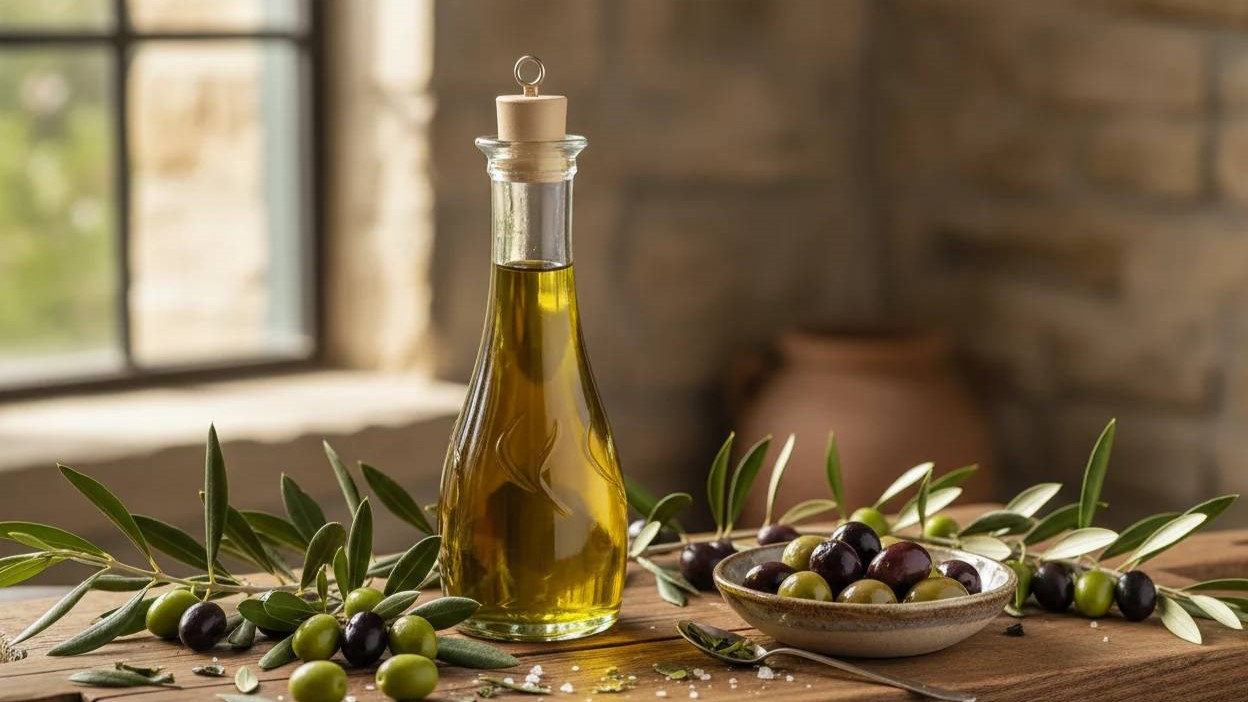
Olive Oil Polyphenols: Oleocanthal, Hydroxytyrosol, and Why EVOO Quality Varies Enormously
Extra virgin olive oil has one of the most robust evidence bases of any dietary fat — associated with reduced cardiovascular mortality, lower Alzheimer risk, anti-inflammatory effects, and improved metabolic markers across dozens of clinical trials. But there is a critical fact that most EVOO marketing omits: the vast majority of this evidence applies to high-polyphenol EVOO specifically, and most olive oil on supermarket shelves — even oil labelled "extra virgin" — contains polyphenol levels too low to produce these effects.
The polyphenol content of olive oil can vary from under 50mg/kg to over 1,000mg/kg depending on olive variety, harvest timing, processing method, and storage. Understanding which polyphenols matter, what concentrations are needed, and how to identify them on a label is the difference between buying an expensive salad oil and buying one of the most clinically validated functional foods available.
The Key EVOO Polyphenols
Oleocanthal — The Natural Ibuprofen
Oleocanthal is arguably the most pharmacologically interesting compound in olive oil — and the one responsible for the characteristic throat-burning sensation of high-quality fresh EVOO. That burning sensation is not a flaw; it is a biomarker of oleocanthal concentration.
In 2005, researchers at the Monell Chemical Senses Center discovered that oleocanthal produces the same throat irritation as ibuprofen — and subsequently demonstrated that this is because both compounds inhibit the same target: cyclooxygenase enzymes (COX-1 and COX-2), the enzymes NSAIDs block to produce anti-inflammatory effects. Oleocanthal is a natural, non-selective COX inhibitor with a potency roughly comparable to ibuprofen on a gram-for-gram basis. A 50mL daily dose of high-oleocanthal EVOO provides approximately 10% of the anti-inflammatory activity of an adult ibuprofen dose — meaningful for chronic low-grade inflammation, though insufficient for acute pain.
Beyond COX inhibition, oleocanthal has demonstrated:
- Alzheimer amyloid-beta clearance: Oleocanthal promotes autophagic clearance of amyloid-beta oligomers — the most neurotoxic form of amyloid — and reduces tau phosphorylation in multiple preclinical models. It has been specifically highlighted as a candidate neuroprotective compound in Alzheimer prevention research.
- Anticancer activity: Oleocanthal induces lysosomal membrane permeabilisation specifically in cancer cells — causing selective cancer cell death while leaving healthy cells unaffected in cell studies. This mechanism has been described as potentially clinically relevant for several cancer types.
- Cardiovascular protection: LDL oxidation inhibition and reduced platelet aggregation, overlapping with other EVOO polyphenols.
Oleocanthal content in EVOO ranges from essentially zero in refined or old oils to 300–500mg/kg in fresh, high-quality cold-pressed oils from bitter olive varieties. The throat burn test is a practical proxy: count the number of coughs or throat scratches after swallowing a spoonful. One cough corresponds to approximately 10mg oleocanthal per 50mL — clinical researchers use this as a semi-quantitative field test.
Hydroxytyrosol — The EFSA-Approved Antioxidant
Hydroxytyrosol (HT) is the most studied individual EVOO polyphenol and the compound specifically named in the European Food Safety Authority (EFSA) approved health claim for olive oil — the only officially recognised health claim for olive oil in the European Union.
The EFSA claim states: "Olive oil polyphenols contribute to the protection of blood lipids from oxidative stress." The qualifying threshold is at least 5mg of hydroxytyrosol and its derivatives (including oleuropein) per 20g of olive oil — equivalent to approximately 250mg/kg total polyphenols. Oils meeting this threshold can carry the claim on their label; oils below it cannot, regardless of how they are marketed.
Hydroxytyrosol is one of the most potent natural antioxidants identified — with an oxygen radical absorbance capacity (ORAC) approximately 10 times higher than green tea catechins and two times higher than resveratrol. Its documented biological activities include:
- LDL oxidation prevention — the critical step in atherosclerosis initiation
- Upregulation of Nrf2 — the master antioxidant transcription factor, activating the cell's own antioxidant enzyme systems (SOD, catalase, glutathione peroxidase)
- Mitochondrial protection — maintaining mitochondrial membrane integrity under oxidative stress conditions
- NF-kB inhibition — reducing systemic inflammatory cytokine production
- HDL cholesterol functionality improvement — increasing HDL's capacity to perform reverse cholesterol transport
A 2024 HP-EVOO scoping review confirmed that high-polyphenol EVOO (≥300mg/kg total polyphenols) produced greater reductions in LDL cholesterol (total cholesterol by 9.52 mg/dL, LDL by 5.10 mg/dL) and CRP compared to refined olive oil or lower-polyphenol EVOO — directly attributing the cardiometabolic benefits to the polyphenol content rather than the fat profile.
Oleuropein — The Precursor with Its Own Activity
Oleuropein is the most abundant polyphenol in fresh olive fruit and young olive leaves, and a major contributor to the bitter taste of high-quality EVOO. During processing and storage, oleuropein is progressively hydrolysed to hydroxytyrosol. This is why oleuropein is counted alongside hydroxytyrosol in the EFSA health claim calculation — they are part of the same bioactive pool.
Oleuropein has documented antimicrobial activity (particularly against Helicobacter pylori and certain gram-positive bacteria), antiviral properties, and anti-inflammatory effects. Olive leaf extract supplements — which concentrate oleuropein — are marketed specifically for immune and cardiovascular support, but the same compound in EVOO contributes to its overall polyphenol activity.
Why Polyphenol Content Varies So Dramatically
The polyphenol content of EVOO is determined by multiple factors at every stage from olive to bottle:
- Olive variety: Koroneiki (Greek), Coratina (Italian), Picual (Spanish) varieties are naturally highest in polyphenols. Arbequina and Hojiblanca are lower.
- Harvest timing: Early-harvest olives (October–November, when fruit is still green) contain the highest polyphenol concentrations — up to 3–5× more than late-harvest ripe black olives. Most commercial oil uses late-harvest fruit for higher yield and milder taste.
- Processing temperature: Cold extraction (below 27°C) preserves polyphenols. Higher temperatures increase yield but degrade polyphenols. "First cold press" and "cold extraction" on labels indicate polyphenol-preserving processing.
- Oxygen and light exposure: Polyphenols oxidise rapidly. Bottled in clear glass and stored in bright light, an EVOO can lose 40% of its polyphenol content within weeks. Dark glass, opaque containers, or stainless steel tins preserve polyphenols.
- Age: Fresh oil (same harvest year) always contains more polyphenols than aged oil. A "best before" date 18–24 months after purchase suggests oil is already 12+ months old before it reaches you.
How to Identify High-Polyphenol EVOO
The clearest quality indicators on a label or product page:
- Total polyphenol content stated in mg/kg — look for ≥300mg/kg for therapeutic-level benefits; ≥500mg/kg for maximum effect
- Harvest date stated — not just "best before" date; look for the harvest year and buy within 12 months of harvest
- Cold extraction or first cold press stated
- Single estate or single variety — blended commercial oils typically use lower-quality fruit
- Dark glass, tin, or opaque container
- EFSA polyphenol claim present — confirms meeting the 250mg/kg polyphenol threshold at minimum
The throat-burn test after purchase remains one of the best real-world proxies: fresh high-polyphenol EVOO should produce a distinct peppery burn in the throat within seconds of swallowing. Oils with no burn contain minimal oleocanthal and likely minimal polyphenols overall.
References
- Beauchamp GK, et al. (2005). Phytochemistry: ibuprofen-like activity in extra-virgin olive oil. Nature, 437(7055), 45–46.
- Ussia S, et al. (2025). Exploring the Benefits of Extra Virgin Olive Oil on Cardiovascular Health Enhancement and Disease Prevention. Nutrients, 17(11), 1843.
- George ES, et al. (2019). The effect of high-polyphenol extra virgin olive oil on cardiovascular risk factors: A systematic review and meta-analysis. Critical Reviews in Food Science and Nutrition, 59(17), 2772–2795.
- Alkhalifa AE, et al. (2024). Extra-Virgin Olive Oil in Alzheimer's Disease: A Comprehensive Review. International Journal of Molecular Sciences, 25(3).