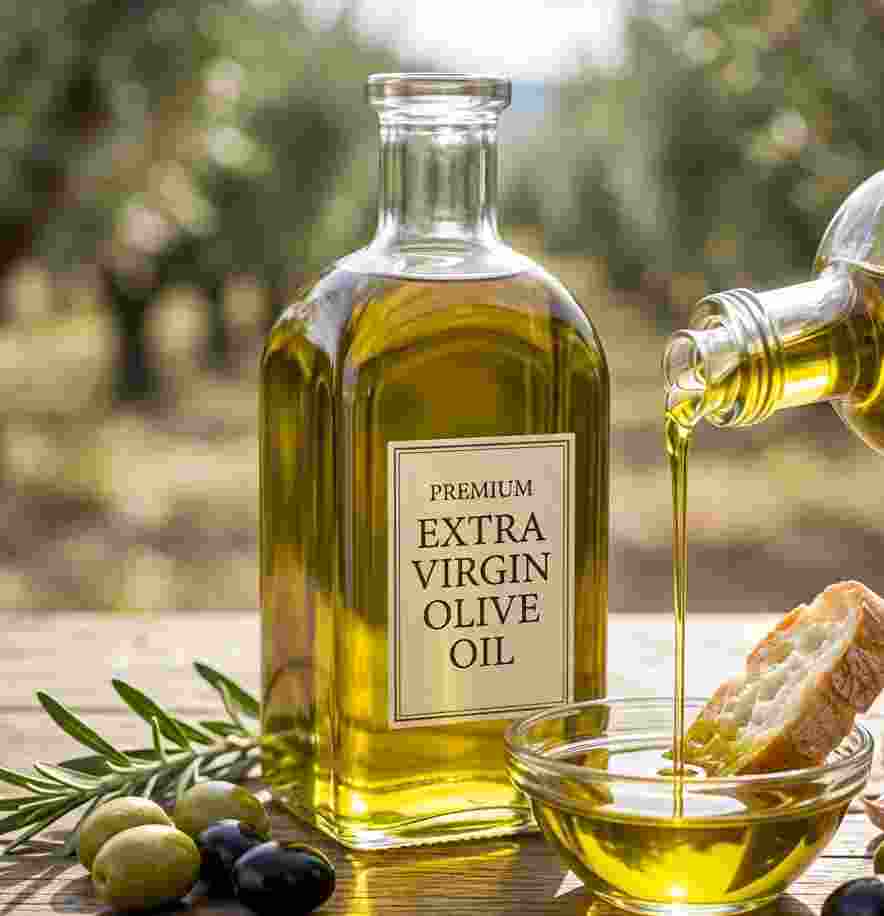
What is Extra Virgin Olive Oil?
Extra virgin olive oil (EVOO) is the highest grade of olive oil, produced by cold-pressing fresh olives without heat or chemical solvents, and meeting strict chemical standards including acidity below 0.8% and no sensory defects. It is the cornerstone of the Mediterranean diet — the single most evidence-backed dietary pattern for longevity, cardiovascular health, and cognitive preservation.
EVOO is far more than a cooking fat. It is a complex food containing over 200 distinct bioactive compounds, the most important of which are oleocanthal, oleuropein, hydroxytyrosol, and squalene — polyphenols with extraordinary anti-inflammatory, antioxidant, and cardioprotective properties that distinguish high-quality EVOO from refined olive oils and all other common cooking fats.
The Polyphenol Difference
Not all olive oils are created equal. The polyphenol content of EVOO varies enormously — from under 50mg/kg in some commercial products to over 1,000mg/kg in high-quality early-harvest oils. Polyphenols are responsible for the peppery, slightly bitter taste notes in premium EVOO — what olive oil experts describe as "bitterness" and "pungency" are direct sensory indicators of polyphenol content. A throat-scratching sensation after swallowing EVOO is specifically caused by oleocanthal — and is considered a quality marker.
Refined olive oils, "pure" olive oils, and light olive oils have had their polyphenols removed during processing. They are essentially flavourless fat with minimal health benefit — nutritionally inferior to EVOO in every respect that matters for health.
Key Health Benefits Supported by Research
Cardiovascular Protection — The PREDIMED Evidence
The PREDIMED trial — one of the largest and most influential nutrition studies ever conducted — randomised over 7,400 adults at high cardiovascular risk to one of three diets: Mediterranean diet supplemented with EVOO (1L per week), Mediterranean diet supplemented with nuts, or a low-fat control diet. The EVOO group showed a 30% reduction in major cardiovascular events (heart attack, stroke, cardiovascular death) compared to the low-fat diet — a magnitude of benefit comparable to statin therapy. The trial was stopped early because withholding EVOO from the control group was deemed unethical given the magnitude of benefit observed.
Oleocanthal: Nature's Ibuprofen
Oleocanthal — found exclusively in EVOO — is a phenolic compound that inhibits both COX-1 and COX-2 enzymes through exactly the same mechanism as ibuprofen. Research by Dr. Paul Breslin at Monell Chemical Senses Center found that 50ml of high-polyphenol EVOO provides anti-inflammatory activity roughly equivalent to 10% of a standard ibuprofen dose — a meaningful contribution when consumed daily over years. Unlike ibuprofen, oleocanthal does not damage the gastric lining and has additional neuroprotective properties not shared by NSAIDs.
Oleocanthal has also been shown to promote the clearance of amyloid-beta proteins from the brain through enhanced autophagy — directly targeting the pathological mechanism of Alzheimer disease. Animal studies have shown high-oleocanthal diets significantly reduce brain amyloid-beta accumulation, and human epidemiological data consistently shows lower Alzheimer incidence in populations with high olive oil consumption.
LDL Oxidation Prevention
Cardiovascular disease is initiated not merely by high LDL cholesterol, but by the oxidation of LDL — a process that converts benign cholesterol particles into the inflammatory, plaque-forming agents that damage arterial walls. Hydroxytyrosol in EVOO is one of the most potent inhibitors of LDL oxidation identified in any food. The European Food Safety Authority has approved the health claim that EVOO polyphenols "protect blood lipids from oxidative stress" — one of the few natural food compounds to receive this regulatory recognition in Europe.
Gut Microbiome and Longevity
EVOO polyphenols act as selective prebiotics, promoting beneficial gut bacterial species while inhibiting pathogenic ones. A 2020 study found that EVOO consumption significantly increased populations of Lactobacillus and Bifidobacterium species and reduced Clostridium counts. The gut microbiome is now recognised as a central regulator of systemic inflammation, immune function, and metabolic health — all directly relevant to biological aging rate.
Cancer Prevention
Mediterranean populations with high olive oil consumption consistently show lower rates of breast, colon, and prostate cancer in epidemiological studies. Laboratory research has identified multiple mechanisms: oleocanthal has been shown to rapidly destroy cancer cells through lysosomal membrane disruption while leaving normal cells intact. Oleuropein inhibits tumour angiogenesis and promotes apoptosis in cancer cell lines. These findings are mechanistically compelling but require human clinical trial confirmation.
How to Choose and Use EVOO
For maximum polyphenol benefit:
- Look for polyphenol content on the label — target above 250mg/kg. Some premium producers now state this explicitly.
- Choose early harvest — olives pressed in October-November (slightly under-ripe) contain the highest polyphenol concentrations. Later harvests produce milder, lower-polyphenol oil.
- Dark glass bottle — polyphenols degrade rapidly with light exposure. Avoid clear plastic or glass bottles.
- Check the harvest date — not just the best-before date. Use within 18 months of harvest for peak polyphenol activity.
- Single origin is preferable — blended oils from multiple countries are harder to quality-verify.
- Use generously — 2-4 tablespoons daily is the dose used in most clinical research. Add to salads, drizzle over cooked vegetables, use in dips. For cooking, EVOO is more heat-stable than commonly believed — its polyphenols and high oleic acid content make it suitable for sautéing at moderate temperatures.