Meditation for Sleep: What 18 Clinical Trials and 4,870 Patients Show
Insomnia affects 10–25% of adults globally and is the most prevalent sleep disorder in high-income countries. First-line treatments — cognitive behavioural therapy for insomnia (CBT-I) and pharmaceutical sleep aids — both have significant limitations: CBT-I requires qualified therapists and multiple sessions; medications carry dependency risks and impair sleep architecture over time. Meditation has emerged as a clinically studied alternative with a growing trial record.
This article reviews what the evidence actually shows: the most recent meta-analytic data, which meditation styles are most effective for sleep, the specific mechanisms that explain why meditation improves sleep, and a practical bedtime protocol built on the strongest evidence.
The State of the Evidence: What the Meta-Analyses Show
The Largest Meta-Analysis to Date (2025, Nature npj Digital Medicine)
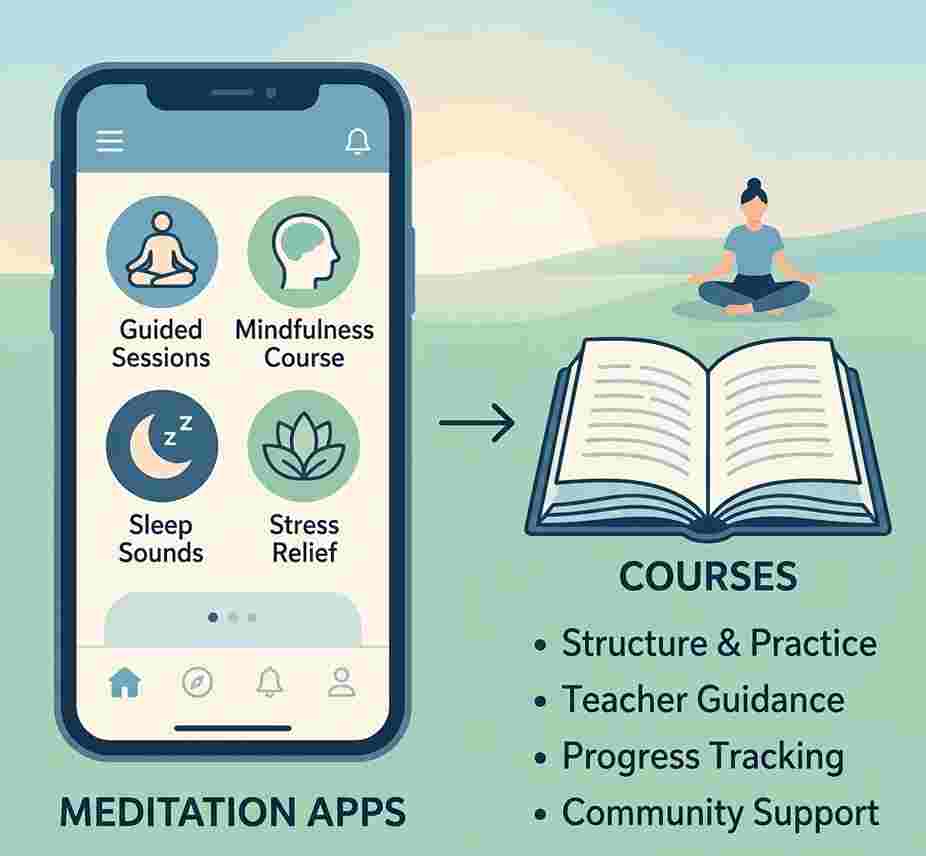
A 2025 systematic review and meta-analysis published in npj Digital Medicine (Nature) identified 18 eligible RCTs involving 4,870 participants examining digital mindfulness-based interventions and sleep. Key findings:
- Standalone digital mindfulness interventions significantly improved sleep health with a moderate effect size (Hedges' g = 0.38, p < 0.001) — a clinically meaningful improvement equivalent to approximately 30–45 minutes of improved sleep efficiency
- Interventions ranged from Mindfulness Training (MT), MBSR, and ACT-based approaches, with recommended doses of 1–30 minutes daily
- Sleep improvements were accompanied by parallel improvements in mental health (Hedges' g = 0.33)
- The evidence certainty was classified as very low to low — meaning the effects are real but larger, higher-quality trials are still needed
The JAMA Internal Medicine RCT (2015)
A landmark randomised clinical trial published in JAMA Internal Medicine (Black et al., 2015) compared a mindfulness meditation programme with a sleep education programme in 49 older adults with moderate sleep disturbances. The mindfulness group showed significantly superior improvements in sleep quality (PSQI score), insomnia symptoms, depression, fatigue, and daytime impairment. This was the first well-controlled RCT to directly test mindfulness meditation against an active comparator for sleep — and the mindfulness arm won on all primary outcomes.
The Chronic Insomnia RCT (SLEEP, 2014)
Ong et al. conducted a three-arm RCT comparing MBSR, MBTI (mindfulness-based therapy for insomnia — a hybrid programme combining mindfulness with behavioural sleep strategies), and self-monitoring in 54 adults with clinical chronic insomnia. Results:
- Mean reduction in total wake time: 43.75 minutes in meditation arms vs. 1.09 minutes in self-monitoring (p < 0.001)
- Large within-group effect sizes (Cohen's d > 0.8) for both MBSR and MBTI
- Benefits maintained at 6-month follow-up with continued improvement from post-treatment
- MBTI showed relative advantages over MBSR on long-term insomnia severity — suggesting the behavioural components added benefit
This study is particularly significant because it used polysomnography (objective sleep monitoring) rather than self-report alone — confirming that the sleep improvements were physiologically real, not just perceived.
Why Meditation Improves Sleep: The Mechanisms
1. Pre-Sleep Arousal Reduction
The primary maintaining factor in chronic insomnia is hyperarousal — a state of physiological and cognitive activation that prevents sleep onset and disrupts sleep architecture. This manifests as racing thoughts, physical tension, and difficulty "switching off." Mindfulness meditation directly targets this arousal through two pathways:
- Cognitive de-arousal: Mindfulness trains the observer stance toward thoughts — noticing their presence without engagement or elaboration. This interrupts the ruminative thought cycles that drive pre-sleep cognitive arousal. The Ong 2014 RCT specifically measured pre-sleep arousal and found large reductions in meditation groups but not in controls
- Physiological de-arousal: Meditative breathing activates the parasympathetic nervous system, reducing cortisol, heart rate, and muscle tension within minutes of practice onset — directly countering the sympathetic activation that maintains hyperarousal
2. HPA Axis and Cortisol Regulation
Elevated evening cortisol is one of the most documented physiological markers in chronic insomnia patients. Cortisol follows a natural diurnal rhythm — peaking at awakening and declining through the day. In insomniacs, this decline is disrupted, with cortisol levels remaining elevated into the evening — suppressing melatonin secretion and maintaining wakefulness. Regular meditation practice reduces basal cortisol levels and improves the evening cortisol decline rate, creating the hormonal conditions for normal sleep onset.
3. Amygdala Activity Modulation
Neuroimaging studies show that mindfulness meditation reduces amygdala reactivity — the brain's threat-detection system that, when overactive, maintains a state of vigilance incompatible with sleep. An 8-week MBSR study (Gotink et al.) found decreased activity in the amygdala, insula, and cingulate cortex after the programme — brain regions whose hyperactivity characterises both anxiety disorders and insomnia.
4. Sleep Staging Effects
Some studies suggest meditation may improve sleep architecture beyond simple sleep quantity. Research in long-term meditators finds increased slow-wave sleep (deep, restorative sleep) and modified REM patterns. The mechanism is proposed to involve GABA system upregulation — meditators show higher baseline GABA activity in thalamic regions that regulate sleep staging.
Which Meditation Styles Work Best for Sleep?
Based on the clinical trial evidence:
Best evidence: MBTI (Mindfulness-Based Therapy for Insomnia) — the most specific and best-evidenced approach for clinical insomnia. Combines MBSR structure with behavioural sleep strategies (sleep restriction, stimulus control) within a mindfulness framework. Significantly outperformed MBSR alone on long-term insomnia outcomes in the Ong 2014 trial. Available as an 8-week structured programme.
Strong evidence: Body Scan Meditation — the most effective acute technique for pre-sleep practice. Systematically moving attention through the body reduces physical tension and interrupts rumination simultaneously. A 10–20 minute body scan at bedtime consistently outperforms breath-only practices for sleep onset in clinical settings.
Strong evidence: Breath-paced techniques — specifically coherent breathing (approximately 6 breaths per minute, 5 seconds in, 5 seconds out) maximises heart rate variability and produces the fastest measurable shift to parasympathetic dominance. The 4-7-8 technique (inhale 4s, hold 7s, exhale 8s) has significant anecdotal evidence and plausible mechanistic rationale via vagal nerve activation, though direct RCT evidence is limited.
Evidence emerging: Loving-kindness meditation before sleep — shifts cognitive content from problem-solving and worry toward warm, relational content. Some evidence that sleep disrupted by interpersonal stress or self-criticism responds particularly well to LKM pre-sleep practice.
A Evidence-Based Bedtime Meditation Protocol
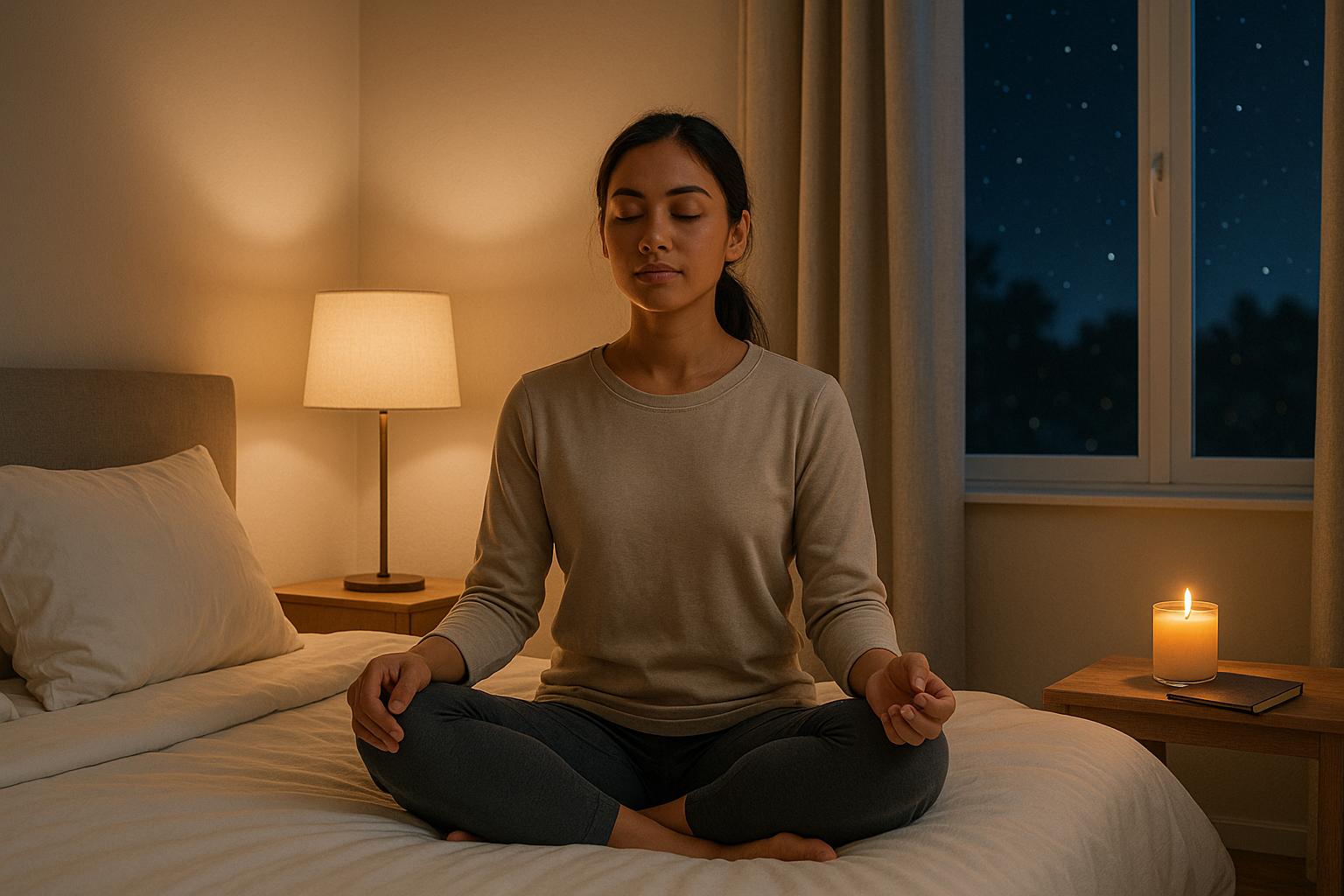
30 Minutes Before Bed: Wind-Down Transition
Begin dimming lights and avoid screens. Spend 5–10 minutes writing a simple "worry dump" — externalising tomorrow's concerns onto paper removes them from working memory where they would otherwise cycle as pre-sleep rumination. This is a CBT-I technique that pairs well with meditation.
15–20 Minutes: Body Scan
Lie in bed or sit comfortably. Begin at the feet — simply noticing whatever sensations are present (warmth, pressure, tingling, numbness). Not trying to relax each area, not judging what you find — just observing. Move upward through the calves, knees, thighs, pelvis, abdomen, chest, back, shoulders, arms, hands, neck, and face. If the mind wanders to planning or worrying, return without judgment. The returning is the practice.
If sleep begins before completing the scan, that is the protocol working correctly — do not try to finish.
If Still Awake: Breath Pacing
After the body scan, shift to coherent breathing: inhale for 5 counts, exhale for 5 counts. Keep the breath relaxed and natural — the counting is simply a pacer, not a force. Alternatively, try the 4-7-8 technique once or twice. Do not count repetitions or check time. Allow the breath pacing to be the entire content of awareness.
Middle-of-Night Waking
If waking occurs and sleep does not return within 20 minutes: do not check the time. Begin body scan from wherever feels natural. Do not try to force sleep — the anxious effort to sleep is itself arousing. The goal is simply relaxed awareness, not unconsciousness. Many people report the body scan produces a quality of rest that is restorative even without conventional sleep.
Supplements That Work Alongside Meditation for Sleep
Meditation and targeted supplementation address complementary pathways. Magnesium glycinate or L-threonate taken 30–60 minutes before bed enhances GABA receptor activity and supports the parasympathetic shift that meditation initiates — the combination produces additive effects in many clinical observations. Melatonin (0.5–2mg, not the 10mg doses common in US supplements) can support sleep onset timing without suppressing the body's own production. Lion's Mane mushroom taken in the morning has emerging evidence for improving sleep quality via NGF-mediated hippocampal effects, without the sedating properties that can impair daytime function.
References
- npj Digital Medicine (2025). Systematic review and meta-analysis of effects of standalone digital mindfulness-based interventions on sleep in adults. Nature npj Digital Medicine.
- Black DS, et al. (2015). Mindfulness meditation and improvement in sleep quality and daytime impairment among older adults. JAMA Internal Medicine, 175(4):494–501.
- Ong JC, et al. (2014). A randomized controlled trial of mindfulness meditation for chronic insomnia. SLEEP, 37(9):1553–1563.
- Gotink RA, et al. (2016). 8-week mindfulness based stress reduction induces brain changes similar to traditional long-term meditation practice: A systematic review. Brain and Cognition, 108:32–41.