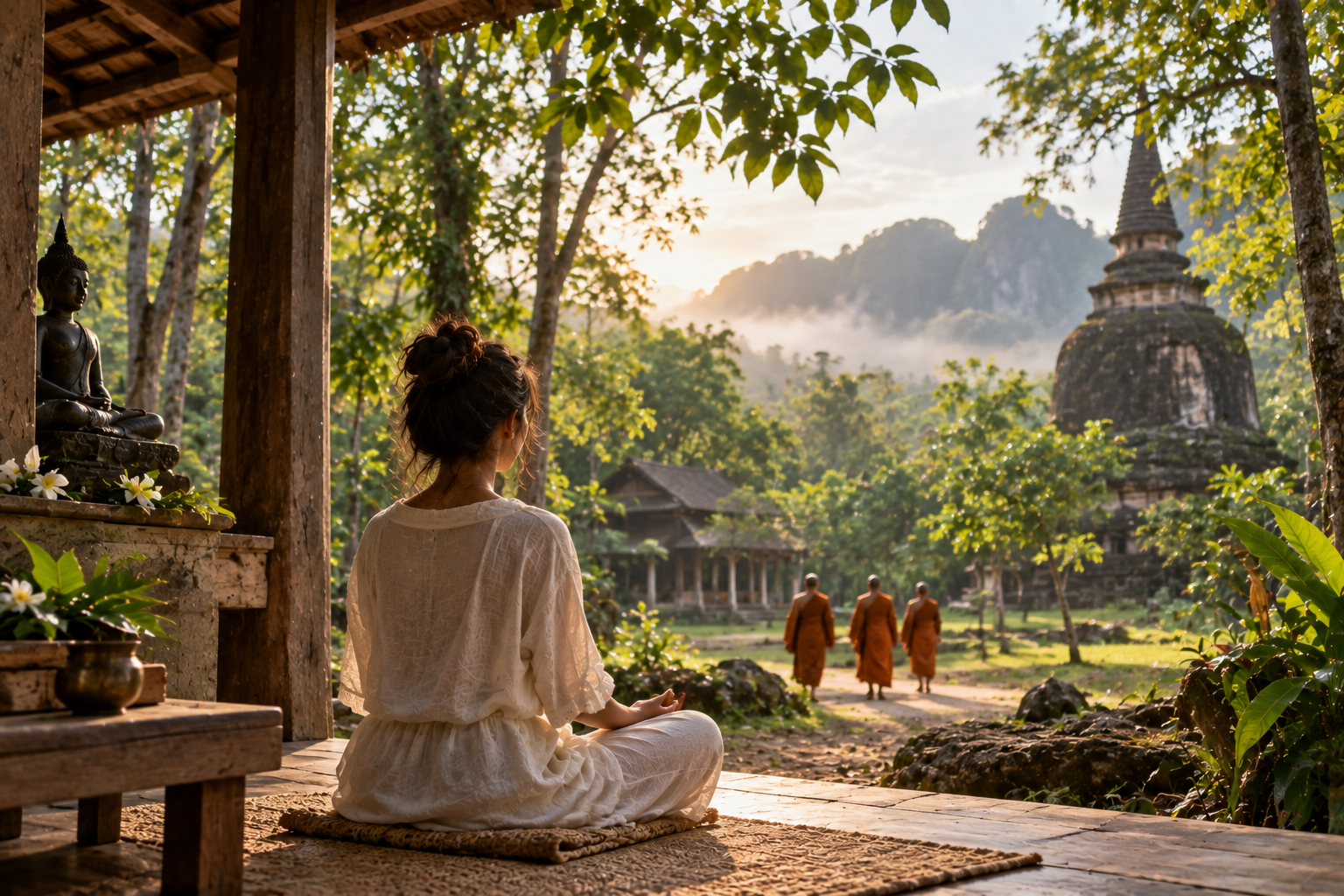
Meditation Retreats in Thailand: Wat Suan Mokkh and the Forest Monastery Tradition
The Forest Monastery Tradition
Thailand's Theravada Buddhist forest monasteries have a long tradition of teaching meditation to lay visitors, including Westerners, in a genuinely monastic setting rather than a wellness-resort format -- simple accommodation, a structured schedule, and instruction rooted directly in traditional practice.
Wat Suan Mokkh
Wat Suan Mokkh, in southern Thailand, is one of the best-known examples: it has run monthly 10-day silent meditation retreats for international visitors for decades, on a donation basis, with a schedule that includes pre-dawn wake-ups, walking and sitting meditation, and simple vegetarian meals.
What Makes It Different From a Resort Retreat
Facilities are intentionally basic -- shared dormitory-style rooms, cold showers in some cases -- because the emphasis is entirely on the practice, not comfort. This is a meaningful difference from a paid wellness retreat and worth genuinely accepting before arriving, not discovering on day one.
Who It Suits
Best suited to people who want serious, structured meditation instruction and are comfortable with a demanding schedule and minimal comfort -- not a relaxation-focused wellness holiday. A gentler retreat elsewhere is a better fit for that goal.
Practical Notes
Because these retreats run on a fixed monthly schedule and accept a limited number of visitors, checking current dates and registration requirements directly with the monastery well ahead of travel is essential -- unlike a resort, you can't simply book a date that suits you.