Rishikesh, India: The Yoga Capital and What Its Ashrams Actually Teach
Why Rishikesh
Rishikesh, in the foothills of the Himalayas in Uttarakhand, has been a centre for yoga and spiritual study for over a century, home to long-established ashrams including the Sivananda lineage and Parmarth Niketan, among many others -- the concentration and depth of tradition here is genuinely unmatched rather than a recent tourism development.
Ashram Life vs a Resort Retreat
Traditional ashram stays involve a structured daily schedule -- often starting before dawn with meditation, followed by yoga practice, philosophy study and simple vegetarian meals -- closer to a monastic routine than a wellness holiday, even at ashrams that welcome Western visitors comfortably.
Yoga Teacher Training
Rishikesh is also one of the most common places in the world to complete a yoga teacher training (typically a 200 or 300-hour certification), given the density of registered schools and experienced teachers -- worth confirming a school's registration and teacher credentials rather than assuming location alone guarantees quality.
The Ganges and Its Role
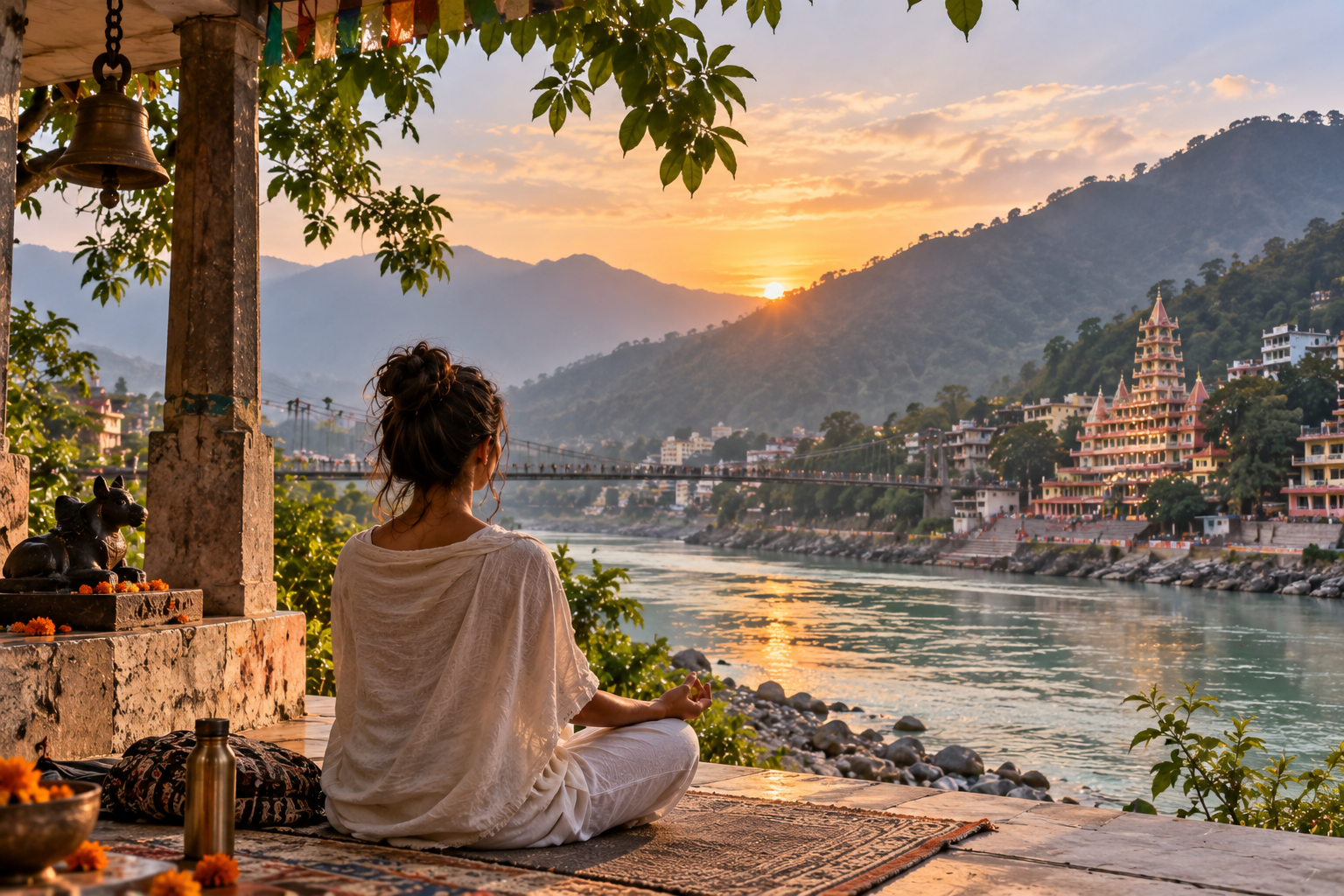
The town sits directly on the Ganges river, which plays a real role in daily spiritual life there (evening Ganga Aarti ceremonies, riverside meditation) -- not just scenery, but part of what makes the setting distinct from a generic retreat location.
Practical Notes
Facilities range from very basic ashram dormitories to considerably more comfortable guesthouse-style accommodation nearby -- deciding how much comfort you want going in avoids a mismatch between expectation and the (often intentionally simple) ashram experience.