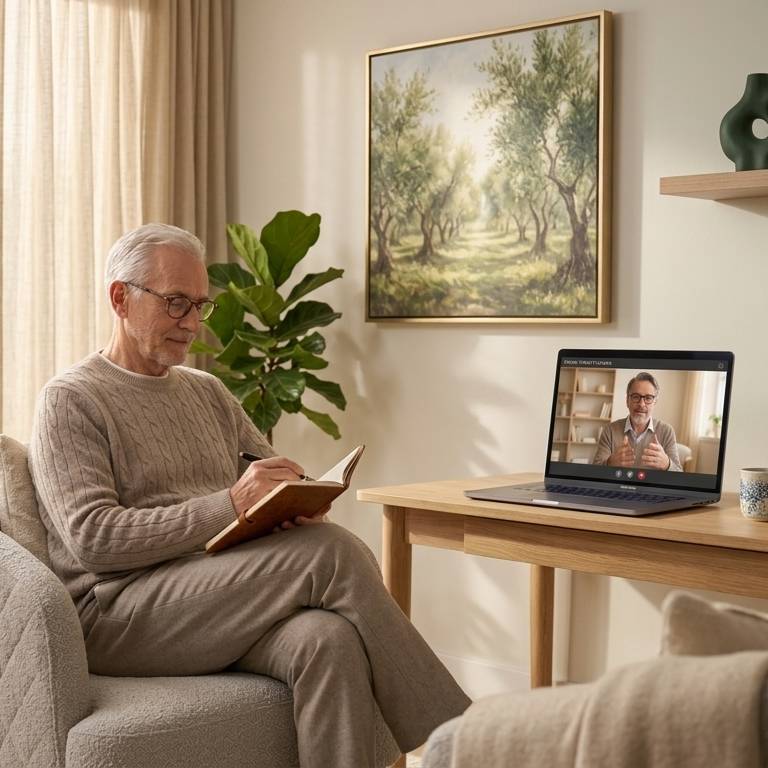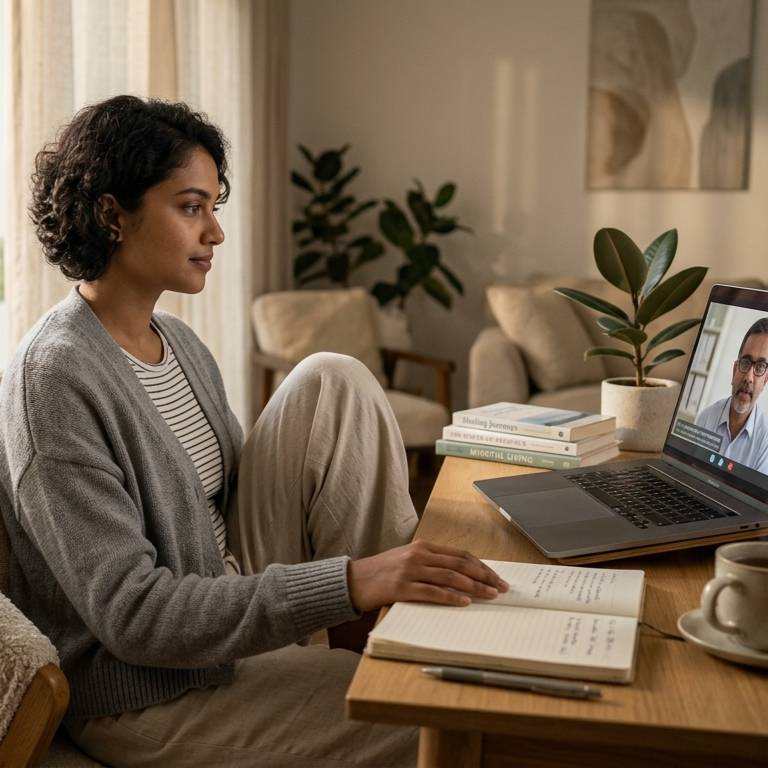
Online Therapy vs In-Person Therapy: What the Research Actually Shows
The question of whether online therapy is as effective as in-person therapy is no longer speculative — it has been tested in dozens of randomised controlled trials and multiple large-scale meta-analyses. The short answer is: for the most common mental health conditions, therapist-guided online CBT produces outcomes equivalent to face-to-face therapy. The more nuanced answer involves understanding which conditions show this equivalence, which populations are best served by each format, and what the research does not yet fully answer.
The Meta-Analytic Evidence
The most comprehensive evidence comes from a 2018 meta-analysis published in World Psychiatry (Carlbring et al.) which pooled results from 65 randomised controlled trials directly comparing internet-based CBT with face-to-face CBT. The findings were clear: there was no statistically significant difference in outcomes between the two formats for anxiety disorders (standardised mean difference = 0.04, 95% CI: −0.29 to 0.37) or depression (SMD = −0.01, 95% CI: −0.36 to 0.34). Both formats produced large therapeutic effects compared to control conditions.
A 2021 network meta-analysis published in JAMA Psychiatry (Karyotaki et al.) reached the same conclusion, with the additional finding that guided iCBT — where a therapist provides regular feedback — produced larger effects than self-guided digital interventions without therapist involvement. The therapist component appears to be the active ingredient regardless of delivery format.
Conditions Where Online Therapy Has Strong Evidence
The strongest equivalence evidence between online and in-person therapy covers the most prevalent mental health conditions:
- Generalised anxiety disorder (GAD): Multiple RCTs confirm equivalence, with large effect sizes for both formats
- Major depressive disorder (mild-to-moderate): Consistent equivalence across formats in multiple independent meta-analyses
- Panic disorder: Strong evidence for online CBT — particularly interoceptive exposure components, which can be self-practised between sessions
- Social anxiety disorder: Some research suggests online delivery may be advantageous — the non-judgement environment of home may reduce avoidance barriers
- Post-traumatic stress disorder (mild-to-moderate): Growing evidence base, though complex trauma may still benefit from in-person delivery
- Insomnia (CBT-I): Strong evidence that digital CBT-I produces equivalent or superior outcomes to in-person delivery — with greater patient adherence
Practical Advantages of Online Therapy
Access: Geographic barriers, mobility limitations, rural location, and international relocation are all eliminated. A therapist matched to your specific concern is accessible anywhere in the world with an internet connection.
Cost: Structured online CBT programmes typically cost 40–70% less than equivalent in-person therapy in the UK and US — making evidence-based treatment accessible to people for whom private therapy would otherwise be financially prohibitive.
Reduced avoidance: For conditions involving avoidance — social anxiety, agoraphobia, OCD — the ability to start therapy from home without having to navigate the anxiety of attending a clinic may facilitate earlier engagement.
Continuity: Online therapy is not disrupted by therapist relocation, illness, travel, or clinic closures. The therapeutic relationship continues regardless of circumstance.
Asynchronous communication: Platforms like Online-Therapy.com allow you to message your therapist and receive feedback on worksheets between live sessions — a form of therapeutic contact that in-person therapy cannot replicate at equivalent cost.
When In-Person Therapy Is the Better Choice
Online therapy is not universally superior. The evidence supports in-person therapy as the preferred format in specific circumstances:
- Severe mental illness: Schizophrenia, bipolar disorder with active manic or psychotic episodes, and severe borderline personality disorder require the clinical monitoring and relational intensity that in-person treatment provides
- Active suicidal ideation or self-harm: Crisis presentations require in-person clinical assessment and safety planning
- Complex trauma: Trauma with severe dissociation, complex PTSD, or trauma requiring EMDR or somatic approaches is better served by in-person delivery in most cases
- Eating disorders (moderate-to-severe): Physical monitoring requirements and the somatic dimensions of eating disorder treatment support in-person care
- Preference and therapeutic alliance: Some individuals find it difficult to build therapeutic alliance remotely. If you consistently feel that you cannot connect with a therapist over video, in-person therapy is likely to produce better outcomes for you regardless of format equivalence data
The Therapeutic Alliance Question
The most robust predictor of therapy outcome — across all formats and modalities — is therapeutic alliance: the quality of the collaborative working relationship between client and therapist. A frequent concern about online therapy is whether this alliance can be established equivalently via video or text. The research on this is reassuring: multiple studies have found no significant difference in therapeutic alliance ratings between online and in-person therapy formats when participants are randomly assigned (Sucala et al., 2012; Norwood et al., 2018).
The practical implication: the platform matters less than the match. Choosing a platform that facilitates good therapist matching for your specific concern — including specialisation-based matching as offered by Online-Therapy.com — is more important than the format of delivery.
Conclusion
For most people presenting with anxiety, depression, panic disorder, or stress-related conditions, therapist-guided online CBT is an evidence-equivalent alternative to in-person therapy — at substantially lower cost and with greater accessibility. The research does not support the assumption that online therapy is an inferior substitute for face-to-face care; for the most prevalent mental health conditions, it is a genuinely equivalent format. In-person therapy retains a clear advantage for severe, complex, or crisis presentations where clinical monitoring and relational intensity are clinically required.
References & Further Reading
- Carlbring P, et al. (2018). Internet-based vs. face-to-face cognitive behaviour therapy for psychiatric and somatic disorders. World Psychiatry, 17(1), 29–38.
- Karyotaki E, et al. (2021). Guided or self-guided internet-based cognitive-behavioural therapy for mental health problems. JAMA Psychiatry, 78(7), 810–819.
- Sucala M, et al. (2012). The therapeutic relationship in e-therapy for mental health: A systematic review. Journal of Medical Internet Research, 14(4), e110.
- Norwood C, et al. (2018). Examining the efficacy of internet-delivered cognitive behavioral therapy for panic disorder. Journal of Anxiety Disorders, 56, 8–20.
- Andrews G, et al. (2010). Computer therapy for the anxiety and depression disorders is effective, acceptable and practical health care. PLOS ONE, 13(12), e0210200.
- Andersson G & Cuijpers P. (2009). Internet-based and other computerized psychological treatments for adult depression: A meta-analysis. Cognitive Behaviour Therapy, 38(4), 196–205.