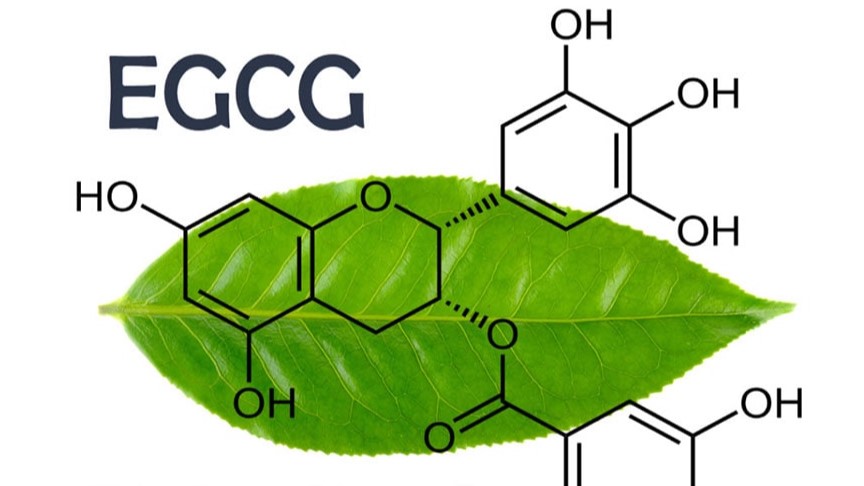
EGCG Explained: The Active Compound in Green Tea Extract and How It Works
Green tea is one of the most consumed beverages in the world and one of the most extensively studied plants in nutritional science. Yet most people who drink it — or take green tea extract supplements — have only a vague understanding of why it has health effects, which specific compounds are responsible, and what concentrations are actually needed to produce the outcomes demonstrated in clinical research.
The answer centres on one compound: EGCG — epigallocatechin-3-gallate. Understanding EGCG is the key to understanding green tea extract supplementation: why some products work and others do not, what doses clinical trials actually use, and what safety considerations apply at higher doses.
Green Tea's Bioactive Family: The Six Catechins
Green tea leaves (from the Camellia sinensis plant) contain a family of polyphenol compounds called catechins — a subclass of flavonoids. There are six major catechins in green tea:
- Epigallocatechin gallate (EGCG) — the most abundant, comprising approximately 50–80% of total catechin content
- Epigallocatechin (EGC)
- Epicatechin gallate (ECG)
- Epicatechin (EC)
- Gallocatechin (GC)
- Catechin (C)
Of these, EGCG is both the most abundant and the most pharmacologically potent. It is the compound responsible for the majority of green tea's anti-inflammatory, metabolic, cardiovascular, and neuroprotective effects documented in clinical research. ECG is the second-most potent catechin, sharing several of EGCG's mechanisms at lower potency.
Green tea differs from black tea in that it is not oxidised during processing — the catechins remain intact. Black tea oxidation converts catechins into theaflavins and thearubigins, which have different but overlapping health properties. Matcha is essentially powdered whole green tea leaf, concentrating all catechins rather than extracting them into a beverage.
How EGCG Works: Key Molecular Mechanisms
1. AMPK Activation — The Metabolic Master Switch
AMP-activated protein kinase (AMPK) is one of the most important metabolic regulators in the human body — often called the cellular energy sensor. When AMPK is activated, it triggers a cascade of metabolic adaptations: increased fat oxidation, enhanced glucose uptake, inhibition of fat synthesis (lipogenesis), and improved insulin sensitivity. EGCG activates AMPK through multiple pathways, producing effects similar in direction to those of metformin — the most widely prescribed diabetes medication, which also works primarily through AMPK activation. This AMPK mechanism underpins EGCG's documented effects on fat metabolism, blood sugar regulation, and body composition.
2. NF-kB Inhibition — Anti-Inflammatory Activity
Nuclear factor kappa B (NF-kB) is the master transcription factor controlling inflammatory gene expression — the same target inhibited by curcumin, ginger, and resveratrol. EGCG suppresses NF-kB activation, reducing the downstream production of pro-inflammatory cytokines including TNF-alpha, IL-6, and IL-1beta. A 2024 meta-analysis of 10 RCTs confirmed that green tea extract supplementation significantly reduced malondialdehyde (MDA) — a validated oxidative stress marker — with a weighted mean difference of −0.32 µmol/L (p<0.001), confirming systemic anti-inflammatory and antioxidant activity in humans.
3. Nrf2 Activation — Cellular Antioxidant Defence
EGCG activates Nrf2 — the transcription factor that upregulates the cell's own antioxidant enzyme systems, including superoxide dismutase (SOD), catalase, and glutathione peroxidase. Rather than simply scavenging free radicals directly (as vitamin C does), this Nrf2 activation amplifies the cell's intrinsic antioxidant capacity — a more sustainable and comprehensive antioxidant mechanism.
4. SIRT1 and FOXO — Longevity Pathway Activation
EGCG activates SIRT1 (a key longevity-associated deacetylase of the sirtuin family) and FOXO transcription factors — the same pathways activated by caloric restriction and associated with extended healthy lifespan in multiple model organisms. In C. elegans studies, EGCG extended lifespan by 6–7% through these pathways. In mammals, SIRT1 activation drives mitochondrial biogenesis, reduces inflammatory signalling, and promotes cellular stress resistance. This pathway is also activated by resveratrol, making green tea and resveratrol a complementary longevity stack.
5. COMT Inhibition — Catecholamine Potentiation
EGCG inhibits catechol-O-methyltransferase (COMT) — an enzyme that breaks down catecholamines including noradrenaline and dopamine. This inhibition extends the activity of these neurotransmitters and, importantly, synergises with caffeine in green tea to produce thermogenic (fat-burning) and mood-enhancing effects. The caffeine + EGCG combination is more effective for fat oxidation and energy expenditure than either compound alone — which is why whole green tea extract (retaining natural caffeine) often outperforms isolated EGCG for weight management applications.
Bioavailability: The Absorption Challenge
EGCG has relatively poor oral bioavailability. The absolute bioavailability of EGCG after oral administration is estimated at 0.1–1.68% in humans — meaning a very small proportion of ingested EGCG reaches systemic circulation intact. This occurs because EGCG is susceptible to intestinal oxidation and rapid metabolic conjugation, and because it is a substrate for efflux transporters that pump it back out of intestinal cells.
Several strategies improve bioavailability:
- Fasting state consumption: EGCG bioavailability is approximately 2.5–3.5 times higher when taken in a fasted state compared to with food. Most clinical trials showing metabolic benefits used fasted administration.
- Piperine (black pepper extract): Inhibits CYP and glucuronidation enzymes that metabolise EGCG, increasing plasma concentrations — the same synergy seen with curcumin.
- Lipid-based delivery: EGCG formulated with lipids or phospholipids (phytosomes) shows improved intestinal absorption.
- Gut microbiome: Colonic bacteria further metabolise EGCG into bioactive compounds including valerolactones and phenolic acids — so gut microbiome composition significantly affects the total benefit derived from green tea intake.
Safety: The Important Hepatotoxicity Consideration
Unlike most natural anti-inflammatory compounds, green tea extract has a specific safety consideration at high doses that merits clear communication. The US Pharmacopeia identified 51 case reports of hepatotoxicity (liver injury) associated with green tea extract supplements using daily doses ranging from 500–3,000mg of extract (equivalent to approximately 250–1,800mg EGCG daily). The European Food Safety Authority concluded that EGCG intakes above 800mg/day significantly increased serum liver transaminase levels compared to lower doses.
The practical safety guidelines that emerge from this evidence:
- Keep EGCG intake below 800mg/day (equivalent to approximately 1,600–2,000mg of standardised green tea extract daily) for long-term use
- Always take green tea extract supplements with food, not on an empty stomach — the USP specifically recommends this to reduce hepatotoxicity risk
- Avoid combining high-dose green tea extract with other supplements or medications that stress the liver
- If you have pre-existing liver conditions, consult a physician before supplementing
At the doses used in most clinical trials (200–400mg EGCG daily, equivalent to 400–800mg of standardised extract), green tea extract has an excellent safety record with only mild gastrointestinal side effects (nausea, stomach discomfort) reported in a small proportion of users.
Reading Supplement Labels
Key information to look for:
- Standardised EGCG percentage: Look for at least 45–50% EGCG by weight — a 400mg extract capsule standardised to 50% EGCG delivers 200mg EGCG, a clinically relevant dose
- Total catechin percentage: Some labels report total catechins rather than EGCG specifically; total catechins of 80–90% with 45–50% EGCG is a reasonable quality indicator
- Caffeine content disclosed: Some products are decaffeinated; caffeine-containing products produce stronger thermogenic and metabolic effects but may not suit caffeine-sensitive individuals
- Third-party tested: Particularly important given the hepatotoxicity concern — verified potency and purity testing ensures the label accurately reflects EGCG content
References
- Cheng M, et al. (2025). Epigallocatechin Gallate (EGCG): Pharmacological Properties, Biological Activities and Therapeutic Potential. Pharmaceuticals, 18(2), 202.
- Serafini M, et al. (2024). Safety and Efficacy of Dietary EGCG Supplementation for Obesity and NAFLD Management. Nutrients, 17(3), 425.
- Ivaskiene T, et al. (2025). Collagen supplementation and regenerative health: advances in biomarker detection. Frontiers in Nutrition, 12.
- Ávila-Gálvez MÁ, et al. (2022). Disposition of dietary polyphenols in the intestinal epithelium. Nutrients, 14(5), 948.