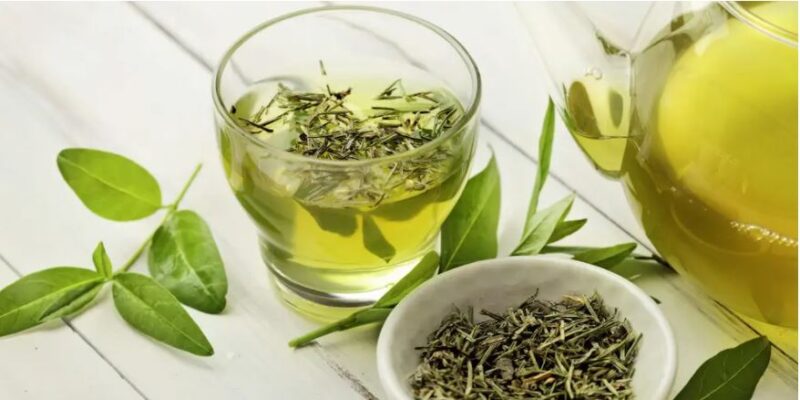
Green Tea Extract for Anti-Aging: EGCG, Autophagy and the Longevity Evidence
Green tea extract is one of the most studied plant compounds in longevity research. Its primary active compound — EGCG (epigallocatechin-3-gallate) — has been shown to influence several of the hallmark pathways of biological aging: it activates autophagy, inhibits mTOR, suppresses NF-kB-driven inflammaging, protects telomeric DNA, and demonstrates selective toxicity toward senescent cells. This article reviews the anti-aging evidence specifically, separating the well-established mechanisms from the more preliminary findings.
EGCG: The Central Bioactive Compound
Green tea leaves contain a complex of polyphenols called catechins, of which EGCG is the most biologically active and most abundant. A standardised green tea extract typically contains 45–90% total catechins with 30–50% EGCG. Drinking green tea provides EGCG, but at lower and more variable concentrations than standardised extracts — typically 50–100mg per cup vs 200–400mg per capsule of a quality extract.
EGCG's molecular targets relevant to aging include:
- mTOR inhibition: EGCG inhibits the mTOR (mechanistic target of rapamycin) complex — a nutrient-sensing kinase that, when chronically activated, suppresses autophagy and accelerates cellular aging
- AMPK activation: EGCG activates AMPK — the energy-sensing enzyme that promotes mitochondrial biogenesis, upregulates autophagy, and is activated by caloric restriction and exercise
- Nrf2 activation: EGCG activates the Nrf2 antioxidant response pathway, upregulating endogenous antioxidant enzymes including SOD, catalase, and glutathione peroxidase
- NF-kB inhibition: EGCG directly inhibits IKK-beta, reducing the chronic inflammatory signalling central to inflammaging
- SIRT1 activation: EGCG has been shown to activate SIRT1 — one of the sirtuin longevity proteins — through mechanisms overlapping with those of resveratrol
Autophagy: The Anti-Aging Mechanism Most People Miss
Autophagy — the cellular self-cleaning process by which damaged proteins, dysfunctional organelles, and pathological aggregates are degraded and recycled — declines dramatically with age. This decline contributes to the accumulation of damaged mitochondria, protein aggregates (including amyloid-beta and alpha-synuclein), and senescent cellular components that drive aging and neurodegeneration.
EGCG has been shown in multiple cell and animal studies to activate autophagy through its mTOR inhibitory and AMPK activating effects. Significantly, it has also been shown to enhance mitophagy — the selective autophagy of damaged mitochondria — which is considered one of the most important anti-aging processes at the cellular level. Impaired mitophagy is directly linked to the mitochondrial dysfunction characteristic of aged tissues.
Human clinical evidence for EGCG-induced autophagy is still emerging, but a 2022 study found that green tea extract supplementation increased markers of autophagic flux in peripheral blood mononuclear cells in older adults — providing the first direct human evidence that dietary EGCG activates autophagy in vivo.
Senescent Cell Clearance
EGCG has demonstrated selective pro-apoptotic activity against senescent cells in cell culture studies — a senolytic property analogous to (though weaker than) pharmaceutical senolytics like dasatinib and quercetin. The mechanism involves EGCG's ability to inhibit the Bcl-2 family of anti-apoptotic proteins that senescent cells upregulate to resist programmed death. By suppressing Bcl-2 and Bcl-xL, EGCG reduces the resistance of senescent cells to apoptosis without equivalent toxicity to healthy cycling cells.
While human senolytic trials using EGCG alone have not been published as of 2025, it is being studied in combination senolytic protocols alongside quercetin and fisetin — and its broader anti-inflammatory and mTOR-inhibitory effects are expected to reduce the accumulation of new senescent cells regardless of its direct clearance activity.
Telomere Protection
EGCG has been shown to inhibit telomerase in cancer cells (which is desirable — preventing tumour immortalisation) while protecting telomeric DNA integrity in normal cells through its antioxidant and anti-inflammatory mechanisms. A cross-sectional study of over 2,000 Chinese adults found that higher green tea consumption was independently associated with longer telomere length, with habitual tea drinkers having telomeres approximately 5 years younger than non-drinkers in biological age terms. The association remained significant after adjustment for smoking, diet quality, and physical activity.
Cardiovascular and Metabolic Aging
A 2021 meta-analysis of 109 RCTs (Furushima et al.) found that green tea consumption was associated with significant reductions in LDL cholesterol, fasting blood glucose, and CRP — three primary biomarkers of cardiometabolic aging. EGCG inhibits intestinal cholesterol absorption, reduces hepatic triglyceride synthesis, and improves insulin sensitivity through AMPK activation — addressing multiple components of the metabolic syndrome that accelerates aging.
Japanese cohort studies of populations consuming 5–10 cups of green tea daily consistently show lower rates of cardiovascular disease, type 2 diabetes, and all-cause mortality. The Ohsaki Cohort Study (40,530 adults, 11-year follow-up) found that those drinking 5+ cups daily had 26% lower cardiovascular mortality and 16% lower all-cause mortality compared to those drinking less than one cup.
Brain Aging and Neuroprotection
EGCG crosses the blood-brain barrier and accumulates in neuronal tissue. In the brain, it inhibits beta-amyloid aggregation, reduces tau phosphorylation, suppresses neuroinflammation via NF-kB inhibition, and supports BDNF (brain-derived neurotrophic factor) expression — the primary growth factor for neuronal plasticity and survival. Multiple epidemiological studies have found green tea consumption inversely associated with cognitive decline and dementia risk, with the most consistent associations seen in studies from Japan with long follow-up periods.
Bioavailability: The Key Limitation
EGCG's main limitation as an oral supplement is bioavailability. Standard EGCG is poorly absorbed in the small intestine and undergoes rapid first-pass metabolism, with peak plasma concentrations typically achieved 1–2 hours post-dose and declining quickly. Strategies to improve bioavailability:
- Take on an empty stomach — food (particularly protein) significantly reduces EGCG absorption
- Vitamin C co-supplementation or acidic beverages may stabilise EGCG in the gut and improve absorption
- Liposomal EGCG formulations show 2–4x better bioavailability in preliminary studies
- Avoid milk with green tea — casein proteins bind catechins and reduce absorption
Dosage and Safety
Effective doses in clinical studies range from 200–800mg EGCG daily. For anti-aging purposes, 300–500mg standardised to EGCG content is a practical target. Safety considerations:
- Liver safety: Rare cases of liver injury have been reported at very high doses (above 800mg EGCG daily). This risk appears confined to high-dose concentrated extracts taken on an empty stomach. Doses up to 800mg EGCG daily with food are considered safe in healthy adults based on systematic reviews
- Iron absorption: EGCG chelates non-haem iron — take separately from iron-rich meals or supplements, particularly if iron deficiency is a concern
- Caffeine content: Green tea extracts vary considerably in caffeine content — decaffeinated extracts are available for those sensitive to stimulants
- Drug interactions: EGCG may affect the metabolism of some medications through CYP enzyme inhibition — discuss with a prescriber if taking blood thinners, statins, or immunosuppressants
References & Further Reading
- Furushima D, et al. (2021). Effect of green tea catechins on cardiovascular disease risk factors: Meta-analysis of 109 RCTs. Molecules, 26(17), 5337.
- Chan EW, et al. (2011). Green tea epigallocatechin gallate and EGCG bioavailability. Food Chemistry, 129(4), 1352–1357.
- Nakachi K, et al. (2000). Influence of drinking green tea on breast cancer malignancy among Japanese patients. Japanese Journal of Cancer Research, 91(6), 566–571.
- Kuriyama S, et al. (2006). Green tea consumption and mortality due to cardiovascular disease, cancer, and all causes in Japan (Ohsaki Cohort). JAMA, 296(10), 1255–1265.
- Liu J, et al. (2012). Green tea consumption and telomere length in Chinese adults. European Journal of Nutrition, 51(1), 117–122.
- Suzuki T & Pervin M. (2016). Catechins in Human Health and Disease. Molecules, 21(12), 1649.
- Bettuzzi S, et al. (2006). Chemoprevention of prostate cancer by oral administration of green tea catechins. Cancer Research, 66(2), 1234–1240.