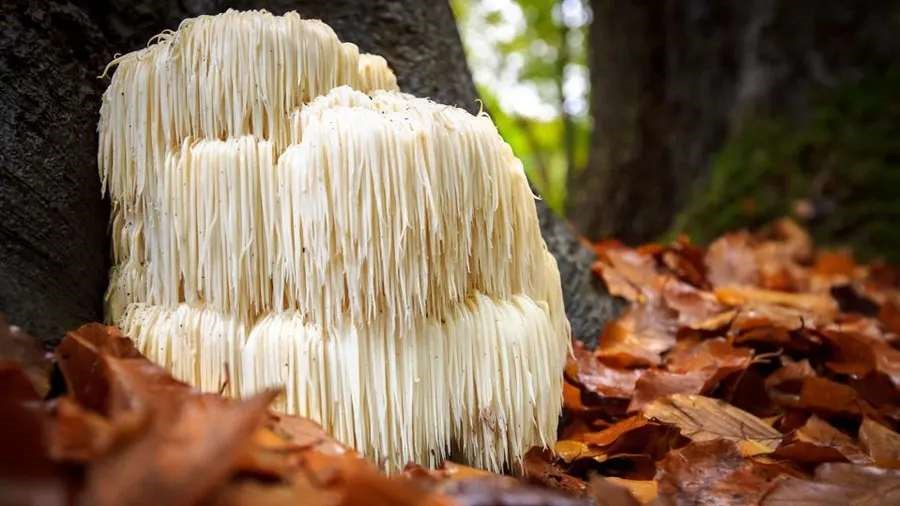
Lion's Mane Mushroom for Anxiety: NGF, Gut-Brain Axis and the Clinical Evidence
Lion's Mane mushroom (Hericium erinaceus) addresses anxiety through a mechanism that most anxiolytic supplements miss entirely: neurotrophin support. Its hericenones and erinacines stimulate nerve growth factor (NGF) and brain-derived neurotrophic factor (BDNF) — the growth factors that maintain hippocampal neuroplasticity, support the GABAergic interneurons that regulate anxiety circuits, and enable the structural brain changes required for lasting anxiety reduction. Combined with its gut-brain axis effects, Lion's Mane offers a genuinely distinct mechanism from other natural anxiety supplements — making it particularly valuable in combination protocols.
Mechanism 1: NGF and Hippocampal Neurogenesis
The hippocampus — the brain region central to memory, emotional regulation, and the contextual processing of fear and threat — undergoes structural changes in chronic anxiety: dendritic atrophy, reduced neurogenesis, and GABAergic interneuron loss impair the hippocampus's ability to contextualise threats accurately and regulate the amygdala's fear response. These structural changes are driven by chronically elevated cortisol and reduced NGF and BDNF signalling.
Lion's Mane's hericenones (in the fruiting body) and erinacines (in the mycelium) promote NGF synthesis in hippocampal and cortical neurons. NGF supports the survival and function of cholinergic neurons critical to cognitive and emotional regulation, promotes dendritic growth and synaptic connectivity, and supports GABAergic interneuron maintenance — directly reversing some of the structural brain changes driven by chronic anxiety and stress.
Mechanism 2: BDNF Upregulation
BDNF (brain-derived neurotrophic factor) is the primary growth factor for hippocampal neuroplasticity — reduced BDNF is one of the most consistent biological findings in anxiety disorders and depression. Lion's Mane has been shown to increase BDNF expression in the hippocampus and prefrontal cortex through mechanisms overlapping with its NGF-stimulating activity. Higher BDNF supports the structural brain changes required for anxiolytic therapy to produce lasting benefits — which may explain why Lion's Mane shows particular synergy with psychological interventions for anxiety.
Research: Human RCT — Anxiety and Depression
A double-blind RCT (Nagano et al., 2010) in 30 menopausal women found that Lion's Mane supplementation (2g of 96% dry powder daily) for 4 weeks significantly reduced self-rated anxiety and depression scores compared to placebo — with significant improvements on the Kupperman Index anxiety subscale and "concentration" and "irritability" items. Importantly, no adverse effects were reported and the effect size was clinically meaningful for a 4-week intervention.
A second observational study in university students found daily Lion's Mane supplementation significantly reduced trait anxiety and depression scores over an academic semester — with the neuroplasticity mechanism providing a plausible explanation for the anxiety benefits in a stress-exposed population.
Mechanism 3: Gut-Brain Axis
70-95% of serotonin is produced in the gut, and the gut microbiome directly regulates HPA axis reactivity, vagal nerve tone, and brain GABA receptor expression — all core components of anxiety. Lion's Mane polysaccharides have documented prebiotic effects — increasing Lactobacillus and Bifidobacterium species that produce GABA precursors, short-chain fatty acids that support the blood-brain barrier, and anti-inflammatory metabolites that reduce neuroinflammation associated with anxiety disorders. This gut-brain axis contribution adds a systemic dimension to Lion's Mane's anxiety benefits that extends beyond its direct neurotrophin activity.
Mechanism 4: Neuroinflammation Reduction
Neuroinflammation — microglial NF-kB activation producing pro-inflammatory cytokines in the brain — is increasingly recognised as a driver of anxiety disorders. Elevated IL-6, TNF-alpha, and IL-1beta in the brain reduce GABA receptor density, impair serotonin synthesis, and increase HPA axis reactivity. Lion's Mane polysaccharides and hericenones inhibit microglial NF-kB activation, reducing neuroinflammatory cytokine production — directly addressing one of the biological mechanisms linking chronic stress to anxiety disorder development.
Lion's Mane in Anxiety Treatment Protocols
Lion's Mane is most useful as a complement to faster-acting anxiolytics (ashwagandha, L-theanine) rather than as a standalone acute anxiolytic. Its neuroplasticity-promoting effects require 4-12 weeks to produce meaningful structural changes — but they potentially create lasting neurological improvements rather than the purely symptomatic relief of acute anxiolytics. It is particularly valuable for:
- Anxiety with significant cognitive symptoms (rumination, poor concentration, brain fog)
- Anxiety with concurrent depression
- Long-term anxiety management where neuroplasticity restoration matters
- Supporting the structural brain changes that make psychological therapy (CBT, exposure therapy) more effective
Dosage
- Dose: 500-1,000mg standardised extract daily (minimum 30% beta-glucans, dual extracted)
- Consistency required: 4-12 weeks for neuroplasticity effects — not appropriate as an acute anxiolytic
- Dual extraction: Both water-soluble beta-glucans and alcohol-soluble hericenones are required for the full anxiety-relevant profile
- Morning use: Mildly activating — take in the morning to avoid potential sleep interference at higher doses
References & Further Reading
- Nagano M, et al. (2010). Reduction of depression and anxiety by 4 weeks Hericium erinaceus intake. Biomedical Research, 31(4), 231–237.
- Mori K, et al. (2009). Nerve growth factor-inducing activity of Hericium erinaceus in 1321N1 human astrocytoma cells. Biological and Pharmaceutical Bulletin, 31(9), 1727–1732.
- Sheng X, et al. (2017). Immunomodulatory effects of Hericium erinaceus derived polysaccharides. Molecular Medicine Reports, 15(5), 3359–3366.
- Ratto D, et al. (2019). Hericium erinaceus improves recognition memory and induces hippocampal and cerebellar neurogenesis. Frontiers in Neuroscience, 13, 215.