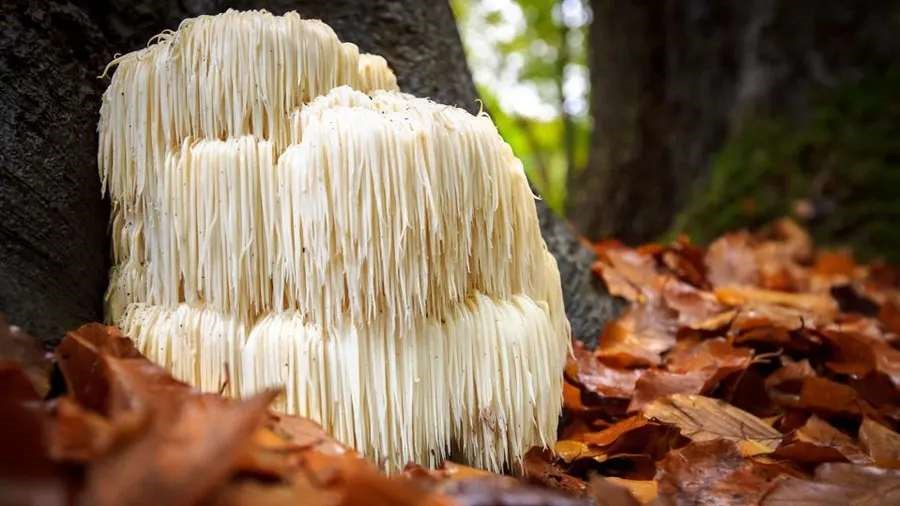
Lion's Mane Mushroom for Gut Health: Nerve Growth Factor, Gut-Brain Axis and Microbiome Evidence
Lion's Mane mushroom (Hericium erinaceus) has an unusual relationship with gut health — it is simultaneously a neurotrophin stimulator (supporting the enteric nervous system through nerve growth factor induction), a prebiotic (selectively feeding beneficial gut bacteria), an H. pylori inhibitor, and a direct intestinal anti-inflammatory agent. This breadth of gut-relevant mechanisms makes it one of the most pharmacologically interesting gut health supplements — particularly for gut-brain axis applications where most supplements have limited mechanisms.
Mechanism 1: Nerve Growth Factor and the Enteric Nervous System
The enteric nervous system (ENS) — sometimes called the "second brain" — contains more neurons than the spinal cord and autonomously controls intestinal motility, secretion, and blood flow. ENS neuronal health depends on nerve growth factor (NGF) signalling, and ENS dysfunction is a primary mechanism in IBS, chronic constipation, and gut motility disorders.
Lion's Mane contains hericenones (in the fruiting body) and erinacines (in the mycelium) — diterpene compounds that stimulate NGF synthesis in intestinal cells and cross into the CNS after absorption. In the gut context, NGF stimulation supports ENS neuronal survival, maintenance of enteric nerve fibre density, and normalisation of intestinal motility signalling — directly addressing one of the primary mechanisms of motility disorders that conventional gut supplements do not target.
Research: Gastric Ulcer Healing
A study found Lion's Mane extract significantly accelerated gastric ulcer healing in animals — with the mechanism attributed to both NGF-stimulated gastric mucosal nerve regeneration and direct anti-inflammatory reduction of gastric epithelial NF-kB activation. The mushroom's polysaccharides also coat gastric mucosal surfaces, providing a physical protective layer analogous to mucin glycoproteins. Human evidence for ulcer healing is limited but the mechanistic evidence from animal models is consistent and well-characterised.
Research: H. Pylori Inhibition
H. pylori — the primary cause of peptic ulcers and the leading risk factor for gastric cancer — has shown susceptibility to Lion's Mane polysaccharide and hericenone fractions in laboratory studies. The mechanism involves inhibition of H. pylori urease (essential for the bacterium's acid tolerance) and disruption of H. pylori adhesion to gastric epithelial cells. A cell study found Lion's Mane extract significantly reduced H. pylori colonisation density in gastric epithelial cell cultures. While human eradication trials are not yet published, the anti-H. pylori mechanisms are well-documented and provide biological plausibility for gastric health applications.
Research: Prebiotic Microbiome Effects
Lion's Mane polysaccharides — particularly beta-glucans and hericenans — are fermented by colonic bacteria and produce prebiotic effects. Studies have found Lion's Mane supplementation significantly increases Bifidobacterium and Lactobacillus populations while reducing Clostridium perfringens and other pathogenic species. The beta-glucan content specifically feeds Faecalibacterium prausnitzii — the most important anti-inflammatory gut bacterium — and supports butyrate production. A study in mice with colitis found Lion's Mane supplementation restored microbiome diversity to near-normal levels and significantly reduced colonic inflammation markers.
Research: Intestinal Anti-Inflammatory Activity
Lion's Mane polysaccharides inhibit intestinal NF-kB activation — reducing IL-6, TNF-alpha, and IL-1beta production in intestinal immune cells. A study in a colitis model found Lion's Mane extract significantly reduced colonic myeloperoxidase activity (neutrophil infiltration marker), reduced inflammatory cytokine levels, and improved colonic mucosal architecture on histology — results comparable to low-dose anti-inflammatory drugs in the same model. Human IBS and IBD trials with Lion's Mane are limited but ongoing — the mechanistic evidence is strong enough to support its use as a gut anti-inflammatory supplement.
Gut-Brain Axis: The Unique Contribution
Lion's Mane is the only common gut health supplement that directly targets ENS neuronal health through NGF stimulation. This is particularly relevant for:
- IBS, where ENS sensitisation and altered visceral perception are primary pathological mechanisms
- Chronic constipation, where ENS neurodegeneration contributes to reduced peristaltic drive
- Post-infectious IBS, where gastroenteritis-induced ENS neuronal damage creates persistent motility dysregulation
- Stress-related gut symptoms, mediated through the gut-brain bidirectional communication that Lion's Mane NGF activity supports at both ends
Dosage and Form
- Dose: 500-1,000mg daily of standardised extract (minimum 30% beta-glucans)
- Dual extraction: Both water-soluble polysaccharides (beta-glucans, prebiotic activity) and alcohol-soluble hericenones require dual water/alcohol extraction — single-solvent products miss half the bioactive profile
- Fruiting body vs mycelium: Fruiting body is richer in hericenones (NGF stimulation); mycelium is richer in erinacines (also NGF stimulants). Quality products specify the source.
- Onset: Microbiome effects appear within 4-8 weeks; motility and gut-brain effects may take 8-12 weeks of consistent use
References & Further Reading
- Nagano M, et al. (2010). Reduction of depression and anxiety by 4 weeks Hericium erinaceus intake. Biomedical Research, 31(4), 231–237.
- Wang M, et al. (2019). Hericium erinaceus polysaccharides ameliorate DSS-induced colitis. Journal of Cellular and Molecular Medicine, 23(5), 3353–3365.
- Sheng X, et al. (2017). Immunomodulatory effects of Hericium erinaceus derived polysaccharides. Molecular Medicine Reports, 15(5), 3359–3366.
- Mori K, et al. (2008). Improving effects of the mushroom Yamabushitake on mild cognitive impairment. Phytotherapy Research, 23(3), 367–372.
- He X, et al. (2017). Structures, biological activities, and industrial applications of the polysaccharides from Hericium erinaceus. International Journal of Biological Macromolecules, 97, 228–237.