Quercetin for Cancer Prevention: Bcl-2 Inhibition, Senolytic Activity and the Clinical Evidence
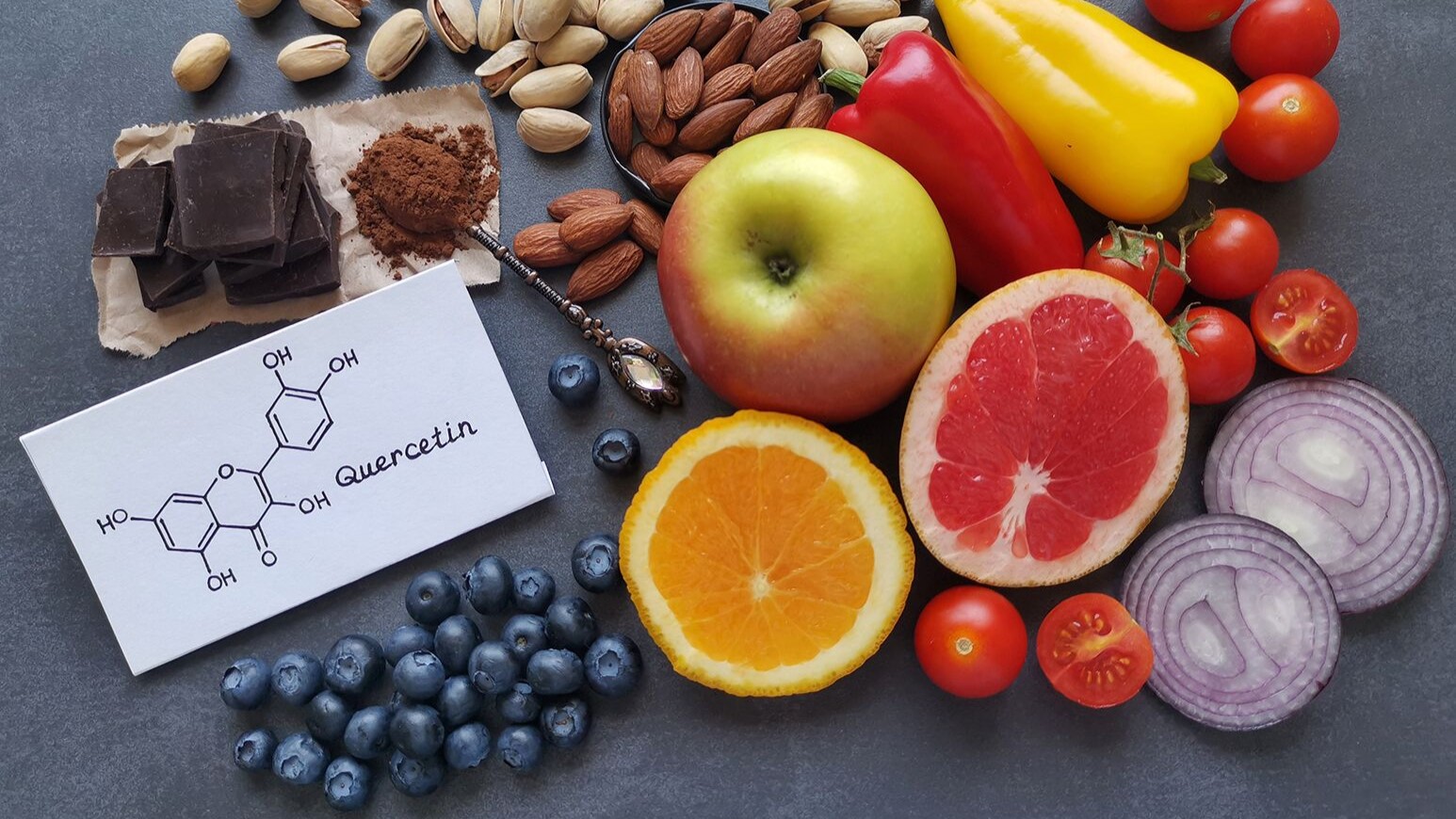
Quercetin — one of the most abundant dietary flavonoids, found in onions, capers, apples, and berries — has attracted significant cancer research attention for a combination of mechanisms that address cancer prevention at multiple stages simultaneously: it inhibits the Bcl-2 proteins that cancer cells use to resist apoptosis, suppresses the chronic inflammatory signalling that promotes carcinogenesis, clears senescent cells whose SASP secretions create pro-carcinogenic microenvironments, and directly inhibits several oncogenic signalling kinases. Its cancer prevention evidence base, while less extensive than curcumin or EGCG in clinical trials, is mechanistically well-characterised and supported by epidemiological data from multiple large cohort studies.
Mechanism 1: Bcl-2 Family Inhibition
The Bcl-2 family of anti-apoptotic proteins (Bcl-2, Bcl-xL, Bcl-w, Mcl-1) are the primary molecular mechanism by which cancer cells resist programmed death. They sequester pro-apoptotic proteins (Bax, Bak, Bad) and prevent cytochrome c release from mitochondria — blocking the intrinsic apoptosis pathway regardless of upstream death signals. Many cancers overexpress Bcl-2 or Bcl-xL as a primary resistance mechanism.
Quercetin binds the BH3 domain of Bcl-2 and Bcl-xL — the same domain targeted by the pharmaceutical BH3 mimetic venetoclax (ABT-199), approved for CLL treatment. This binding releases the sequestered pro-apoptotic proteins, triggering mitochondrial cytochrome c release and caspase activation. Quercetin's Bcl-2 inhibitory activity is weaker than venetoclax but operates alongside its other mechanisms — contributing to synergistic apoptosis induction with multiple co-agents.
Mechanism 2: Senolytic Activity — Clearing Pre-Carcinogenic Cells
Cellular senescence — when cells enter permanent cell cycle arrest — plays a paradoxical role in cancer: senescence initially suppresses tumour formation (by preventing damaged cells from proliferating) but senescent cell accumulation with age creates a pro-carcinogenic microenvironment through the SASP (Senescence-Associated Secretory Phenotype). SASP includes proteases (MMPs), growth factors (HGF, EGF), and inflammatory cytokines that remodel the extracellular matrix, promote neighbouring cell proliferation, and suppress anti-tumour immune responses.
Quercetin is one of the two compounds (alongside dasatinib) used in the first human senolytic clinical trials. It selectively induces apoptosis in senescent cells through Bcl-2/Bcl-xL inhibition — senescent cells upregulate these anti-apoptotic proteins as part of their survival mechanism, making them specifically vulnerable to quercetin's BH3 mimetic activity. Clearing senescent cells reduces SASP-driven inflammatory carcinogenic signalling in tissues — a preventive mechanism that operates upstream of tumour initiation.
Mechanism 3: PI3K and mTOR Inhibition
Quercetin inhibits PI3K (phosphoinositide 3-kinase) — the lipid kinase that activates Akt, mTOR, and downstream pro-survival and pro-growth signalling. PI3K/Akt/mTOR is one of the most frequently activated pathways in human cancer — mutated or amplified in over 30% of all cancers — and its inhibition reduces cancer cell proliferation, survival, and metabolic activity. Quercetin's PI3K inhibition also reduces HIF-1alpha activity — decreasing the hypoxia-inducible gene expression that tumours use to survive low-oxygen microenvironments and induce angiogenesis.
Mechanism 4: Antiviral and Oncoviral Prevention
Several human cancers are caused by viral carcinogens — HPV (cervical, oropharyngeal), HBV/HCV (hepatocellular), EBV (Burkitt lymphoma), and H. pylori (gastric). Quercetin has demonstrated antiviral activity against multiple oncoviruses in cell studies, including inhibition of HPV E6/E7 oncoproteins that inactivate p53 and Rb tumour suppressors, and inhibition of HBV replication. While human trials specifically for oncoviral prevention are limited, the antiviral mechanisms provide a biologically plausible cancer prevention pathway for virus-associated malignancies.
Epidemiological Evidence
Multiple large cohort studies have found inverse associations between dietary quercetin intake and cancer risk. A prospective study in 38,408 women found the highest quartile of quercetin intake was associated with a 27% lower risk of pancreatic cancer — a tumour type where dietary chemoprevention options are particularly limited. A meta-analysis found higher dietary flavonoid intake (dominated by quercetin in most Western diets) was significantly associated with reduced lung cancer risk. The Iowa Women's Health Study found quercetin intake inversely associated with colon cancer risk specifically in women who smoke or drink alcohol — populations with higher oxidative carcinogen exposure.
Research: Human Trial — Familial Adenomatous Polyposis
A small but landmark study (Cruz-Correa et al., 2006) found that quercetin combined with curcumin significantly reduced polyp number (60.4% reduction) and size (50.9% reduction) in patients with familial adenomatous polyposis compared to baseline — providing direct human evidence of cancer precursor regression from quercetin-containing supplementation in a high-risk population.
Bioavailability and Dosage
Quercetin absorption varies substantially with food matrix. Quercetin glycosides (from onions, apples) are better absorbed than aglycone quercetin from supplements. Key considerations:
- Dose: 500-1,000mg quercetin aglycone or glycoside daily for cancer prevention purposes
- The senolytic protocol uses: 1,000mg quercetin + 100mg dasatinib (pharmaceutical) — or quercetin alone at higher doses (1,000-2,000mg) for the natural senolytic approach
- With bromelain: Bromelain (from pineapple) increases quercetin absorption by approximately 40% through enhanced intestinal uptake
- With vitamin C: Synergistic — vitamin C regenerates quercetin after its antioxidant activity and enhances bioavailability
- Phytosome form: Quercetin phytosome (bound to phosphatidylcholine) shows approximately 20x better bioavailability than standard quercetin powder
- Food sources: Capers (the highest dietary quercetin source), red onions, shallots, and apples provide meaningful quercetin alongside synergistic compounds not present in isolated supplements
References & Further Reading
- Cruz-Correa M, et al. (2006). Combination treatment with curcumin and quercetin of adenomas in familial adenomatous polyposis. Clinical Gastroenterology and Hepatology, 4(8), 1035–1038.
- Kirkland JL & Tchkonia T. (2020). Senolytic drugs: from discovery to translation. Journal of Internal Medicine, 288(5), 518–536.
- Gibellini L, et al. (2011). Quercetin and cancer chemoprevention. Evidence-Based Complementary and Alternative Medicine, 2011, 591356.
- Russo M, et al. (2012). The flavonoid quercetin in disease prevention and therapy. Biochemical Pharmacology, 83(1), 6–15.
- Murota K & Terao J. (2003). Antioxidative flavonoid quercetin: implication of its intestinal absorption and metabolism. Archives of Biochemistry and Biophysics, 417(1), 12–17.