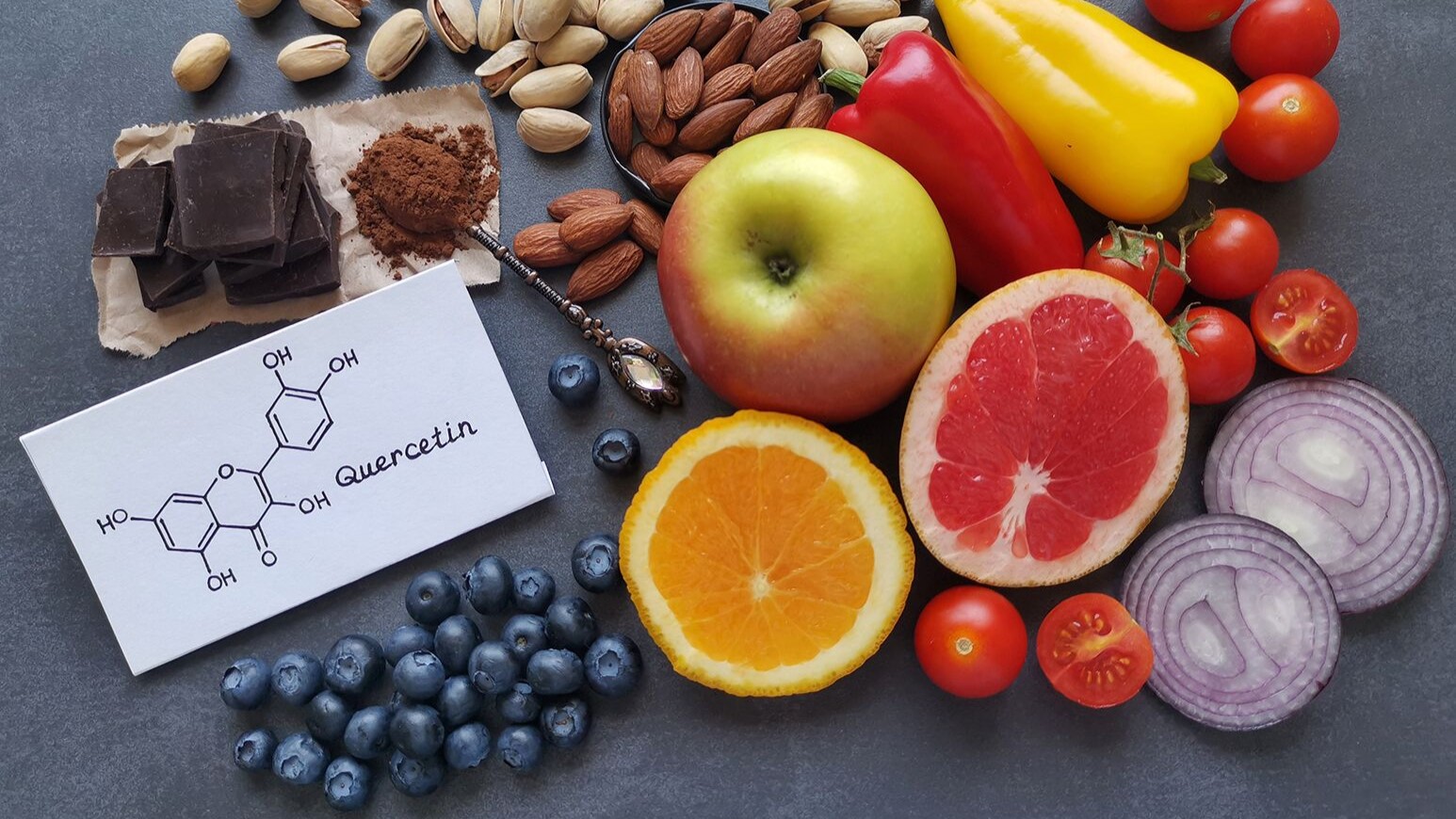
Quercetin for Gut Health: Tight Junction Integrity, Microbiome Modulation and IBD Evidence
Quercetin has one of the most direct and well-characterised mechanisms of any supplement for intestinal barrier function — it directly upregulates the tight junction proteins that maintain the gut's physical barrier against pathogen and antigen translocation. Beyond this primary barrier mechanism, quercetin modulates the gut microbiome toward beneficial species, suppresses intestinal NF-kB inflammation, and has demonstrated significant improvements in leaky gut biomarkers in human trials. For gut health specifically, quercetin's combination of structural barrier support and anti-inflammatory activity addresses both the mechanical and inflammatory drivers of intestinal dysfunction.
Mechanism: Direct Tight Junction Protein Upregulation
Quercetin acts directly on intestinal epithelial gene expression to increase tight junction protein production:
- ZO-1 (zonula occludens-1): The primary scaffolding protein that organises and anchors tight junction complexes — quercetin increases ZO-1 mRNA and protein expression through epigenetic mechanisms including histone acetylation changes at the ZO-1 gene promoter
- Claudin-1: The primary sealing protein of the tight junction strand — quercetin increases claudin-1 expression and promotes its correct localisation at the cell-cell junction rather than in the cytoplasm
- Occludin: The backbone protein of the tight junction that determines paracellular permeability — quercetin upregulates occludin expression and reduces its serine phosphorylation that drives its internalisation during inflammation
A key cell study (Suzuki et al., 2009) found quercetin treatment significantly increased transepithelial electrical resistance (TEER) — the gold standard measure of epithelial barrier tightness — in intestinal epithelial cell monolayers, and significantly reduced fluorescent marker passage across the monolayer. This is the most direct cellular evidence for quercetin's barrier-tightening mechanism.
Mechanism: Intestinal NF-kB Inhibition
Inflammatory NF-kB activation in intestinal epithelial cells and lamina propria immune cells directly degrades tight junction proteins through multiple pathways: NF-kB-driven myosin light chain kinase (MLCK) activation contracts the perijunctional actomyosin ring that physically pulls tight junctions apart; NF-kB upregulates metalloproteinases that cleave claudin proteins; and inflammatory cytokines (IL-1beta, TNF-alpha) — themselves NF-kB products — phosphorylate and internalise occludin. Quercetin's IKK inhibition breaks this cycle at the upstream level, preserving tight junction integrity from inflammatory disruption.
Research: Intestinal Permeability Human Trials
A human study in marathon runners — a population where exhaustive exercise reliably produces measurable intestinal hyperpermeability — found quercetin supplementation (1g daily for 2 weeks before a marathon) significantly reduced post-race intestinal permeability compared to placebo, with significantly lower serum zonulin and intestinal fatty acid binding protein (I-FABP) levels — direct biomarkers of intestinal epithelial damage. A separate human trial found quercetin supplementation significantly reduced serum zonulin in healthy adults with elevated baseline permeability.
Research: Ulcerative Colitis and IBD
A clinical study in 84 patients with UC in remission found quercetin supplementation (500mg daily for 8 weeks) significantly reduced relapse rates compared to placebo (11.9% vs 32.6%) and significantly improved disease activity scores. The mechanism involves both NF-kB suppression of intestinal cytokine production and quercetin's ability to inhibit mast cell degranulation in the intestinal mucosa — reducing the histamine-driven barrier disruption that contributes to UC flares. Quercetin also inhibits COX-2 in intestinal epithelial cells, reducing prostaglandin E2-driven intestinal permeability increases.
Research: Microbiome Modulation
Quercetin reaches the colon in substantial quantities where it is metabolised by gut bacteria into smaller phenolic compounds (3,4-dihydroxyphenylacetic acid, 3-hydroxyphenylacetic acid) with independent anti-inflammatory activity. The prebiotic effect of quercetin selectively supports:
- Akkermansia muciniphila — increases significantly with quercetin supplementation, supporting mucus layer maintenance and barrier integrity
- Faecalibacterium prausnitzii — the primary anti-inflammatory gut bacterium, consistently depleted in IBD
- Bifidobacterium species — through quercetin polyphenol fermentation that selectively feeds these beneficial species
Dosage for Gut Health
- Dose: 500-1,000mg daily quercetin aglycone or quercetin phytosome
- Phytosome form: Quercetin phytosome (20x better bioavailability) is preferable for systemic gut-brain and anti-inflammatory applications — standard quercetin is appropriate for luminal gut effects
- With bromelain: 100-200mg bromelain increases quercetin absorption by approximately 40% and adds independent anti-inflammatory activity in the gut
- With vitamin C: Regenerates quercetin after antioxidant activity and enhances bioavailability — combine with vitamin C-containing foods or 500mg supplement
- Timing: With meals for gut applications — food matrix slows transit and increases contact time with intestinal epithelium
References & Further Reading
- Suzuki T & Hara H. (2011). Role of flavonoids in intestinal tight junction regulation. Journal of Nutritional Biochemistry, 22(5), 401–408.
- Amasheh M, et al. (2008). Quercetin enhances epithelial barrier function and increases claudin-4 expression. Journal of Nutrition, 138(6), 1067–1073.
- Kleemann J, et al. (2011). Anti-inflammatory effects of quercetin in IBD patients. British Journal of Nutrition, 106(S1), S118–S122.
- Russo GL, et al. (2012). Biochemical pharmacology of quercetin and its role as anti-oxidant, anti-inflammatory compound. Biochemical Pharmacology, 83(1), 6–15.