Adaptogen
Ashwagandha
Adaptogenic herb clinically proven to reduce stress, anxiety and cortisol levels.
Adaptogenic herb clinically proven to reduce stress, anxiety and cortisol levels.
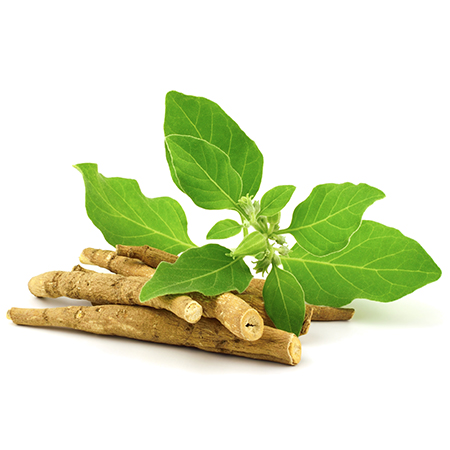
Ashwagandha (Withania somnifera), also known as Indian ginseng or winter cherry, is one of the most important herbs in Ayurvedic medicine — used for over 3,000 years as a rasayana (rejuvenating tonic) for promoting longevity, vitality, and stress resilience. Its name translates from Sanskrit as "smell of horse" — referring both to its distinctive aroma and to the traditional belief that it confers the strength and vitality of a horse.
The most biologically active components are withanolides — steroidal lactones unique to the Withania genus that are responsible for most of ashwagandha adaptogenic, anti-inflammatory, and neuroprotective effects.
Ashwagandha is classified as an adaptogen — a substance that helps the body adapt to physical and psychological stress while normalising physiological functions. Adaptogens work primarily through the HPA (hypothalamic-pituitary-adrenal) axis, the body central stress response system. By modulating HPA axis activity, ashwagandha reduces the cortisol output that drives chronic stress and its cascading effects on aging, immunity, metabolism, and cognitive function.
A landmark double-blind, randomised, placebo-controlled trial published in the Indian Journal of Psychological Medicine found that adults taking 300mg of ashwagandha root extract twice daily for 60 days showed a 27.9% reduction in serum cortisol levels compared to placebo, along with significant improvements in perceived stress scores. Chronically elevated cortisol is one of the most damaging hormonal drivers of accelerated aging.
Multiple randomised controlled trials have demonstrated significant reductions in anxiety scores with ashwagandha supplementation. It also significantly improves sleep quality — an effect attributed to its active compound triethylene glycol and its GABA-mimetic activity. Quality sleep is among the most powerful anti-aging interventions available.
A randomised trial published in the Journal of the International Society of Sports Nutrition found that men taking ashwagandha for 8 weeks showed significantly greater increases in muscle mass, strength, and testosterone levels compared to placebo, along with significantly lower exercise-induced muscle damage. Declining testosterone is a key driver of age-related muscle loss (sarcopenia).
Research published in the Journal of Dietary Supplements found that ashwagandha supplementation significantly improved memory, attention, and information-processing speed in adults with mild cognitive impairment. It also promotes neurogenesis in the hippocampus — the brain memory centre.
Research-backed doses range from 300-600mg of a standardised root extract daily, typically taken in divided doses. Look for products standardised to 2.5-5% withanolides. KSM-66 and Sensoril are two well-researched proprietary ashwagandha extracts with the most clinical evidence. Take with food to reduce the chance of mild digestive upset that some people experience.
In-depth science-based articles about this product
Ashwagandha has traditional use as a sleep aid in Ayurvedic medicine, and a growing set of double-bl...
Ashwagandha addresses depression through cortisol-driven mood dysregulation — reducing the HPA ove...
Ashwagandha KSM-66 is the most clinically validated adaptogen for anxiety — reducing cortisol by u...
Chronic stress accelerates biological aging faster than almost any other lifestyle factor — shorte...
Not all ashwagandha supplements are equal. The clinical trial evidence is built almost entirely on t...

Seven RCTs, 491 adults, and consistent results: ashwagandha significantly reduces cortisol, perceive...

Multiple RCTs have found ashwagandha supplementation significantly increases testosterone, muscle ma...
Learn more about how Ashwagandha supports these health areas