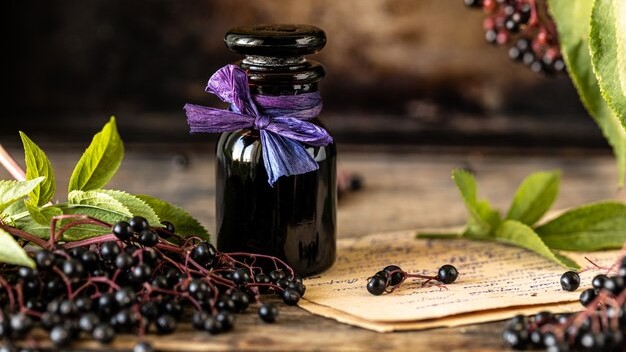
Best Elderberry Supplement: Syrup vs Gummies vs Capsules — What to Actually Buy
Elderberry is one of the top-selling supplement categories in the UK and US — but product quality varies enormously. The elderberry gummies sold at supermarket checkouts and the standardised pharmaceutical-grade syrups used in clinical trials are fundamentally different products delivering vastly different doses of active anthocyanins. Choosing the wrong format means paying for elderberry flavouring rather than elderberry pharmacology.
What You Are Actually Buying: Anthocyanin Content
The clinically active compounds in elderberry are anthocyanins — primarily cyanidin-3-glucoside and cyanidin-3-sambubioside. These are the molecules that inhibit viral haemagglutinin and modulate immune cytokine production. A quality elderberry supplement should be standardised for anthocyanin content — meaning each dose contains a guaranteed, measured amount of these active compounds.
Without standardisation, anthocyanin content can vary up to 10-fold between batches and brands depending on berry origin, harvest time, extraction method, and processing. An elderberry gummy containing 50mg of "elderberry extract" with no anthocyanin standardisation may deliver virtually no active compound. A 15ml dose of standardised elderberry syrup used in clinical trials delivers a measurable, reproducible anthocyanin dose.
Format Comparison
Elderberry Syrup — Closest to Trial Evidence
All the landmark clinical trials (Zakay-Rones 1995, 2004; Tiralongo 2016) used liquid elderberry syrup at doses of 15ml taken 4 times daily for acute illness. Sambucol — the original standardised product developed by virologist Dr Madeleine Zakay-Rones and used in her own trials — remains the most-evidenced specific elderberry product. Standardised syrups deliver consistent anthocyanin doses and are more bioavailable than encapsulated powders due to faster gastric absorption without a dissolution step.
Best for: Acute illness treatment, proven clinical doses, children who cannot swallow capsules
Watch out for: High sugar content in many commercial syrups; look for low-sugar or unsweetened options if taking for extended periods. Ensure the label states standardised extract (e.g. "standardised to X% anthocyanins") rather than just "elderberry juice"
Elderberry Capsules/Tablets — Most Convenient, Variable Quality
Capsule formats are convenient and easy to dose, but quality varies significantly. Look specifically for:
- Standardised extract (not whole berry powder or elderberry juice powder)
- Anthocyanin percentage stated on label (typically 13–17% anthocyanins for a high-quality extract)
- Dose equivalent to 300–600mg standardised extract per capsule for prevention; 600–900mg for treatment
- Third-party testing certification (Informed Sport, NSF, or equivalent)
Products simply listing "elderberry fruit powder 500mg" without standardisation information are unlikely to deliver consistent active doses.
Elderberry Gummies — Generally Lowest Active Dose
Gummies are the most popular format by sales volume and the least likely to deliver clinically meaningful doses. Manufacturing gummies requires heat processing that degrades anthocyanins, and the sugar-gelatin matrix dilutes the active content. Most elderberry gummies contain 50–200mg of elderberry extract per serving — well below the 600–900mg standardised extract used in positive clinical trials. They are appropriate for palatability (particularly for children) but should not be expected to match the clinical evidence.
If buying gummies: Check the extract concentration (look for products stating 10:1 or similar concentration ratios) and anthocyanin content if listed. Brands that provide third-party anthocyanin testing results are significantly more trustworthy.
Lozenges — Limited Data, Useful for Throat Symptoms
Elderberry lozenges provide local throat contact that may have additional benefit for pharyngitis symptoms, but systemic anthocyanin delivery is lower than oral liquid or capsule formats. Best considered as a symptomatic comfort measure rather than primary antiviral treatment.
Key Label Reading Guide
- ✓ "Standardised to X% anthocyanins" — this is what you want
- ✓ "Sambucus nigra L. fruit extract" — correct botanical source
- ✓ Third-party tested for potency — indicates accountability
- ✗ "Elderberry juice powder" — concentrated juice, much lower anthocyanin content than extract
- ✗ No anthocyanin content stated — manufacturer cannot guarantee active dose
- ✗ "Proprietary blend" including multiple herbs — elderberry dose obscured within blend
Dosing by Use Case
- Prevention during cold/flu season: 300–500mg standardised extract daily (or 1–2 tsp standardised syrup once daily)
- High-risk settings (travel, schools, events): Begin 2–3 days before exposure; 600mg standardised extract or 15ml syrup twice daily
- Acute treatment at first symptoms: 600–900mg standardised extract daily in divided doses, or 15ml standardised syrup 4 times daily for 5–7 days. Begin within 24–48 hours of symptom onset
- Children (over 2 years): Half adult dose; syrup format preferred for dose flexibility
Who Should Avoid Elderberry
- Individuals on immunosuppressant medications — elderberry's immune-stimulating effects may counteract suppression
- Autoimmune conditions where immune stimulation is contraindicated — consult a healthcare professional
- Raw, unripe elderberries should never be consumed — they contain sambunigrin, a cyanogenic glycoside causing nausea and vomiting. Commercial extracts use heat-treated ripe berries and are safe
References
- Tiralongo E, Wee SS, Lea RA. (2016). Elderberry RCT in air-travellers. Nutrients, 8(4):182.
- Zakay-Rones Z, et al. (2004). Elderberry syrup for influenza. J Int Med Res, 32(2):132–40.
- Hawkins J, et al. (2019). Elderberry meta-analysis. Complement Ther Med, 42:361–5.
- Ulbricht C, et al. (2014). Evidence-based systematic review of elderberry. J Diet Suppl, 11(1):80–120.