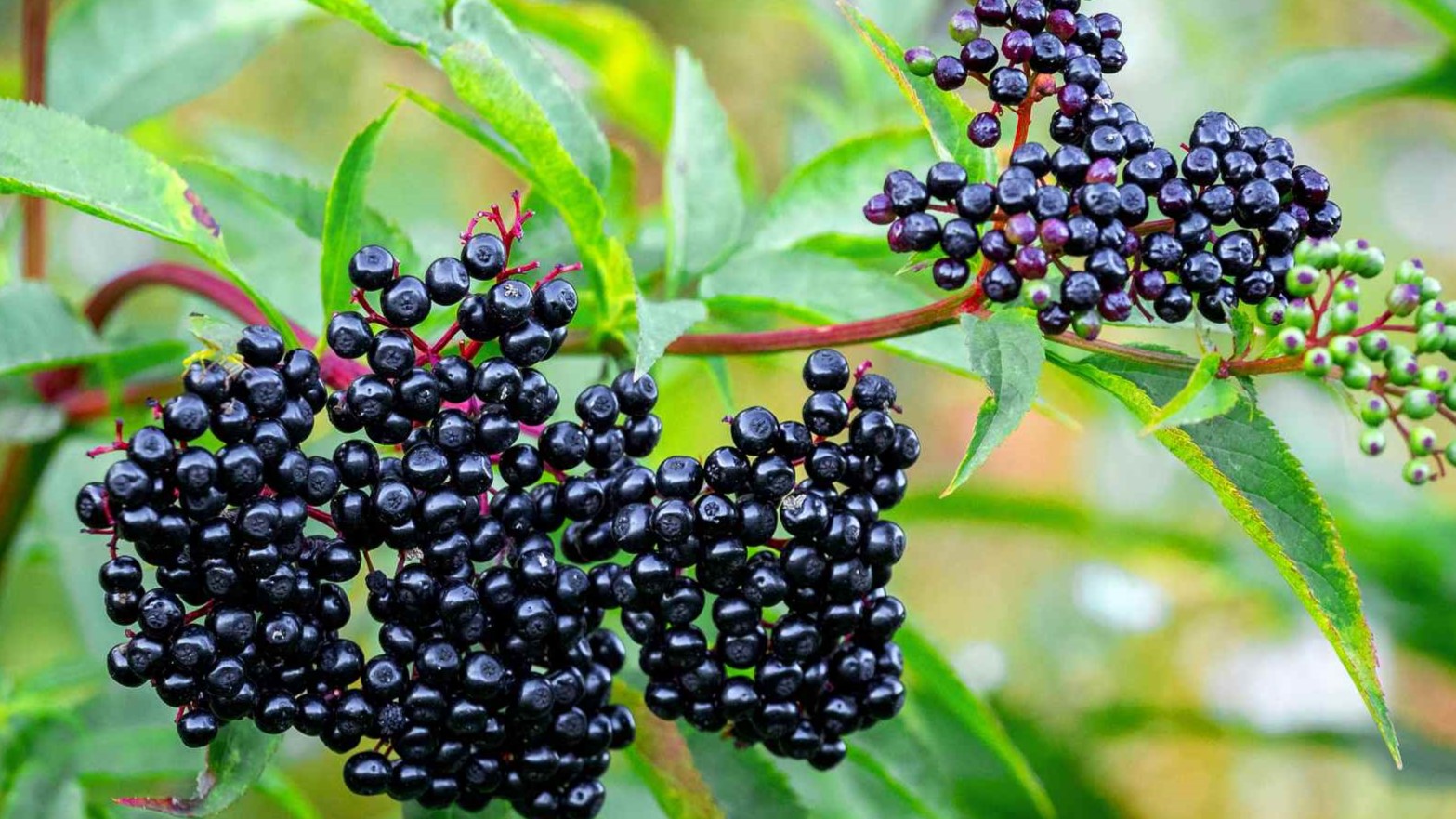
Elderberry for Immune Health: Anthocyanins, Antiviral Mechanisms and the RCT Evidence
Elderberry (Sambucus nigra) has one of the most substantiated clinical evidence bases of any botanical for immune support. Where many herbal immune supplements rely primarily on traditional use and in vitro data, elderberry has been tested in multiple randomised controlled trials in real-world infection scenarios — air travel, clinical flu, and controlled cold exposure — and has produced consistently positive results with large effect sizes. Understanding why requires looking at the specific mechanisms behind its anthocyanin-rich composition.
Active Compounds: Anthocyanins and Their Mechanisms
Elderberry fruit is extraordinarily rich in anthocyanins — primarily cyanidin-3-glucoside and cyanidin-3-sambubioside — at concentrations among the highest of any commonly consumed berry. These anthocyanins produce elderberry's immune effects through three distinct mechanisms:
- Viral hemagglutinin binding: Elderberry anthocyanins bind directly to the hemagglutinin (HA) glycoproteins on influenza virus surfaces — the proteins the virus uses to attach to and enter respiratory epithelial cells. By occupying these binding sites, anthocyanins physically block viral cell entry before infection can be established.
- Neuraminidase inhibition: Elderberry extracts inhibit neuraminidase — the enzyme that allows newly replicated viruses to escape infected cells and infect neighbouring cells. This is the same enzyme targeted by the antiviral drug oseltamivir (Tamiflu). Neuraminidase inhibition traps viruses at the surface of infected cells, limiting their spread.
- Cytokine stimulation: Elderberry stimulates production of cytokines including IL-1beta, TNF-alpha, IL-6, and IL-8 from monocytes — activating the innate immune response against the detected viral threat. This immunostimulatory effect is rapid (within hours) and supports the initial immune mobilisation against infection.
Research: Influenza RCT (Zakay-Rones et al., 2004)
The landmark double-blind RCT in 60 Norwegian patients with confirmed influenza A or B found that Sambucol elderberry syrup (4 tablespoons daily for 5 days) reduced flu symptom duration by an average of 4 days compared to placebo (4 days vs 8 days recovery). The elderberry group also required significantly less rescue medication. This remains one of the most cited botanical immune RCTs in the literature.
Research: Air Travel RCT (Tiralongo et al., 2016)
A double-blind RCT in 312 economy class passengers on long-haul flights from Australia found that elderberry extract supplementation (taken before, during, and after travel) significantly reduced cold incidence, total cold duration, and cold severity scores compared to placebo. The elderberry group accumulated 57 cold episode days vs 117 in the placebo group — a 51% reduction in total cold burden over the travel period. This study is particularly relevant because it demonstrates real-world effectiveness in the high-exposure, immune-stressing conditions of air travel.
Research: Meta-Analysis (Hawkins et al., 2019)
A meta-analysis of randomised controlled trials found elderberry supplementation produced a large effect size (Cohen's d = 1.717) on upper respiratory symptom reduction — substantially larger than most pharmaceutical interventions for cold symptoms. The analysis concluded elderberry supplementation substantially reduced upper respiratory symptoms and that the evidence quality was sufficient to support its clinical use.
Research: Secretory IgA and Mucosal Immunity
Secretory IgA (sIgA) is the primary antibody at mucosal surfaces — the respiratory and gastrointestinal epithelium where most infections are first established. Elderberry has been shown to stimulate sIgA production, strengthening the mucosal barrier against pathogen entry. This mechanism is distinct from the direct antiviral and cytokine effects and adds a preventive layer to elderberry's immune activity.
Research: Safety and the Cytokine Concern
Some sources have raised concern that elderberry's cytokine-stimulating activity could worsen cytokine storm in severe influenza. Current evidence does not support this concern: the RCT data shows clinical benefit without adverse events, and the cytokine stimulation produced by elderberry is of a different magnitude to the dysregulated cytokine storm seen in severe disease. The European Medicines Agency considers elderberry preparations safe at recommended doses for adults and children over 12.
How to Use Elderberry for Immune Support
- Form: Standardised extract (at least 15% anthocyanins) in syrup, capsule or gummy form. Sambucol is the brand used in the landmark RCTs.
- Preventive dose: 600-900mg extract daily during cold and flu season or periods of high exposure risk
- Acute dose: Double the preventive dose at first sign of infection — the antiviral mechanisms are most effective in the first 24-48 hours of infection
- Duration: Not intended for continuous year-round use — most appropriate seasonally or during high-risk periods
- Raw elderberries: Must be cooked — raw berries contain sambunigrin, a cyanogenic glycoside that causes nausea. All commercial preparations are heat-processed.
References & Further Reading
- Zakay-Rones Z, et al. (2004). Randomized study of the efficacy and safety of oral elderberry extract in the treatment of influenza A and B virus infections. Journal of International Medical Research, 32(2), 132–140.
- Tiralongo E, et al. (2016). Elderberry supplementation reduces cold duration and symptoms in air-travellers: A randomized, double-blind placebo-controlled clinical trial. Nutrients, 8(4), 182.
- Hawkins J, et al. (2019). Black elderberry (Sambucus nigra) supplementation effectively treats upper respiratory symptoms: A meta-analysis of randomized, controlled clinical trials. Complementary Therapies in Medicine, 42, 361–365.
- Roschek B, et al. (2009). Elderberry flavonoids bind to and prevent H1N1 infection in vitro. Phytochemistry, 70(10), 1255–1261.
- Barak V, et al. (2001). The effect of Sambucol, a black elderberry-based, natural product, on the production of human cytokines. European Cytokine Network, 12(2), 290–296.