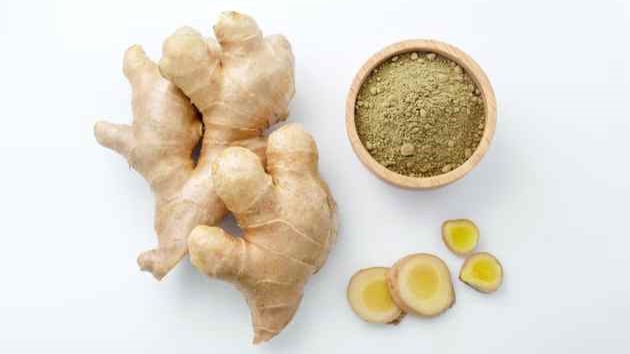
Ginger Root for Anti-Aging: Gingerols, Shogaols and the Longevity Research
Ginger (Zingiber officinale) is one of the most widely consumed spices in the world and one of the longest-used medicinal plants in recorded history. Its use in Ayurvedic and traditional Chinese medicine for inflammatory conditions, digestive disorders, and age-related decline has been practised for over 2,500 years. In the last two decades, the specific bioactive compounds responsible for these effects have been identified, their molecular targets mapped, and their efficacy assessed in human clinical trials. The anti-aging evidence is more substantial than most people realise.
The Bioactive Compounds: Gingerols, Shogaols and Paradols
Ginger's biological activity comes from a family of phenolic compounds collectively called gingeroids:
- Gingerols — the primary active compounds in fresh ginger, particularly 6-gingerol, 8-gingerol, and 10-gingerol. They are potent anti-inflammatory and antioxidant agents, inhibiting both COX and LOX enzyme pathways.
- Shogaols — formed from gingerols during drying and heat processing. 6-shogaol is approximately twice as potent as 6-gingerol in anti-inflammatory activity and has demonstrated stronger senolytic and neuroprotective properties. Dried ginger and standardised extracts are richer in shogaols than fresh ginger.
- Paradols — hydrogenated forms of shogaols with additional antioxidant and anti-tumour activity.
- Zingerone — formed during cooking, with antioxidant and anti-inflammatory properties and specific evidence for reducing age-related metabolic dysfunction.
This compound diversity means different preparations of ginger have different activity profiles. Fresh ginger is richest in gingerols; dried powder and extracts are richest in shogaols and paradols — and the most relevant form depends on the target mechanism.
Research: Inflammaging and NF-kB Inhibition
Chronic low-grade inflammation — inflammaging — is the central driver of biological aging, and ginger compounds target it through multiple pathways simultaneously:
- COX-2 inhibition: Gingerols and shogaols inhibit cyclooxygenase-2 (COX-2) — the inducible enzyme responsible for prostaglandin E2 synthesis in inflammatory tissue. This is mechanistically similar to NSAIDs (ibuprofen, naproxen) but without the gastrointestinal side effects at typical supplement doses.
- LOX inhibition: Ginger compounds also inhibit 5-lipoxygenase (LOX-5), blocking leukotriene synthesis — a second major inflammatory pathway that NSAIDs do not address. This dual COX/LOX inhibition makes ginger broader-spectrum as an anti-inflammatory than standard analgesics.
- NF-kB suppression: 6-shogaol directly inhibits the IKK complex, preventing NF-kB nuclear translocation and downstream transcription of IL-1beta, IL-6, TNF-alpha, and COX-2 — addressing inflammaging at the master regulatory level.
A meta-analysis of 16 RCTs found that ginger supplementation significantly reduced CRP and IL-6 — the two primary clinical biomarkers of chronic systemic inflammation — across diverse populations. The reductions were most pronounced in participants with elevated baseline inflammatory markers, which is typical of the aging population.
Research: Oxidative Stress
Gingerols and shogaols are potent antioxidants across multiple assay systems. Uniquely, 6-shogaol activates the Nrf2 pathway — the master transcription factor that upregulates the body's endogenous antioxidant defences including glutathione, superoxide dismutase, and catalase. This Nrf2 activation is particularly valuable for anti-aging because it amplifies the body's own antioxidant capacity rather than simply providing exogenous antioxidant molecules that are consumed and depleted.
A human RCT in patients with type 2 diabetes found that 2g ginger powder daily for 12 weeks significantly reduced malondialdehyde (MDA) — the primary biomarker of lipid peroxidation and oxidative damage — and increased superoxide dismutase activity compared to placebo. These are direct measures of reduced oxidative stress rather than in vitro antioxidant capacity.
Research: Blood Sugar and Glycation
Glycation — the non-enzymatic binding of glucose to proteins forming Advanced Glycation End-products (AGEs) — is one of the most direct biochemical links between metabolic health and accelerated aging. AGEs cross-link collagen, stiffen arterial walls, damage kidney tubules, and contribute to neurodegeneration. Controlling blood glucose is therefore directly anti-aging, not just metabolically important.
Ginger has demonstrated clinically meaningful blood glucose-lowering effects in multiple RCTs:
- A meta-analysis of 10 RCTs found ginger supplementation significantly reduced fasting blood glucose (mean reduction 19.45 mg/dL) and HbA1c (a measure of chronic glycation) compared to placebo.
- The mechanisms include GLUT-4 translocation enhancement (improving cellular glucose uptake independent of insulin), alpha-glucosidase inhibition (slowing carbohydrate digestion and postprandial glucose spikes), and AMPK activation (the same energy-sensing pathway targeted by metformin).
For anti-aging purposes, even modest postprandial glucose reduction in non-diabetic individuals meaningfully reduces the rate of AGE accumulation over years and decades.
Research: Cellular Senescence
6-shogaol has emerged as one of the more interesting natural compounds in senescence research. Cell culture studies have demonstrated that 6-shogaol selectively induces apoptosis in senescent cells while showing lower toxicity to healthy cells — the defining characteristic of a senolytic compound. The mechanism involves suppression of the Bcl-2 anti-apoptotic proteins that senescent cells upregulate to resist programmed death, combined with downregulation of the SASP (Senescence-Associated Secretory Phenotype) inflammatory signalling that senescent cells use to drive tissue-level inflammaging.
Human senolytic trials using ginger-derived compounds specifically have not yet been published as of early 2026, but 6-shogaol is being studied in the context of combination senolytic protocols alongside quercetin and fisetin. The anti-SASP activity is particularly noteworthy — even without direct senescent cell clearance, reducing SASP signalling attenuates the tissue damage that accumulating senescent cells cause.
Research: Brain Aging and Neuroprotection
Several ginger compounds cross the blood-brain barrier and demonstrate neuroprotective activity relevant to aging. 6-shogaol has been shown to reduce neuroinflammation, suppress microglial NF-kB activation, and inhibit amyloid-beta aggregation — three mechanisms directly relevant to Alzheimer's pathology. A double-blind RCT in middle-aged healthy women (Saenghong et al., 2012) found standardised ginger extract significantly improved working memory and cognitive processing speed compared to placebo — providing human clinical evidence for cognitive benefit.
Ginger also reduces acetylcholinesterase activity — the same enzyme targeted by Alzheimer's drugs like donepezil — increasing acetylcholine availability in neural synapses and supporting cognitive function in aging.
Ginger and the Gut-Aging Axis
The gut microbiome deteriorates with age — diversity decreases, beneficial species decline, and pro-inflammatory species increase. Ginger has demonstrated prebiotic-like activity, selectively supporting Lactobacillus and Bifidobacterium populations. It also accelerates gastric emptying, reduces intestinal permeability (leaky gut), and suppresses intestinal inflammation — all aspects of gut function that deteriorate with age and contribute to systemic inflammatory burden.
How to Use Ginger for Anti-Aging
Clinical trials have used doses of 1–3g ginger powder daily, with most positive outcomes at 1.5–2g. Key considerations:
- Standardised extract vs whole powder: Extracts standardised to 5% gingerols provide more consistent dosing; whole powder at 1.5–2g daily is more economical and has the broadest evidence base
- Fresh vs dried: Fresh ginger is richest in gingerols (anti-inflammatory); dried powder and extracts are richest in shogaols (more potent anti-inflammatory, senolytic, neuroprotective). For anti-aging purposes, dried ginger or standardised extract is preferable
- Timing: Take with food to minimise any gastrointestinal sensitivity, particularly at higher doses
- Synergy with turmeric: Ginger and turmeric share complementary anti-inflammatory pathways — both inhibit NF-kB and LOX-5, but through different upstream mechanisms. Combining them produces additive rather than redundant effects, and piperine (from black pepper) improves both turmeric and ginger compound absorption
Safety
Ginger is well tolerated at typical supplement doses. Mild gastrointestinal effects (heartburn, reflux) are occasionally reported above 2g daily in sensitive individuals. Important interactions:
- Anticoagulants: Ginger has mild antiplatelet activity — those on warfarin, aspirin, or other blood thinners should monitor and discuss with their prescriber
- Diabetes medication: Ginger's blood glucose-lowering effect may potentiate insulin and metformin — blood glucose monitoring is advisable when combining
- Pregnancy: Ginger at culinary doses is safe and well-evidenced for nausea in pregnancy; high supplemental doses above 1g should be discussed with a midwife or obstetrician
References & Further Reading
- Mashhadi NS, et al. (2013). Anti-oxidative and anti-inflammatory effects of ginger in health and physical activity. International Journal of Preventive Medicine, 4(Suppl 1), S36–S42.
- Mozaffari-Khosravi H, et al. (2014). The effect of ginger powder supplementation on insulin resistance and glycemic indices in patients with type 2 diabetes. Complementary Therapies in Medicine, 22(1), 9–16.
- Zeng GF, et al. (2013). Protective effects of ginger root extract on Alzheimer disease-induced behavioral dysfunction in rats. Rejuvenation Research, 16(2), 124–133.
- Saenghong N, et al. (2012). Zingiber officinale improves cognitive function of the middle-aged healthy women. Evidence-Based Complementary and Alternative Medicine, 2012, 383062.
- Arablou T, et al. (2014). The effect of ginger consumption on glycemic status, lipid profile and some inflammatory markers in patients with type 2 diabetes. International Journal of Food Sciences and Nutrition, 65(4), 515–520.
- Kim MK, et al. (2017). 6-Shogaol inhibits the release of inflammatory mediators in lipopolysaccharide-stimulated mouse macrophages. Molecules, 22(9), 1493.
- Nicoll R & Henein MY. (2009). Ginger (Zingiber officinale Roscoe): A hot remedy for cardiovascular disease? International Journal of Cardiology, 131(3), 408–409.