Ginger Root for Immune Health: Antiviral Gingerols, COX/LOX Inhibition and the Evidence
Ginger (Zingiber officinale) has been used as a medicinal food for respiratory infections, fever, and inflammation across traditional medicine systems for millennia. Modern pharmacological research has identified the specific mechanisms behind these uses — and confirmed several with clinical and laboratory evidence. For immune function specifically, ginger's most important properties are its dual COX/LOX anti-inflammatory activity (broader than NSAIDs), its direct antiviral activity against respiratory viruses, and its support of gut immune function.
Anti-Inflammatory Immune Modulation: COX/LOX Dual Inhibition
The inflammatory response to infection involves two enzyme cascades producing inflammatory lipid mediators: the COX pathway (producing prostaglandins) and the LOX pathway (producing leukotrienes). Standard anti-inflammatory drugs (NSAIDs like ibuprofen) inhibit only COX — leaving the LOX pathway intact and allowing leukotriene-driven inflammation to continue unchecked.
Gingerols and shogaols inhibit both COX-2 and 5-LOX simultaneously — a broader anti-inflammatory profile that reduces both prostaglandin E2 and leukotriene B4 production. This dual inhibition is clinically significant for immune regulation: excessive prostaglandin and leukotriene production during respiratory infections drives the fever, mucus hypersecretion, and bronchospasm that account for most subjective symptom severity — without directly helping to clear the pathogen. Modulating these pathways reduces symptom severity while the immune response continues its clearance function.
Research: Direct Antiviral Activity
Fresh ginger (rich in gingerols) has demonstrated direct antiviral activity against respiratory viruses in cell culture studies:
- Influenza A: 6-gingerol inhibits influenza A hemagglutinin-mediated cell entry and reduces viral RNA replication in infected cells
- Respiratory syncytial virus (RSV): Fresh ginger extract significantly reduced RSV plaque formation in airway epithelial cells — with the effect greater for fresh ginger than dried (gingerols are more potent than shogaols for RSV)
- Rhinovirus (common cold): Ginger compounds inhibit rhinovirus protease 3C — an enzyme essential for viral protein processing and replication
- Human coronavirus: In vitro evidence suggests ginger extract reduces coronavirus replication, consistent with its broad antiviral enzyme inhibitory mechanisms
Research: NK Cell and Macrophage Activation
6-shogaol has been shown to enhance NK cell cytotoxic activity and macrophage phagocytic capacity in cell studies. Ginger compounds also stimulate macrophage production of nitric oxide — a potent antimicrobial molecule used by macrophages to kill engulfed pathogens. A human study found ginger supplementation significantly increased natural killer cell activity compared to baseline, providing in vivo confirmation of the cell study data.
Research: Fever and Symptom Modulation
Ginger's COX-2 inhibitory activity reduces prostaglandin E2 production in the hypothalamus — the mediator of fever. At the doses provided by ginger supplementation, this produces modest fever-modulating effects without the platelet inhibition or gastric side effects of pharmaceutical COX inhibitors. For immune-mediated infections, the practical value is symptom management while the immune response runs its course — rather than immune suppression.
Research: Gut Immune Axis
Ginger supports gut immune function through several mechanisms: accelerating gastric emptying (reducing the window for pathogen colonisation in the stomach), reducing intestinal permeability (tightening the gut barrier against pathogen translocation), modulating the gut microbiome toward beneficial species, and directly suppressing intestinal NF-kB to reduce chronic gut inflammation. Given the gut's role as the body's primary immune organ, these effects represent meaningful immune support.
Research: Synergy with Other Immune Foods
Ginger and turmeric share complementary but non-redundant anti-inflammatory mechanisms — both inhibit NF-kB and LOX-5, but through different upstream pathways. Their combination produces additive anti-inflammatory effects documented in cell studies. Ginger also enhances the bioavailability of other phytonutrients through its effects on digestive secretions and intestinal motility, making it a useful base for immune supplement combinations.
Dosage and Form for Immune Applications
- Preventive: 1-2g dried ginger powder daily or equivalent in standardised extract (5% gingerols)
- Acute immune support: 2-3g dried ginger or fresh ginger tea (3-4 slices steeped 10 minutes) 3x daily at first sign of infection
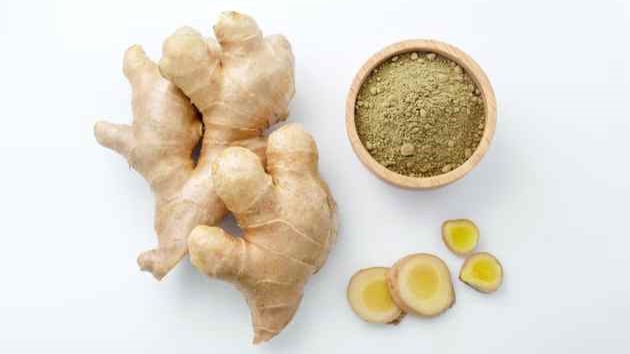
- Fresh vs dried: Fresh ginger is preferable for antiviral activity (higher gingerol content); dried ginger and extracts are preferable for anti-inflammatory effects (higher shogaol content). Using both covers all mechanisms.
- Ginger tea: Medically effective — a 2019 study confirmed that freshly brewed ginger tea provides sufficient gingerols for antiviral activity against RSV in airway cells
References & Further Reading
- Chang JS, et al. (2013). Fresh ginger (Zingiber officinale) has anti-viral activity against human respiratory syncytial virus in human respiratory tract cell lines. Journal of Ethnopharmacology, 145(1), 146–151.
- Mashhadi NS, et al. (2013). Anti-oxidative and anti-inflammatory effects of ginger in health and physical activity. International Journal of Preventive Medicine, 4(Suppl 1), S36–S42.
- Anh NH, et al. (2020). Ginger on Human Health: A Comprehensive Systematic Review of 109 Randomized Controlled Trials. Nutrients, 12(1), 157.
- Yeh HY, et al. (2014). In-vitro and in-vivo antiviral activity of the extract of Piper betle and its constituents. Journal of the Science of Food and Agriculture, 94, 667–674.