Forest Bathing (Shinrin-Yoku): What the Research Actually Shows About Nature and Stress
What Forest Bathing Actually Is
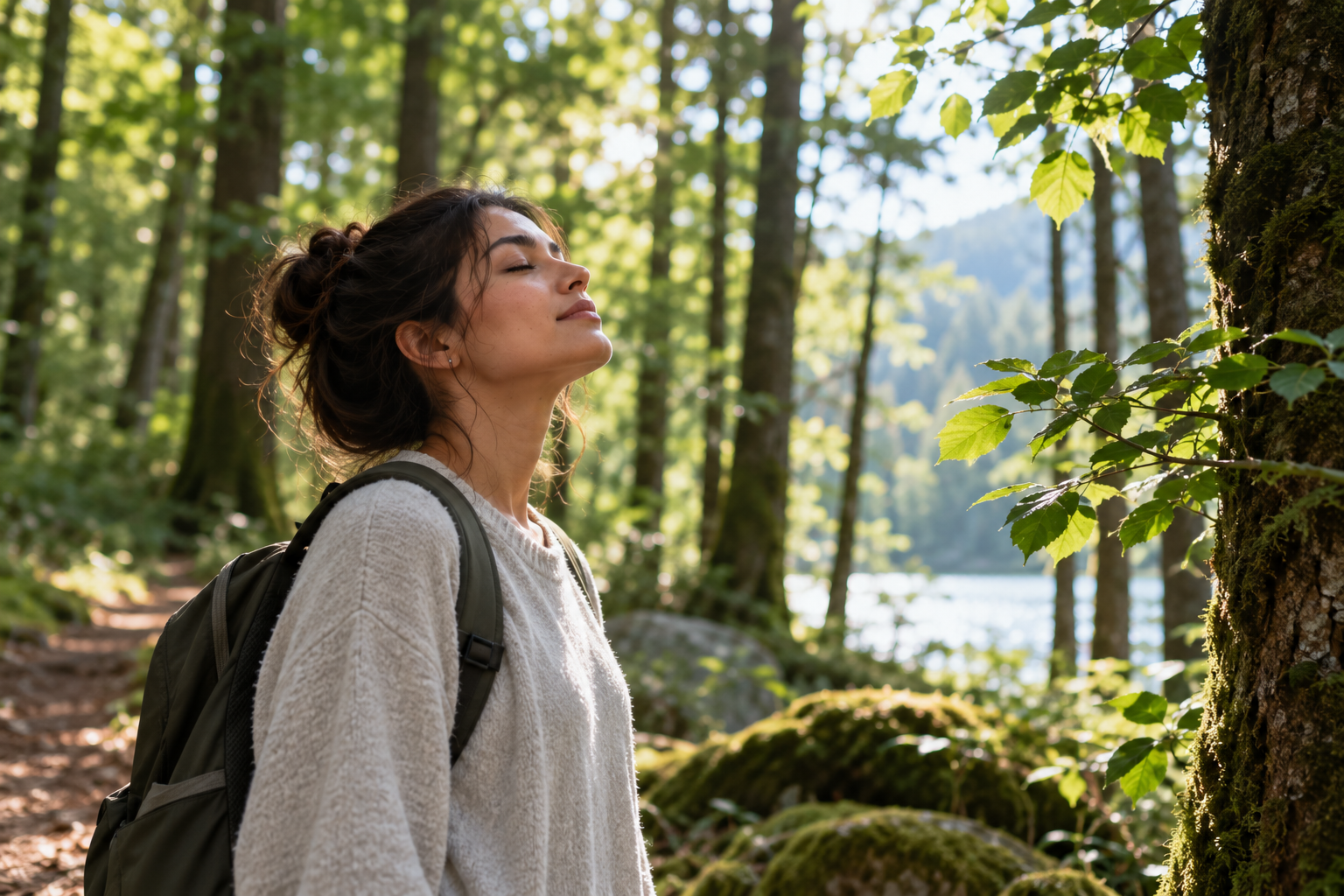
Shinrin-yoku, Japanese for "forest bathing," is the practice of spending unhurried, deliberate time in a forest or wooded area -- walking slowly, sitting, using your senses -- rather than exercising or hiking with a destination in mind. It originated in Japan in the 1980s as a public-health initiative, not a spiritual practice.
What a Meta-Analysis Found
A systematic review and meta-analysis published in the International Journal of Biometeorology, drawing on 8 studies after screening 971 articles, found that salivary cortisol -- a standard stress biomarker -- was significantly lower in forest settings compared with urban environments, both before and after time spent there.
An Honest Caveat From the Researchers
The same review noted that expectation and placebo effects likely play a real role in the results, and recommended more research given the relatively small number of available studies -- a reasonable, honest caveat rather than a reason to dismiss the finding entirely.
Why It Might Work
Candidate mechanisms include reduced sensory and cognitive load compared with urban environments, exposure to natural light and green space linked to mood benefits in other research, and simply the unhurried pacing of the practice itself, similar in effect to other slow, deliberate relaxation techniques.
How to Try It Without Overcomplicating It
You don't need an officially designated forest-bathing trail -- a slow, phone-free 20-30 minute walk in any park or wooded area, paying deliberate attention to what you can see, hear and smell rather than power-walking through it, captures the core of the practice.