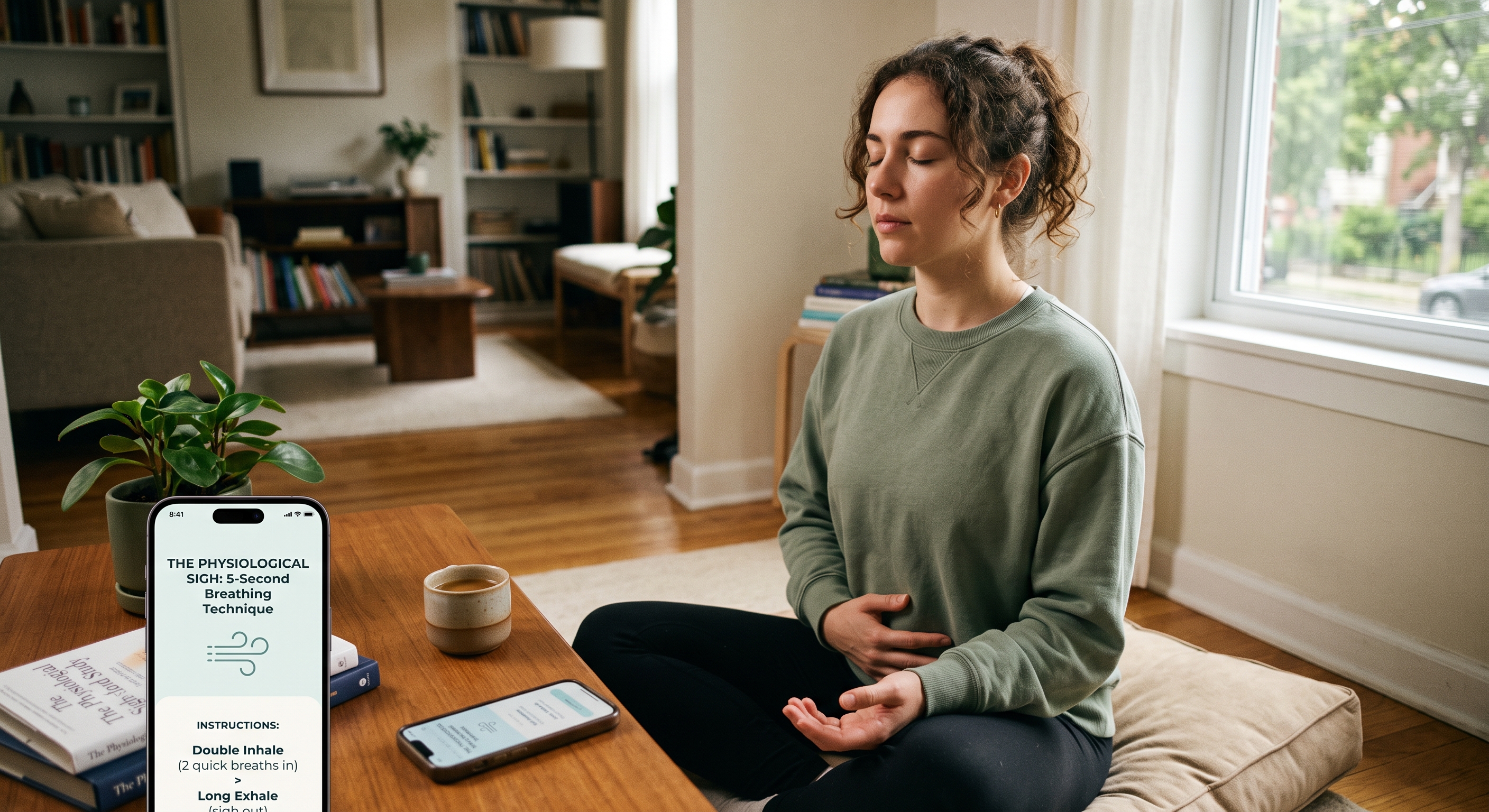
The Physiological Sigh: The 5-Second Breathing Technique Stanford Researchers Found Beats Meditation for Mood
What the Study Actually Tested
A randomized controlled trial published in Cell Reports Medicine in 2023 followed 111 healthy adults over one month, each doing a five-minute daily practice: one of three breathing techniques, or mindfulness meditation as the comparison group.
Breathing Beat Meditation on Mood
All three breathing groups improved positive mood more than the meditation group -- about a third more improvement on the study's mood scale (1.91 vs 1.22 points). Anxiety dropped across all four groups, but the breathing techniques edged out meditation specifically on daily mood.
Cyclic Sighing Was the Standout
Among the three breathing patterns, "cyclic sighing" -- two inhales through the nose followed by one long, slow exhale through the mouth -- produced the biggest gains, and was the only technique that measurably lowered participants' resting breathing rate over the month, suggesting a lasting physiological effect rather than just a short-term feeling.
How to Do a Physiological Sigh
Take a normal inhale through your nose, then a second, shorter "top-up" inhale on top of it, then exhale slowly and fully through your mouth until your lungs feel empty. Repeat for one to five minutes. It works as a quick reset in the moment (before a stressful meeting, after a tense conversation) and as a daily five-minute practice.
Why It Works
The extended exhale activates the parasympathetic ("rest and digest") side of the nervous system more directly than a slow, balanced breath does -- which is consistent with why cyclic sighing outperformed the other techniques in the study.