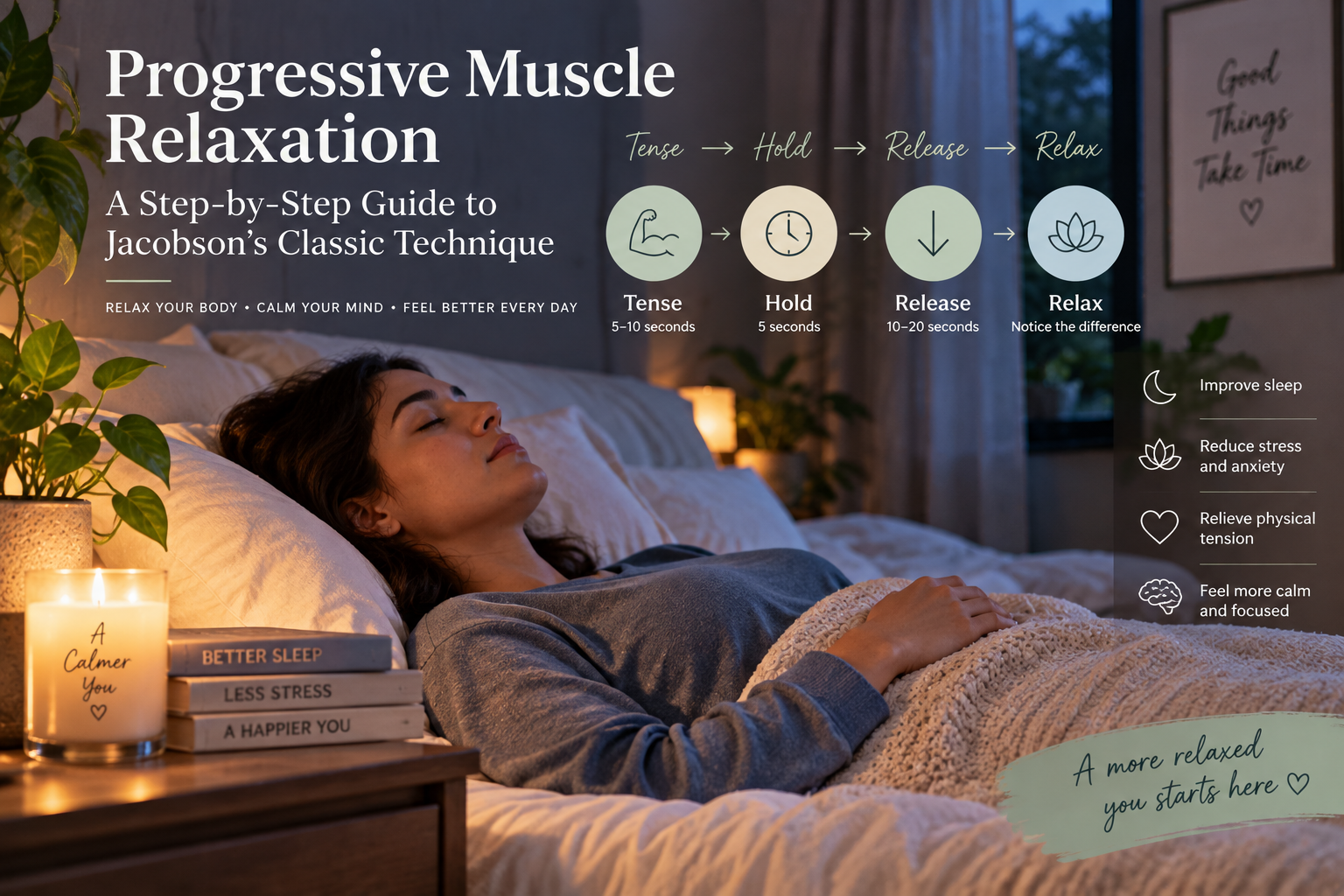
Progressive Muscle Relaxation: A Step-by-Step Guide to Jacobson's Classic Technique
What Progressive Muscle Relaxation Is
Progressive muscle relaxation (PMR) was developed by physician Edmund Jacobson in the 1930s and involves deliberately tensing, then releasing, each major muscle group in sequence -- the contrast between tension and release is what produces the relaxation response, rather than trying to relax directly.
What the Research Shows
Systematic reviews of PMR for stress, anxiety and depression have found consistent, evidence-supported reductions in self-reported stress and anxiety symptoms, making it one of the more established non-drug relaxation techniques alongside breathing exercises and guided imagery.
How to Actually Do It
Starting at your feet (or your face, some versions run the other direction), tense each muscle group hard for about five seconds, then release completely and notice the difference for ten to fifteen seconds before moving to the next group -- feet, calves, thighs, glutes, stomach, hands, arms, shoulders, face -- working through the whole body over ten to twenty minutes.
When It's Most Useful
PMR is particularly effective for stress that shows up as physical tension -- a tight jaw, hunched shoulders, a clenched stomach -- since it directly addresses the muscular side of the stress response, which breathing techniques alone don't always reach.
A Practical Way to Start
A full-body sequence before bed, or a shortened version (shoulders, hands, face) at a desk during a stressful workday, are both reasonable starting points -- most guided audio versions run 10-20 minutes and are easy to follow the first few times.