Weighted Blankets for Anxiehe Rty: What tesearch Actually Says
The Idea Behind Them
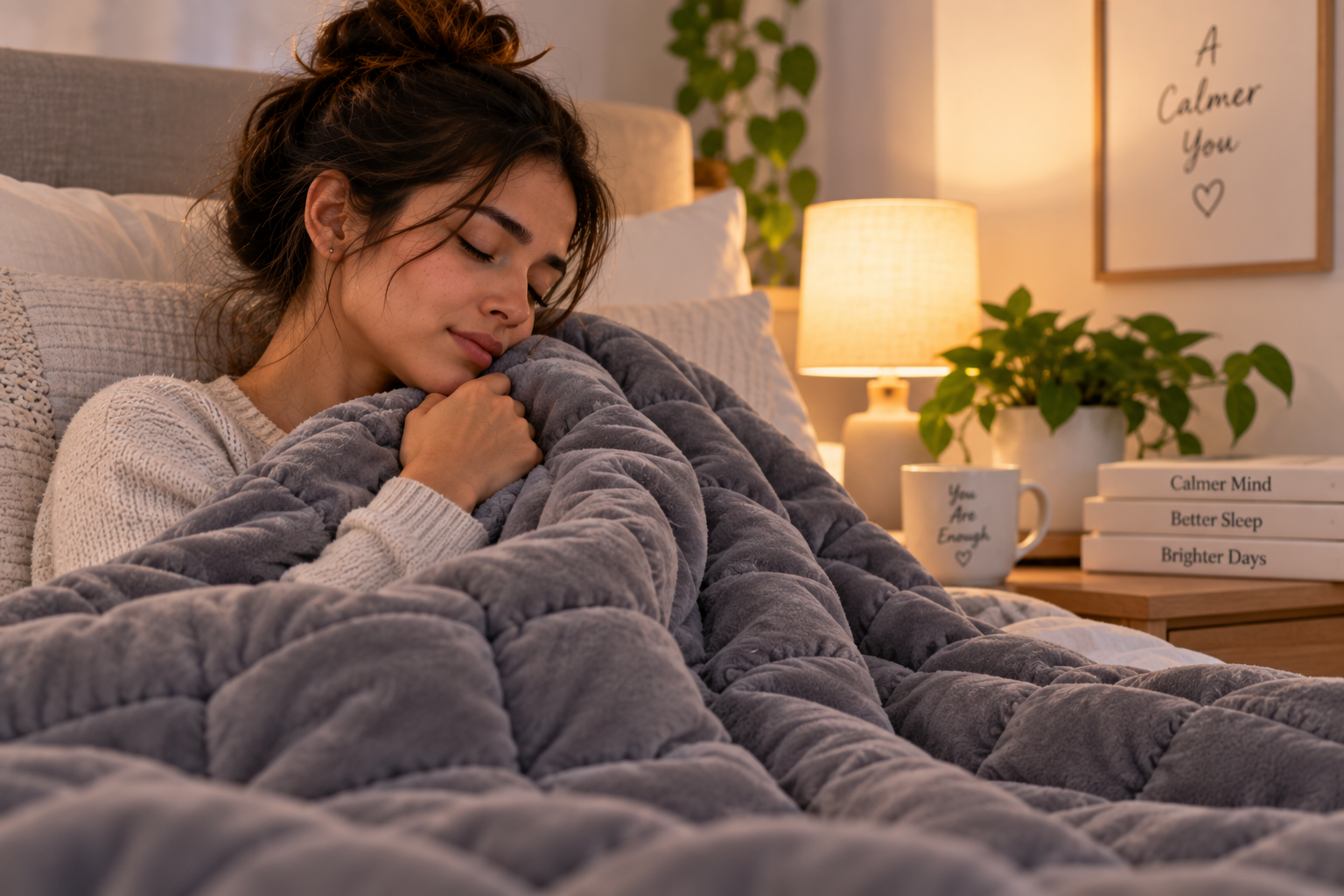
Weighted blankets use deep pressure -- distributed weight across the body, usually 5-15% of body weight -- based on the theory that firm, even pressure has a calming effect on the nervous system, similar in concept to a firm hug or swaddling.
What Systematic Reviews Have Found
Recent systematic reviews and meta-analyses of randomized controlled trials on weighted blankets for anxiety and sleep-related symptoms in people with mental health conditions have generally found modest, positive effects on measures like self-reported anxiety and sleep quality -- real, but not dramatic, and the researchers behind these reviews consistently note that the overall evidence base is still fairly small.
Why "Modest" Matters Here
Weighted blankets are reasonably framed as a comfort tool that may help some people relax, similar in evidence strength to other passive comfort measures -- not as a clinically proven anxiety treatment on the level of therapy or medication, despite how some marketing around them is worded.
Who Tends to Report the Most Benefit
Anecdotally and in some smaller studies, people who specifically respond well to deep-pressure or firm-touch sensations (a group that overlaps with some sensory-processing differences) report more noticeable benefit than the general population -- worth knowing if you're deciding whether to try one.
A Practical Note on Safety
Choosing an appropriate weight (commonly around 10% of body weight) and avoiding weighted blankets for young children or anyone who couldn't safely remove it themselves are standard, sensible safety precautions regardless of the anxiety-related benefit.