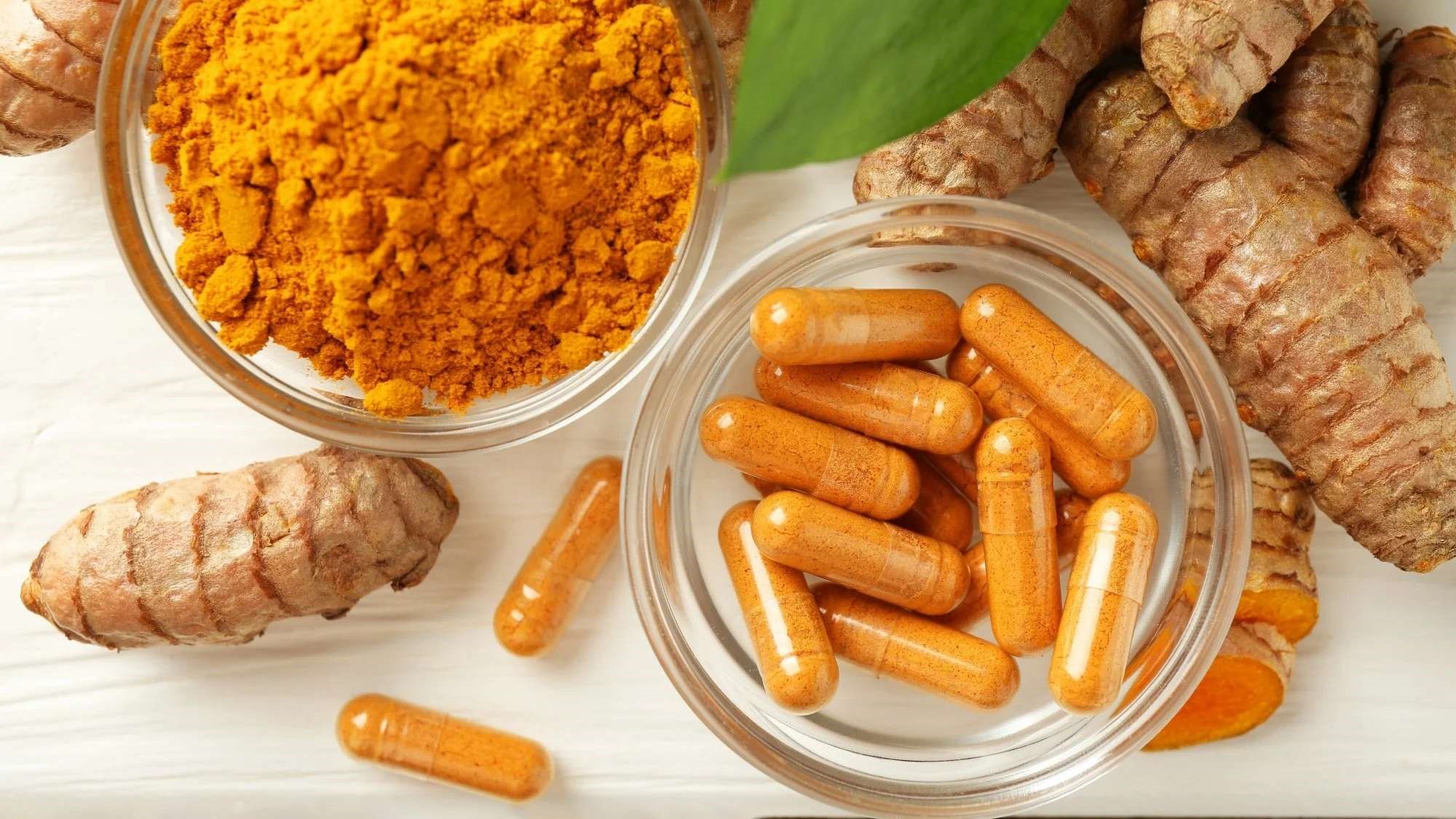
Turmeric and Curcumin for Cancer Prevention: NF-kB, Apoptosis and the Clinical Evidence
Curcumin has attracted more cancer research attention than almost any other dietary compound — with over 3,000 published papers examining its activity across more than 100 cancer cell types and multiple human clinical trials. The enthusiasm is grounded in genuine pharmacological breadth: curcumin simultaneously inhibits several of the core molecular pathways that allow cancer cells to survive, proliferate, resist treatment, and spread. This article reviews the cancer-specific evidence — what curcumin does at the molecular level, what the human trials show, and the critical bioavailability issue that determines whether any of it translates to real-world benefit.
Mechanism 1: NF-kB Inhibition — Removing the Tumour Survival Signal
NF-kB is a transcription factor that cancer cells hijack to suppress their own programmed death. Normally, NF-kB activates transiently in response to stress then switches off. In many cancers — particularly colorectal, breast, prostate, and pancreatic — NF-kB is constitutively active, continuously producing anti-apoptotic proteins (Bcl-2, Bcl-xL, survivin) that block the cell death signals triggered by DNA damage and cellular stress. Curcumin inhibits the IKK complex that activates NF-kB, reducing anti-apoptotic protein expression and restoring cancer cells' sensitivity to programmed death signals.
Mechanism 2: Apoptosis Induction
Curcumin induces apoptosis (programmed cell death) in cancer cells through multiple pathways: activating the intrinsic (mitochondrial) apoptosis pathway through cytochrome c release, upregulating pro-apoptotic proteins Bax and Bad, downregulating anti-apoptotic Bcl-2 and Bcl-xL, and activating caspase cascades that execute cell death. Critically, these pro-apoptotic effects are selective — curcumin induces apoptosis in cancer cells at concentrations that do not significantly affect normal cells, attributed to cancer cells' altered redox status and NF-kB dependence that makes them more vulnerable to curcumin's mechanisms.
Mechanism 3: Anti-Angiogenesis
Tumours require new blood vessel formation (angiogenesis) to grow beyond 1-2mm. VEGF (vascular endothelial growth factor) is the primary pro-angiogenic signal, and its suppression starves tumours of their blood supply. Curcumin downregulates VEGF expression through NF-kB and HIF-1alpha inhibition — multiple cell studies have confirmed significant reductions in VEGF production and endothelial cell tube formation in the presence of curcumin.
Mechanism 4: Cell Cycle Arrest
Curcumin arrests cancer cells at multiple cell cycle checkpoints — particularly the G1/S and G2/M transitions — by downregulating cyclins (D1, E, B1) and CDKs (cyclin-dependent kinases) that drive cell cycle progression, and upregulating CDK inhibitors p21 and p27. This prevents cancer cells from completing division, reducing tumour growth rate and giving apoptosis signals time to act.
Mechanism 5: Nrf2 Activation and Carcinogen Detoxification
Curcumin activates Nrf2 — the master antioxidant and detoxification transcription factor — upregulating phase II detoxification enzymes including glutathione S-transferases, NAD(P)H quinone oxidoreductase 1 (NQO1), and UDP-glucuronosyltransferases. These enzymes conjugate and eliminate carcinogens before they can damage DNA — addressing cancer prevention at the initiating mutation stage rather than after malignant transformation.
Research: Phase II Colorectal Cancer Trials
The strongest human clinical evidence for curcumin in cancer is in colorectal cancer prevention. A Phase II RCT (Carroll et al., 2011) in patients with familial adenomatous polyposis (FAP) — a genetic condition causing certain colorectal cancer development — found that curcumin combined with quercetin significantly reduced both the number and size of adenomatous polyps (colorectal cancer precursors) compared to baseline. A separate Phase II trial found bioavailable curcumin reduced colorectal aberrant crypt foci — another precancerous marker — in patients at elevated colorectal cancer risk.
The colorectal focus is not coincidental: the colon achieves higher curcumin concentrations than any other tissue because curcumin is poorly absorbed from the gut and therefore accumulates there — making colorectal cancer prevention the application where standard curcumin most plausibly achieves therapeutic concentrations without requiring enhanced bioavailability formulations.
Research: Pancreatic Cancer Phase II
Pancreatic cancer is one of the most treatment-resistant cancers, with NF-kB constitutively active in over 70% of cases. A Phase II trial (Dhillon et al., 2008) in 25 patients with advanced pancreatic cancer found oral curcumin was well tolerated and produced biological activity — two patients showed clinical benefit including one remarkable case of brief but dramatic tumour regression. While the trial was small and uncontrolled, it established proof-of-concept for curcumin activity in one of the most treatment-refractory cancers.
The Bioavailability Problem for Cancer Prevention
Standard curcumin's poor bioavailability — rapid conjugation and excretion limiting systemic tissue concentrations — is less of a barrier for colorectal cancer prevention (where local gut concentrations matter) than for other cancer sites where systemic delivery is required. For systemic cancer prevention use, enhanced formulations are essential:
- Piperine (20mg BioPerine): 2,000% bioavailability increase — the most accessible enhancement for general prevention use
- Theracurmin: 27x better bioavailability — used in human cognitive and cancer biomarker trials
- Meriva phytosome: 29x better — strong evidence base for anti-inflammatory applications
- Longvida: Specifically designed for blood-brain barrier crossing — relevant for brain tumour prevention research
Dosage for Cancer Prevention
For colorectal cancer prevention with standard extract: 1-2g curcuminoids daily with piperine and fat. For systemic cancer prevention with enhanced formulations: follow product-specific dosing (Theracurmin 90-180mg, Meriva 500-1000mg). Always take with fat — curcumin is highly lipophilic and absorption increases substantially with co-ingested dietary fat.
References & Further Reading
- Dhillon N, et al. (2008). Phase II trial of curcumin in patients with advanced pancreatic cancer. Clinical Cancer Research, 14(14), 4491–4499.
- Carroll RE, et al. (2011). Phase IIa clinical trial of curcumin for the prevention of colorectal neoplasia. Cancer Prevention Research, 4(3), 354–364.
- Aggarwal BB, et al. (2006). Curcumin: an orally bioavailable blocker of TNF and other pro-inflammatory biomarkers. British Journal of Pharmacology, 169(8), 1672–1692.
- Shoba G, et al. (1998). Influence of piperine on the pharmacokinetics of curcumin. Planta Medica, 64(4), 353–356.
- Kunnumakkara AB, et al. (2017). Curcumin, the golden nutraceutical: multitargeting for multiple chronic diseases. British Journal of Pharmacology, 174(11), 1325–1348.