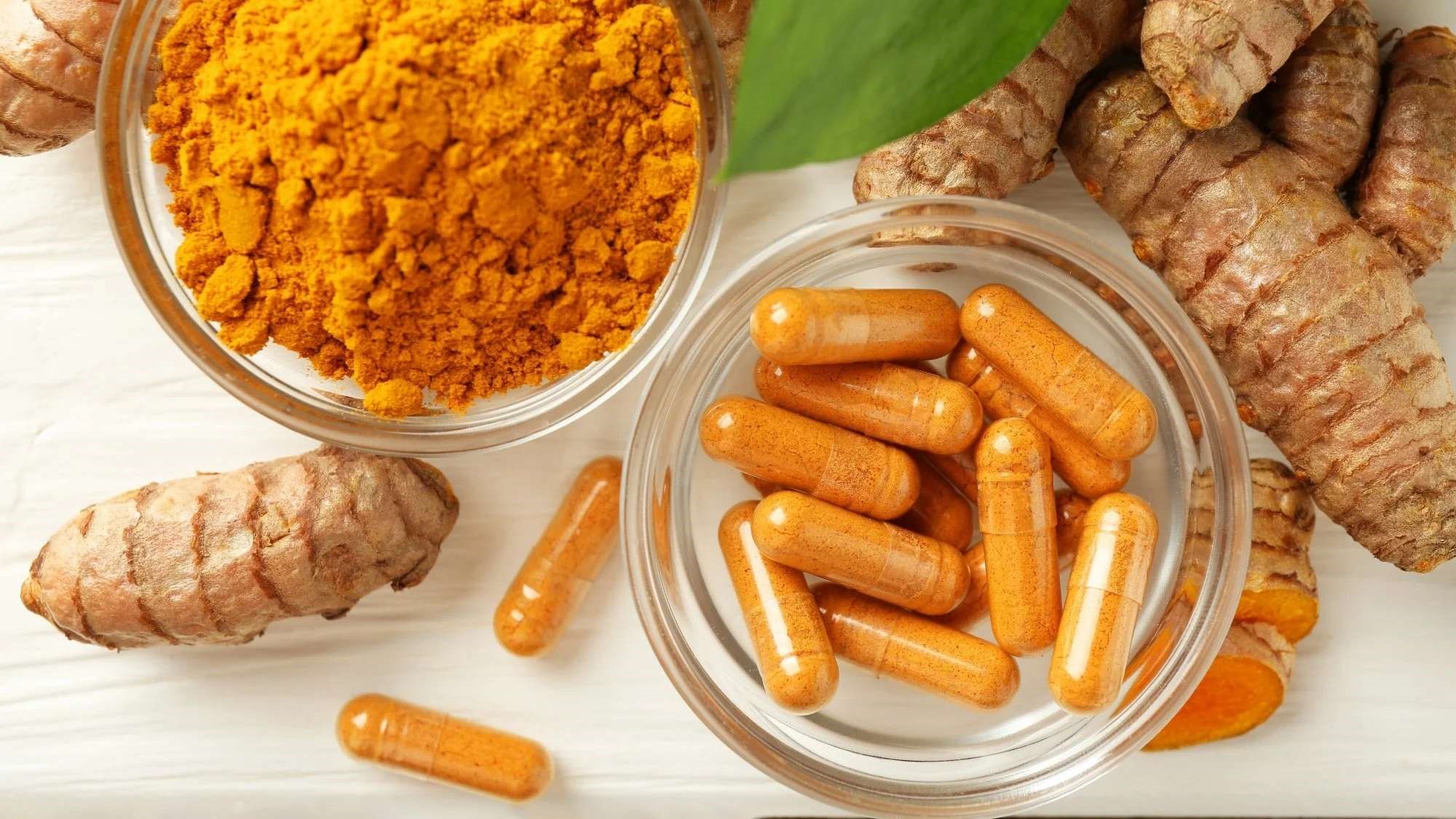
Turmeric and Curcumin for Immune Health: NF-kB, Antiviral Activity and the Clinical Evidence
Curcumin's immune relevance operates at a level distinct from most immune supplements. Where elderberry and spirulina primarily stimulate immune activity, curcumin primarily regulates it — suppressing the chronic inflammatory overactivation that paradoxically impairs immune function, while preserving and supporting the acute response needed for pathogen clearance. This immune-modulating rather than simply immune-stimulating profile is particularly valuable for older adults, where chronic inflammaging suppresses adaptive immune responsiveness even as the inflammatory background is elevated.
NF-kB and the Inflammaging-Immune Connection
Chronic NF-kB activation — the driver of inflammaging — directly impairs immune function in multiple ways: it exhausts immune cell energy reserves through constant cytokine production, promotes T cell senescence, suppresses NK cell activity, and creates an inflammatory environment that interferes with normal lymphocyte trafficking and antigen presentation. By inhibiting NF-kB, curcumin reduces this chronic inflammatory drain on immune resources — allowing immune cells to respond more vigorously and efficiently to genuine threats.
A meta-analysis of 15 RCTs confirmed curcumin supplementation significantly reduces CRP, IL-6, and TNF-alpha in human subjects. The clinical implication is that curcumin-mediated reduction of chronic inflammation frees immune capacity for adaptive responses — an indirect but mechanistically important immune benefit.
Research: Direct Antiviral Activity
Beyond immunomodulation, curcumin has demonstrated direct antiviral activity against multiple clinically relevant viruses:
- Influenza: Curcumin inhibits influenza virus replication by blocking hemagglutinin-mediated cell entry and inhibiting viral RNA-dependent RNA polymerase — the enzyme responsible for viral genome replication
- Adenovirus: Curcumin disrupts adenovirus protein capsid assembly, reducing infectious viral particle production
- Herpes simplex virus: Curcumin inhibits HSV-1 and HSV-2 replication and reduces viral shedding in cell culture models
- Respiratory syncytial virus (RSV): Curcumin has shown significant RSV inhibition in cell studies, consistent with its broader antiviral mechanism of membrane disruption and viral enzyme inhibition
Research: Macrophage and Neutrophil Function
Macrophages are the primary phagocytic cells of the innate immune system — engulfing and destroying pathogens, presenting antigens to T cells, and coordinating the inflammatory response. Curcumin has complex, context-dependent effects on macrophage function: it suppresses pro-inflammatory M1 macrophage cytokine production (reducing inflammatory damage) while preserving or enhancing M2 macrophage phagocytic and tissue-repair functions. This macrophage polarisation modulation improves the quality of the immune response without compromising its magnitude.
Research: T Cell and Th1/Th2 Balance
Curcumin has been shown to promote Th1 immune polarisation — the cell-mediated immunity essential for viral and intracellular bacterial clearance — while moderating excessive Th2 responses associated with allergic disease. This Th1-promoting effect is mediated through IL-12 upregulation and IL-4 suppression. A clinical study in patients with allergic asthma found curcumin supplementation significantly improved Th1/Th2 balance and reduced symptom scores — demonstrating clinically meaningful immune regulatory effects.
Research: Gut Immune Support
Curcumin reduces intestinal inflammation, supports gut barrier integrity by upregulating tight junction proteins, and modulates the gut microbiome — increasing beneficial species including Lactobacillus and Bifidobacterium while reducing pro-inflammatory Proteobacteria. Given that the gut houses 70-80% of all immune cells, curcumin's gut effects represent a significant additional immune mechanism beyond its direct immunomodulatory activity.
The Bioavailability Prerequisite
Standard curcumin powder has very poor bioavailability — most is not absorbed and therefore cannot reach immune cells in therapeutically relevant concentrations. For immune applications, use curcumin with piperine (20mg BioPerine increases bioavailability approximately 2000%), phytosome (Meriva), or liposomal formulations. Plain turmeric powder at culinary doses delivers negligible systemic curcumin.
Dosage
- Maintenance immune support: 500mg curcuminoids daily with piperine, taken with a fat-containing meal
- Active immune support: 1000mg curcuminoids daily during periods of higher infection risk or acute illness
- Synergy: Curcumin pairs particularly well with ginger (complementary anti-inflammatory pathways), elderberry (distinct antiviral mechanisms), and vitamin D (immune regulatory synergy)
References & Further Reading
- Sahebkar A, et al. (2016). Effect of curcuminoids on oxidative stress: A systematic review and meta-analysis. Journal of Functional Foods, 18, 898–909.
- Chen DY, et al. (2010). Curcumin inhibits influenza virus infection and haemagglutination activity. Food Chemistry, 119(4), 1346–1351.
- Moghadamtousi SZ, et al. (2014). A review on antibacterial, antiviral, and antifungal activity of curcumin. BioMed Research International, 2014, 186864.
- Labban L. (2014). Medicinal and pharmacological properties of Turmeric (Curcuma longa): A review. International Journal of Pharmacy and Biomedical Sciences, 5(1), 17–23.
- Shoba G, et al. (1998). Influence of piperine on the pharmacokinetics of curcumin. Planta Medica, 64(4), 353–356.