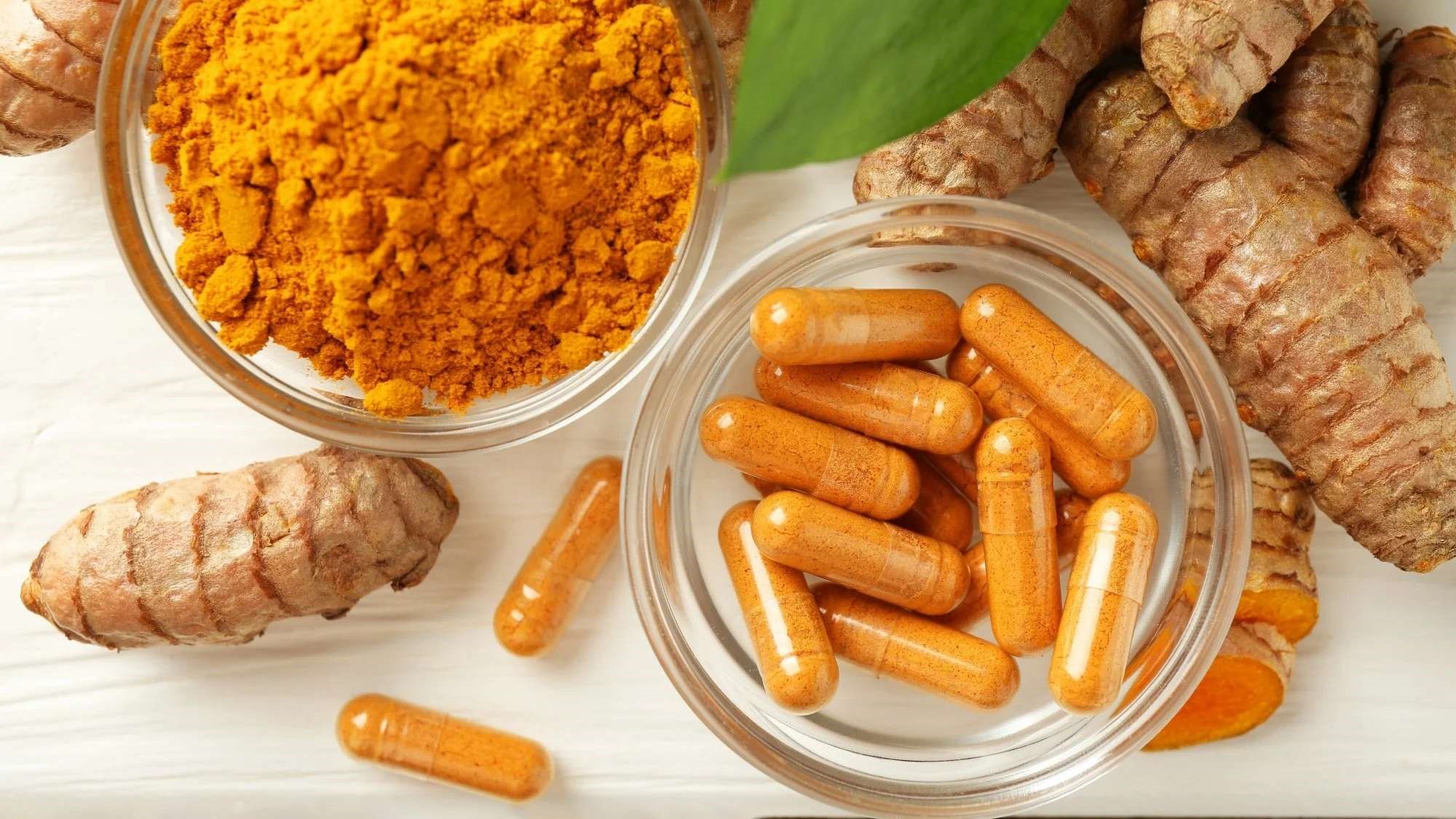
Turmeric and Curcumin for Gut Health: IBS, Intestinal Barrier and the Clinical Evidence
Curcumin's gut health relevance is direct and mechanistically well-characterised. The intestinal epithelium is one of the tissues where curcumin achieves its highest concentrations after oral consumption — because it is poorly absorbed from the gut lumen and therefore accumulates there rather than being rapidly distributed systemically. This pharmacokinetic characteristic, usually considered a limitation, makes curcumin particularly well-suited for gut-specific applications. RCTs have now confirmed clinical benefits in IBS, inflammatory bowel disease, and gut permeability — with a consistent mechanistic thread of NF-kB-mediated intestinal inflammation reduction running through all applications.
Mechanism: Intestinal NF-kB Inhibition
NF-kB is constitutively overactive in the inflamed intestinal epithelium of IBS and IBD patients — continuously producing IL-8, IL-1beta, TNF-alpha, and COX-2 that recruit neutrophils, sensitise enteric neurons, disrupt motility, and degrade tight junction proteins. Curcumin inhibits intestinal NF-kB at multiple points — blocking IKK-beta activity, preventing IkappaB degradation, and reducing NF-kB p65 nuclear translocation. This single mechanism addresses multiple downstream consequences of intestinal inflammation simultaneously.
Research: IBS Clinical Trials
A pilot double-blind RCT (Bundy et al., 2004) in 207 adults with IBS found that curcumin supplementation for 8 weeks significantly reduced IBS prevalence and abdominal discomfort scores compared to placebo — with a 25-60% reduction in symptom burden depending on dose. A separate study found curcumin combined with fennel essential oil significantly improved IBS-associated abdominal pain and quality of life over 30 days. The IBS mechanism involves both the anti-inflammatory reduction of visceral hypersensitivity (sensitised pain signalling from the gut) and the motility-normalising effects of reduced intestinal prostaglandin E2.
Research: Ulcerative Colitis
A multicentre double-blind RCT (Hanai et al., 2006) in 89 patients with quiescent ulcerative colitis found that curcumin added to standard maintenance therapy (sulfasalazine or mesalamine) significantly reduced relapse rates compared to placebo — 4.65% vs 20.51% relapse at 6 months. Endoscopic and histological scores also improved significantly in the curcumin group. A meta-analysis of 5 RCTs confirmed curcumin significantly improves clinical remission and response rates in ulcerative colitis as an adjunct to standard therapy.
Tight Junction and Intestinal Barrier Effects
Curcumin upregulates tight junction protein expression (ZO-1, claudin-1, occludin) in intestinal epithelial cells through two pathways: direct Nrf2 activation that promotes barrier protein synthesis, and NF-kB inhibition that prevents inflammatory tight junction degradation. A human trial found curcumin supplementation significantly reduced serum zonulin — the primary biomarker of intestinal permeability — in patients with leaky gut syndrome, providing clinical evidence of barrier restoration in human subjects.
Microbiome Effects
Curcumin reaches the colon in substantial quantities where it undergoes bacterial metabolism and simultaneously modulates bacterial populations. Studies have found curcumin supplementation increases Bifidobacterium and Lactobacillus populations, increases Akkermansia muciniphila, and reduces pro-inflammatory Proteobacteria — producing a microbiome profile associated with reduced intestinal inflammation and improved barrier function. Curcumin also increases short-chain fatty acid production by feeding butyrate-producing bacteria, indirectly supporting colonocyte energy supply and barrier maintenance.
Bioavailability for Gut Applications
For gut-specific applications, standard curcumin powder actually has advantages over highly bioavailable formulations — because gut health benefits depend on luminal concentrations rather than systemic absorption. Standard curcumin at 500-1000mg stays in the gut longer and at higher concentrations than rapidly absorbed phytosome formulations. For gut health specifically:
- Standard extract (95% curcuminoids) without enhancers: Maximises luminal gut concentration for IBS and IBD applications — 500-1000mg daily with meals
- With piperine: Better for systemic anti-inflammatory effects (leaky gut, gut-brain axis) — 500mg curcuminoids with 20mg piperine
- Timing: With meals for IBS — the fat in food improves any partial absorption while the remainder exerts luminal effects
References & Further Reading
- Hanai H, et al. (2006). Curcumin maintenance therapy for ulcerative colitis: randomized, multicenter, double-blind, placebo-controlled trial. Clinical Gastroenterology and Hepatology, 4(12), 1502–1506.
- Bundy R, et al. (2004). Turmeric extract may improve irritable bowel syndrome symptomology in otherwise healthy adults. Journal of Alternative and Complementary Medicine, 10(6), 1015–1018.
- Holt PR, et al. (2005). Curcumin therapy in inflammatory bowel disease: a pilot study. Digestive Diseases and Sciences, 50(11), 2191–2193.
- Pivari F, et al. (2019). Curcumin and Its Bioavailability. Nutrients, 11(9), 2147.