Curcumin for Cancer Prevention: Phase II Colorectal Trial Evidence and Solving the Bioavailability Problem
Curcumin is simultaneously one of the most well-researched natural compounds in cancer biology and one of the most misunderstood in terms of what evidence actually supports its use. The laboratory evidence for curcumin anti-cancer activity is extraordinary — hundreds of in vitro and animal studies documenting NF-kB inhibition, COX-2 suppression, apoptosis induction, anti-angiogenic activity, and epigenetic tumour suppressor restoration across virtually every cancer type. The clinical trial record is more limited but genuinely positive — particularly for gastrointestinal cancer prevention where the bioavailability challenge is most readily overcome. And standard turmeric powder at culinary doses is pharmacologically nearly inert for systemic cancer prevention — a distinction that most curcumin content fails to make clearly.
The Molecular Targets: Why Curcumin Is Pharmacologically Interesting
Curcumin is what pharmacologists call a pleiotropic agent — it acts on multiple molecular targets simultaneously rather than a single receptor or enzyme. This multi-target activity is unusual for a natural compound and is why its anti-cancer effects span so many cancer types and pathways:
- NF-kB inhibition: NF-kB is the master inflammatory transcription factor that drives cancer-promoting inflammation, inhibits cancer cell apoptosis, promotes angiogenesis, and facilitates metastasis. Curcumin is a potent NF-kB inhibitor — blocking its nuclear translocation and therefore its ability to activate pro-cancer gene expression programmes
- COX-2 and prostaglandin E2 suppression: COX-2 is overexpressed in colorectal, breast, lung, and other cancers. Its product prostaglandin E2 (PGE2) directly promotes tumour cell proliferation, suppresses anti-tumour immune responses, and drives angiogenesis. Curcumin inhibits both COX-1 and COX-2, reducing PGE2 in tumour-adjacent tissue — directly demonstrated in the Phase IIa colorectal trial
- STAT3 inhibition: Signal transducer and activator of transcription 3 (STAT3) is constitutively activated in many cancers and drives expression of oncogenes, anti-apoptotic genes, and angiogenic factors. Curcumin suppresses STAT3 phosphorylation and activation
- PI3K/Akt/mTOR suppression: The most frequently activated survival pathway in cancer cells. Curcumin inhibits PI3K p110α and Akt phosphorylation, reducing mTOR activity and chemotherapy resistance
- Apoptosis induction: Curcumin modulates Bax/Bcl-2 ratio in favour of pro-apoptotic signalling, activates caspase-3, -8, and -9, and upregulates Fas expression — restoring programmed cell death in cells that have acquired apoptosis resistance
- Wnt/beta-catenin suppression: Particularly relevant for colorectal cancer where Wnt pathway mutations are near-universal. Curcumin decreases nuclear beta-catenin and Tcf-4 levels
- Gut microbiota remodelling: 2024 studies (Deng et al., BMC Cancer) found curcumin increases beneficial gut bacteria (Bifidobacterium, Lactobacillus) while reducing pro-cancer inflammatory taxa — a recently identified cancer prevention mechanism with particular relevance to colorectal cancer
The Phase IIa Colorectal Cancer Prevention Trial
The most clinically significant cancer prevention trial for curcumin was conducted by Carroll et al. at the University of Michigan and published in Cancer Prevention Research (2011). The study enrolled 44 current smokers with 8 or more aberrant crypt foci (ACF) on screening colonoscopy. ACF are pre-cancerous microlesions in the colonic mucosa — the earliest measurable precursors to colorectal adenomas and ultimately colorectal cancer.
Participants received oral curcumin at either 2g or 4g per day for 30 days, followed by repeat colonoscopy. Results:
- At the 4g/day dose: significant reduction in ACF number — a direct reduction in measurable pre-cancerous colonic lesions in humans
- Significant reduction in PGE2 concentrations within ACF — confirming the COX-2 suppression mechanism was operating in the target tissue
- No dose-limiting toxicity at either dose
- Curcumin metabolites were detectable in colonic tissue, confirming local bioavailability even where systemic plasma levels were minimal
This is direct Phase II human evidence that curcumin produces anti-cancer activity in the colon at doses achievable through supplementation — regardless of the systemic bioavailability challenge, because the GI mucosa is directly exposed to curcumin as it passes through the gut.
Familial Adenomatous Polyposis: The Curcumin + Quercetin RCT
Cruz-Correa et al. conducted a clinical trial in patients with familial adenomatous polyposis (FAP) — a hereditary condition causing hundreds of colonic adenomas with near-certain progression to colorectal cancer. Patients received curcumin (480mg) + quercetin (20mg) three times daily. The combination produced a significant reduction in both adenoma number (60.4% reduction) and adenoma size (50.9% reduction) without appreciable toxicity. While this was a small trial in a high-risk genetic population, the magnitude of effect is striking, and the combination of curcumin and quercetin — both NF-kB and COX-2 inhibitors — represents a clinically relevant synergistic anti-cancer intervention for those at elevated colorectal cancer risk.
The Bioavailability Problem: Why Standard Turmeric Powder Fails Systemically
The single most important practical issue with curcumin is its almost complete oral bioavailability failure at standard doses. The mechanisms are well-understood:
- Low aqueous solubility: Curcumin is highly lipophilic — it dissolves poorly in gut fluid, limiting dissolution and absorption across intestinal membranes
- Rapid intestinal metabolism: What is absorbed is rapidly conjugated (glucuronidation and sulfation) in the intestinal wall and liver — converting active curcumin to inactive conjugates before it reaches systemic circulation
- Rapid elimination: Curcumin has a very short biological half-life — even when absorbed, it is cleared from plasma quickly
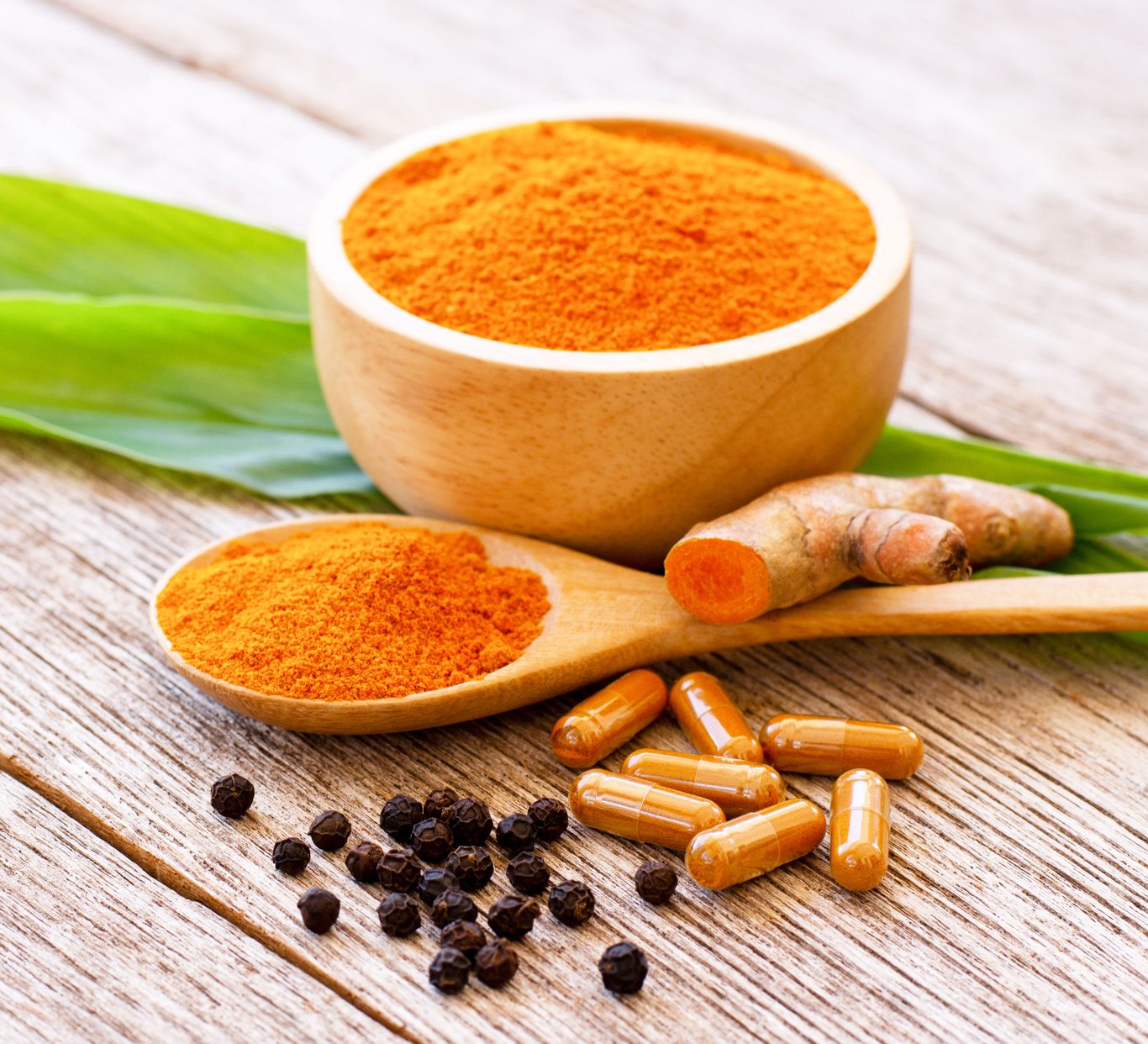
The consequence: free curcumin is undetectable in the plasma of most people consuming standard turmeric powder at culinary doses. In dose-escalation studies, free curcumin was undetectable below 8g/day in some participants — a dose of 80 teaspoons of turmeric powder per day. Standard curcumin powder supplements (500–1,000mg capsules) produce negligible plasma concentrations for the purpose of systemic anti-cancer effects.
The Solutions: Bioavailability-Enhanced Formulations
Several formulation strategies dramatically improve curcumin bioavailability:
- Curcumin + piperine (Bioperine): Piperine, the active compound in black pepper, inhibits intestinal glucuronidation enzymes that are responsible for most curcumin inactivation. Adding 20mg piperine to a standard curcumin dose increases bioavailability by approximately 2,000% (20-fold) in human pharmacokinetic studies. This is the most accessible and widely studied enhancement strategy. Products labelled "curcumin with BioPerine" use this approach
- Phospholipid complexes (Meriva, Curcumin Phytosome): Curcumin complexed with phosphatidylcholine forms a phytosome that is absorbed via the same pathway as dietary lipids. Meriva has been tested in human bioavailability studies and produces approximately 29-fold higher plasma AUC than standard curcumin
- Liposomal curcumin: Encapsulating curcumin in liposomes (lipid bilayer vesicles) protects it from intestinal metabolism and facilitates lymphatic absorption. Used in cancer treatment clinical trials
- BCM-95/Biocurcumax: Curcumin combined with turmeric essential oils — produces approximately 7-fold higher bioavailability than standard curcumin and is the most "whole-food" enhancement approach
Practical Protocol: Curcumin for Cancer Prevention
- For GI tract cancer prevention (colorectal): Standard curcumin 2–4g/day is appropriate because local colonic concentrations are what matter — consistent with the Phase IIa trial evidence. Standard powder is adequate here
- For systemic anti-cancer effects: Bioavailability-enhanced formulation is required — curcumin + piperine (500mg curcumin + 20mg piperine), phospholipid complex, or BCM-95 formulation
- Take with fat: All curcumin formulations absorb better with a fatty meal — the fat-soluble nature of curcumin means co-consumption with olive oil, fish, or other dietary fat meaningfully improves absorption
- Cycle or use consistently: The Phase IIa colorectal trial showed significant effects after just 30 days at 4g/day — curcumin does not require long lead-in periods to show activity
- Caution with blood thinners: Curcumin inhibits platelet aggregation at high doses — discuss with a physician if taking anticoagulants
References
- Carroll RE, et al. (2011). Phase IIa curcumin, colorectal neoplasia, 44 smokers with ACF. Cancer Prev Res, 4(3):354–64.
- Cruz-Correa M, et al. (2006). Curcumin + quercetin in familial adenomatous polyposis RCT. Clin Gastroenterol Hepatol, 4(8):1035–8.
- Shoba G, et al. (1998). Piperine enhancement of curcumin bioavailability 2,000%. Planta Med, 64(4):353–6.
- Dhillon N, et al. (2008). Phase II curcumin in advanced pancreatic cancer. Clin Cancer Res, 14(14):4491–9.