L-Theanine for Anxiety: Alpha Brain Waves, GABA and the Clinical Evidence Explained
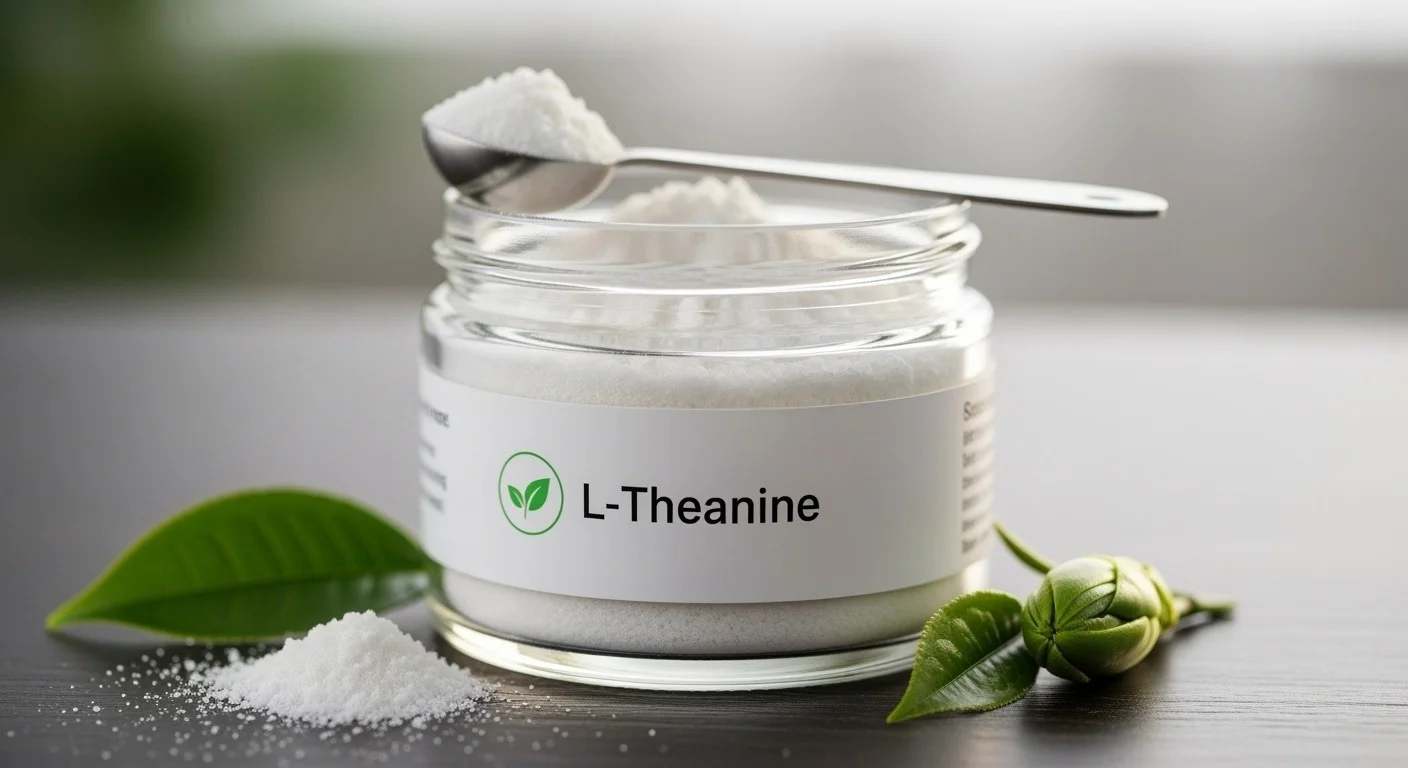
L-theanine is an amino acid found almost exclusively in tea leaves (Camellia sinensis) and certain mushrooms. It is responsible for the paradox that makes tea unique among caffeinated beverages: the simultaneous sense of calm and mental clarity that coffee cannot replicate. This is the L-theanine effect — and the clinical evidence shows it is not placebo.
The Alpha Wave Mechanism: Why L-Theanine Is Unique
L-theanine is the only known dietary compound that reliably and measurably increases alpha brain wave activity in healthy adults. Alpha waves (8–14 Hz) are the electrical signature of a relaxed, alert mental state — the brain activity pattern observed during meditation, creative flow states, and the period of calm focus before sleep onset. They are inhibited by stress, anxiety, and stimulant compounds (including caffeine), and increase with deep relaxation, mindfulness practice, and — uniquely among supplements — L-theanine.
EEG studies confirm alpha wave increases within 30–45 minutes of a single 50–200mg L-theanine dose. This is not a subjective effect measured only by questionnaire — it is objective, electrophysiologically confirmed neurological change. The result is subjectively experienced as calm without drowsiness, reduced tension without fatigue, and improved focus without agitation.
Additional Neurological Mechanisms
- GABA elevation: L-theanine increases GABA synthesis — the brain's primary inhibitory neurotransmitter. This is the key mechanism for anxiety reduction. Unlike benzodiazepines (which force GABA-A receptors to respond more strongly), L-theanine increases the amount of GABA available — a physiological approach with no receptor downregulation or tolerance risk
- Serotonin and dopamine support: L-theanine elevates serotonin (mood stability, emotional regulation) and dopamine (motivation, reward, executive function) — explaining why it improves mood alongside reducing anxiety
- Glutamate blockade: L-theanine is a structural analogue of glutamate (the brain's primary excitatory neurotransmitter) and blocks AMPA/NMDA glutamate receptors — reducing the excitatory drive that underlies anxiety, restlessness, and hypervigilance
- Caffeine modulation: When combined with caffeine, L-theanine smooths the stimulant effect — eliminating the jitteriness, anxiety, and mid-morning crash while preserving alertness and cognitive performance. Multiple RCTs confirm the L-theanine + caffeine combination produces superior cognitive performance and mood outcomes compared to caffeine alone
Clinical Evidence
Hidese et al. (2019) — Randomised Crossover RCT
The most cited human RCT of L-theanine for anxiety enrolled 30 healthy adults in a randomised, double-blind, placebo-controlled crossover design — each participant received L-theanine (200mg/day) and placebo for 4 weeks each, with washout between. Outcomes measured included anxiety symptoms, depression symptoms, sleep quality, and cognitive function. Results for the L-theanine condition versus placebo:
- Significant reduction in anxiety subscale scores
- Significant reduction in depression subscale scores
- Significant improvement in sleep quality (sleep latency, sleep disturbance, use of sleep medication)
- Significant improvement in verbal fluency and executive function
Acute Stress Response Studies
Multiple studies have investigated L-theanine's effect on acute stress responses — particularly relevant for situational anxiety (exam stress, public speaking, social anxiety). A study by Unno et al. found that L-theanine significantly reduced salivary alpha-amylase activity (a biological marker of sympathetic nervous system activation) during exam stress in pharmacy students, with effect correlating with baseline trait anxiety level — suggesting those with higher baseline anxiety benefit most from acute L-theanine supplementation.
The Green Tea Epidemiological Evidence
Population studies consistently find lower rates of anxiety, depression, and cognitive decline in regular green tea drinkers — with dose-response relationships suggesting L-theanine as a primary contributing factor. These observational findings align with and support the mechanistic and RCT evidence.
L-Theanine vs Other Natural Anxiolytics
L-theanine occupies a unique position in the natural anxiety landscape:
- Fastest-acting: Alpha wave effects within 30–45 minutes — ashwagandha requires 4–8 weeks for full effect
- No sedation: Unlike valerian, kava, or benzodiazepines — L-theanine does not impair alertness or driving ability
- Compatible with all activities: Can be taken before work, study, or any performance context
- Excellent for combination: Works synergistically with ashwagandha (complementary mechanisms) and with magnesium (both support GABA pathways)
Dosage, Forms and Timing
- Acute anxiety: 100–200mg taken 30–45 minutes before the stressful event
- Daily supplementation: 100–200mg daily; some people split into AM/PM doses
- With caffeine: A 2:1 or 1:1 ratio of L-theanine to caffeine (e.g., 200mg L-theanine with 100mg caffeine) is the most-studied combination for cognitive performance
- Forms: Pharmaceutical-grade L-theanine (Suntheanine is the most researched branded form, used in many clinical studies). Generic L-theanine is also widely available and effective — verify it is the L-isomer (not DL-theanine)
- Safety: Extremely safe — GRAS status in the US; found naturally in green tea. No known serious drug interactions; may potentiate the effect of CNS depressants at high doses
References
- Hidese S, et al. (2019). L-theanine for stress and cognitive function: RCT. Nutrients, 11(10):2362.
- Unno K, et al. (2013). L-theanine anti-stress effect in students: salivary alpha-amylase study. Pharmacol Biochem Behav, 111:128–35.
- Nobre AC, Rao A, Owen GN. (2008). L-theanine relaxation effect in humans. Asia Pac J Clin Nutr, 17(S1):167–8.
- Psychology Today. (2025). Two research-backed supplements for anxiety: L-theanine and ashwagandha.