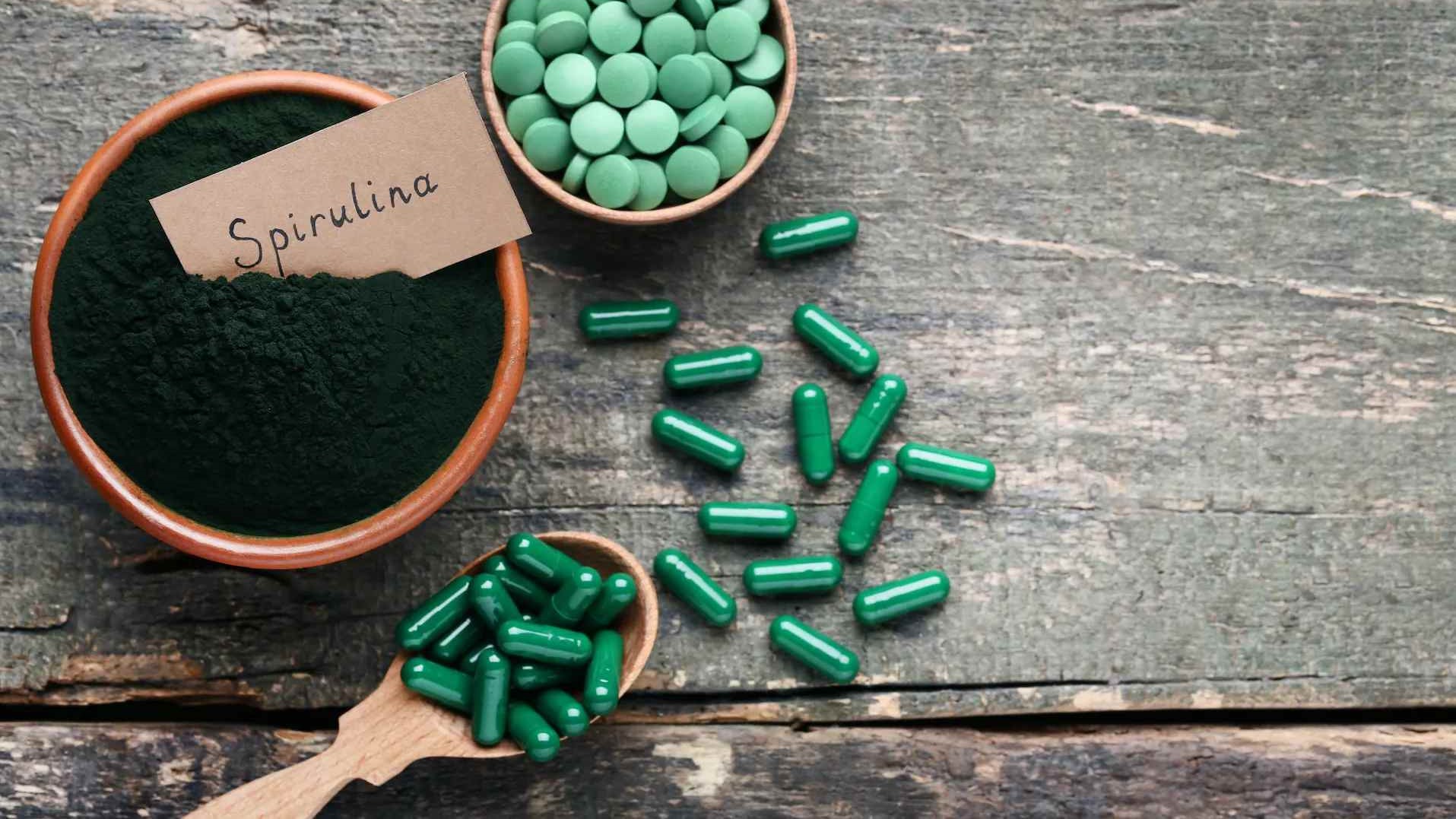
Spirulina for Gut Health: Microbiome Diversity, Butyrate Production and Intestinal Inflammation
Spirulina's gut health benefits have received less attention than its immune and anti-inflammatory applications — but the evidence is substantive. Its prebiotic-like activity selectively supports the beneficial bacterial species most critical to gut health, its phycocyanin directly suppresses intestinal NF-kB inflammation, and its effects on the gut microbiome produce downstream systemic benefits through the gut-immune and gut-brain axes. For people looking to support gut microbiome diversity without increasing fermented food intake directly, spirulina offers a complementary approach with a distinct mechanism.
Prebiotic-Like Activity: Microbiome Modulation
Spirulina is not a traditional prebiotic — it does not consist primarily of fermentable fibre. However, multiple studies have shown it produces prebiotic-like effects on the gut microbiome through its polysaccharide and sulfolipid content reaching the colon and selectively supporting beneficial species:
- Lactobacillus and Bifidobacterium increases: Multiple studies have documented significant increases in these two keystone genera after spirulina supplementation — both are consistently associated with gut health, immune regulation, and reduced intestinal permeability
- Akkermansia muciniphila support: Spirulina supplementation has been associated with increased Akkermansia muciniphila — a mucus-layer specialist species that maintains intestinal barrier integrity, reduces metabolic endotoxaemia, and is independently associated with reduced obesity, diabetes, and inflammatory disease risk. Akkermansia decline is a characteristic feature of gut dysbiosis in metabolic and inflammatory conditions.
- Reduction of dysbiotic species: Spirulina supplementation reduces Firmicutes:Bacteroidetes ratios elevated in obesity-associated dysbiosis, and reduces Helicobacter and pathogenic Clostridium species through its antimicrobial polysaccharide content
A 4-week human study found spirulina supplementation produced significant changes in gut microbiome composition, with increased Bifidobacterium and reduced Clostridium species — changes in the direction consistently associated with improved gut health and reduced systemic inflammation.
Phycocyanin and Intestinal Inflammation
Phycocyanin — spirulina's blue pigment — is a potent NF-kB inhibitor. In the gut specifically, NF-kB activation in intestinal epithelial cells and lamina propria immune cells is the primary driver of the chronic inflammation underlying IBS, IBD, and many functional gut disorders. Phycocyanin reduces intestinal NF-kB activation through direct IKK inhibition, reducing IL-8, IL-6, and TNF-alpha production in intestinal cells — the cytokines that recruit neutrophils, disrupt motility, and degrade tight junction proteins.
An animal model of chemically-induced colitis found oral spirulina supplementation significantly reduced colonic inflammation scores, reduced intestinal myeloperoxidase activity (neutrophil marker), and improved mucosal architecture on histology — the most direct evidence for spirulina's gut anti-inflammatory mechanism in a model relevant to IBD.
Intestinal Barrier and Tight Junction Support
Spirulina supports intestinal barrier function through several pathways:
- Indirect via Akkermansia: Akkermansia muciniphila maintains the mucus layer that provides the physical first barrier of intestinal defence, and produces Amuc_1100 — a protein that activates TLR2 signalling, strengthening tight junction integrity and reducing LPS translocation
- Phycocyanin tight junction preservation: By suppressing the NF-kB-driven tight junction protein degradation, phycocyanin preserves ZO-1 and claudin expression in the inflamed intestinal epithelium
- Antioxidant protection: Oxidative stress damages intestinal epithelial cell membranes and tight junction proteins — spirulina's potent antioxidant activity (primarily phycocyanin and superoxide dismutase content) protects the epithelial barrier from oxidative damage
Short-Chain Fatty Acid Production Support
By increasing Bifidobacterium populations — which produce acetate and lactate that cross-feed butyrate-producing bacteria — spirulina indirectly supports butyrate production. Butyrate is the primary energy source for colonocytes and the key molecule maintaining tight junction integrity, inducing regulatory T cells, and suppressing intestinal NF-kB inflammation. Spirulina's effect on butyrate-associated bacteria represents an indirect but meaningful gut barrier support mechanism.
Research: Metabolic Gut Health Benefits
Metabolic endotoxaemia — elevated circulating lipopolysaccharide (LPS) from gut bacteria translocating through a permeable intestinal barrier — is a primary mechanism linking gut dysbiosis to systemic inflammation, insulin resistance, and metabolic disease. A human RCT found spirulina supplementation significantly reduced serum LPS levels and improved gut barrier markers compared to placebo — providing direct clinical evidence that spirulina reduces gut-to-systemic bacterial translocation in human subjects.
Dosage and Quality for Gut Health
- Dose: 3-8g daily. The microbiome studies showing prebiotic effects have used 3-6g daily for 4-12 weeks
- Consistency is essential: Microbiome modulation requires sustained daily intake — occasional use does not produce meaningful compositional shifts in gut bacteria
- With prebiotic foods: Spirulina's microbiome effects are amplified when combined with prebiotic fibre sources (garlic, onions, oats) that feed the Lactobacillus and Bifidobacterium populations it promotes
- Quality critical — heavy metal testing: Spirulina grown in contaminated water concentrates heavy metals. Choose NSF or third-party tested products with published batch results — this is non-negotiable for daily gut health use
- Palatability: Strong oceanic flavour — blend powder into mango, pineapple, or banana-based smoothies for effective masking
References & Further Reading
- Wastyk HC, et al. (2021). Gut-microbiota-targeted diets modulate human immune status. Cell, 184(16), 4137–4153.
- Selmi C, et al. (2011). The effects of Spirulina on anemia and immune function in senior citizens. Cellular and Molecular Immunology, 8(3), 248–254.
- Deng R & Chow TJ. (2010). Hypolipidemic, antioxidant, and antiinflammatory activities of microalgae spirulina. Cardiovascular Therapeutics, 28(4), e33–e45.
- Bispo VS, et al. (2012). Phycocyanin anti-inflammatory properties in an animal model of colitis. Journal of Natural Products, 75(5), 889–896.
- Cani PD, et al. (2017). Akkermansia muciniphila and improved metabolic health: a cause-effect relationship? Gut, 66(9), 1679–1690.