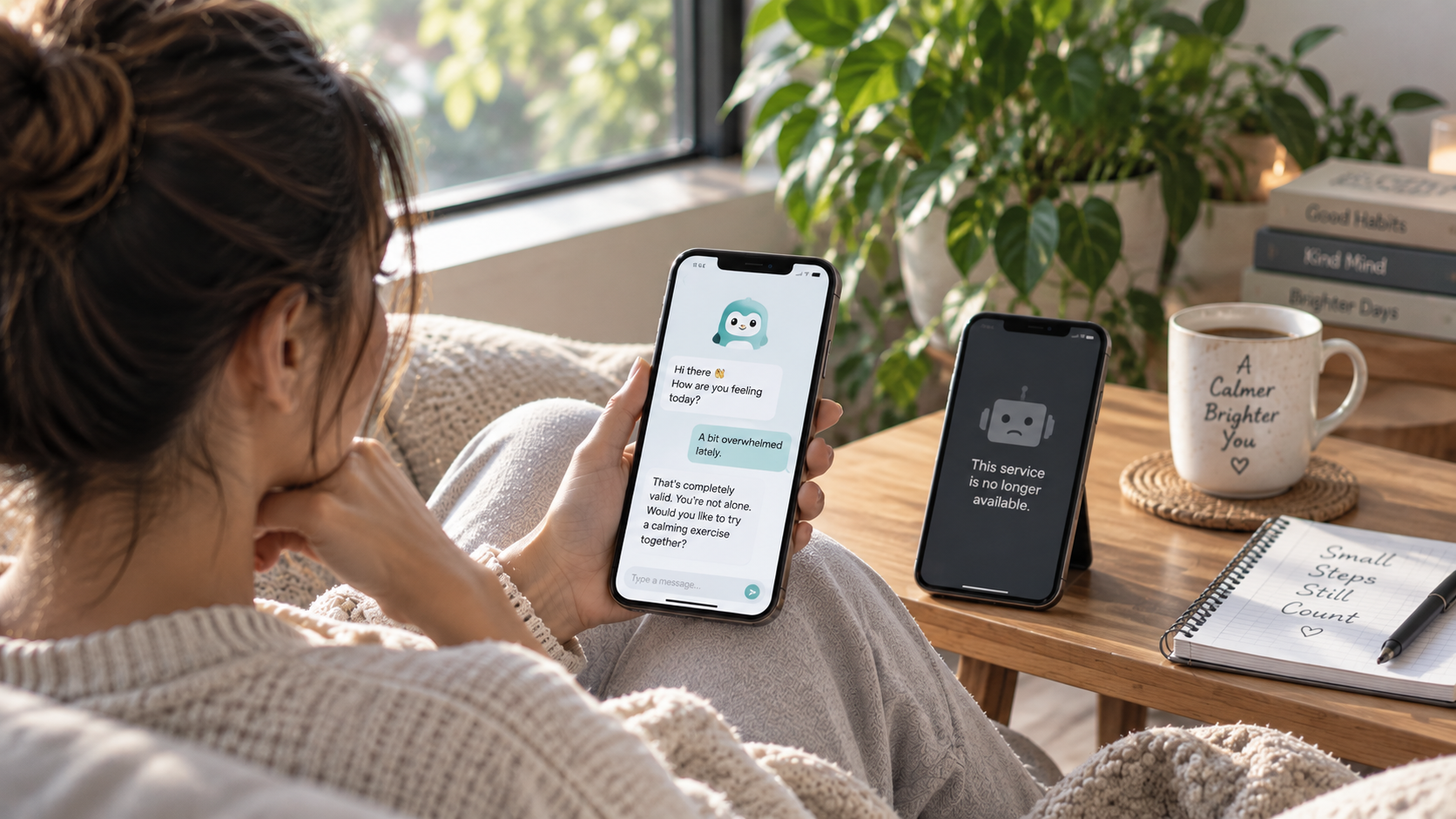
AI Mental Health Chatbots: What Wysa Does, and What Woebot's Shutdown Taught the Industry
What an AI Mental Health Chatbot Actually Does
Tools like Wysa use a combination of scripted, clinically-reviewed conversation flows and AI-driven natural-language responses to walk users through CBT-based exercises -- reframing anxious thoughts, breaking down a problem, or working through a low mood -- in a conversational format rather than a static article or audio session.
Wysa's Clinical Credibility
Wysa is one of the more clinically documented tools in this category. In May 2022 it received FDA Breakthrough Device Designation -- a program that fast-tracks FDA review for promising devices -- specifically for its AI-led CBT conversational agent used alongside chronic pain and associated depression and anxiety in adults. That designation is not full FDA approval and does not cover Wysa's entire app, but it reflects a level of clinical evidence most chatbot apps in this space don't have.
Why Woebot Shut Down Anyway
Woebot was arguably the best-known, most clinically studied AI mental health chatbot -- and it still shut down its consumer app in mid-2025 after serving roughly 1.5 million users. Founder Alison Darcy pointed to the cost and regulatory uncertainty of getting newer large-language-model technology cleared by the FDA as the deciding factor: the company wanted to move to more capable AI but couldn't get regulatory clarity fast enough to justify the investment.
The Real Lesson
Woebot's shutdown is a useful caution: even a well-evidenced, well-funded chatbot app can disappear, and clinical credibility alone doesn't guarantee a product survives. If you rely on an AI chatbot app as part of your routine, it's worth having a backup plan -- another app, a therapist, or a crisis line -- rather than assuming any single tool will always be there.
What These Tools Are Not
No AI chatbot in this category is a substitute for crisis support or a licensed therapist for a serious or worsening condition. They are best understood as a between-sessions coping tool, not an emergency service or a replacement for professional diagnosis and treatment.