How Mental Health Apps and Therapy Work Together
A Common, Not Unusual, Combination
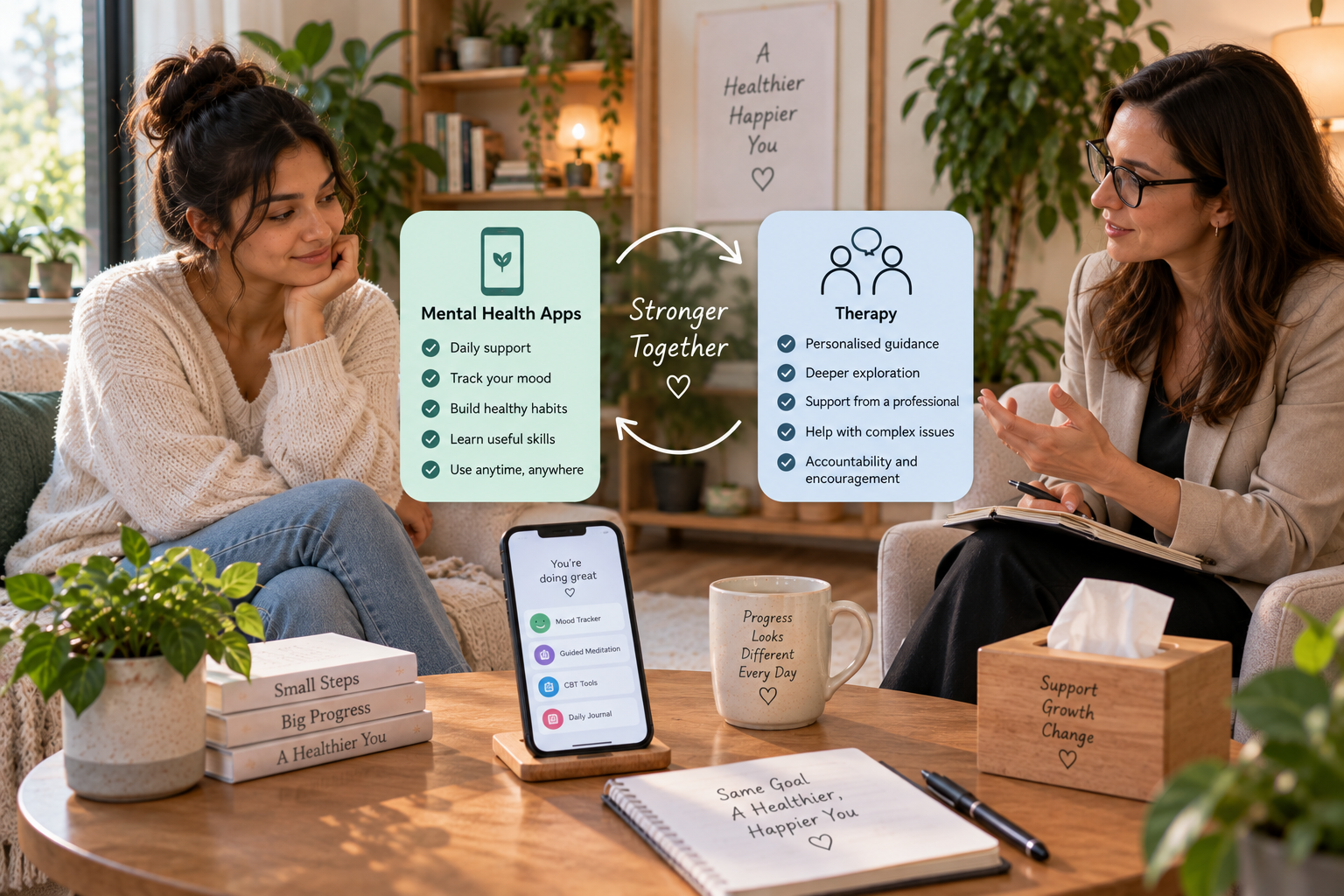
Using a self-guided app alongside therapy is increasingly normal rather than a sign that either one is failing -- many therapists actively suggest apps as homework support between sessions, particularly CBT-based tools that reinforce skills covered in session.
What the App Is Doing in This Setup
Between-session practice: a quick coping exercise when anxiety spikes, a daily mood log to bring into the next session, a guided meditation on a hard day. The app extends the work into daily life in a way that a weekly or biweekly session alone can't.
What Therapy Is Still Doing
The therapist provides the personalization, the deeper work, and the judgment calls an app's fixed content can't -- adjusting an approach that isn't working, addressing something more complex than a single technique can handle, and providing the human relationship that research consistently shows matters to therapy outcomes.
A Practical Way to Combine Them
Mentioning to a therapist which app (if any) you're using, and whether you're finding it useful, lets them incorporate it into the plan rather than working in the dark about what you're doing between sessions -- a five-minute conversation that makes the combination more coordinated than accidental.
When an App Alone Is Enough
For mild, everyday-level stress or anxiety that isn't interfering with daily functioning, an app alone is a reasonable starting point -- therapy becomes the more clearly necessary addition once symptoms are more persistent, more severe, or not responding to self-directed tools.