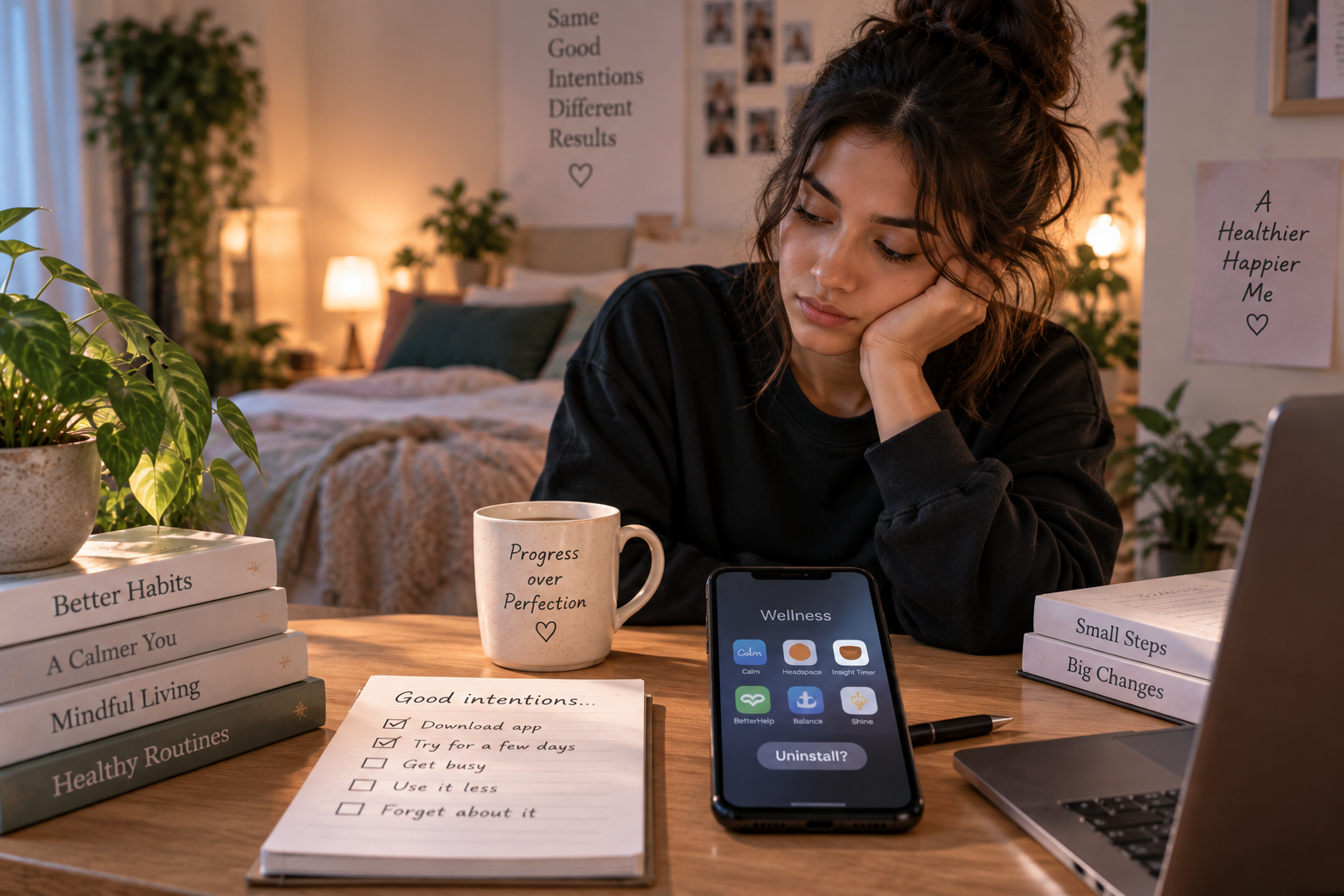
Why Most People Stop Using Wellness Apps Within Weeks
The Numbers Are Blunter Than You'd Think
A widely cited 2019 study in the Journal of Medical Internet Research tracked real-world usage data across 93 popular mental health apps and found a median 15-day retention of just 3.9%, dropping to 3.3% by day 30 -- meaning the overwhelming majority of people who install a given app stop using it within about two weeks, regardless of how good the app itself is.
Why This Happens
Unlike a game or a social app, a wellness app's core reward -- feeling calmer, less anxious, sleeping better -- is slow and easy to miss day to day, while opening the app takes active effort and a reminder that something is bothering you. That combination (slow payoff, effortful prompt) is a recipe for abandonment even when the underlying technique works.
It's Not Necessarily About the App's Quality
Low retention shows up across well-regarded, evidence-based apps and weaker ones alike -- this is a category-wide pattern, not a sign that a specific app you tried and dropped was uniquely bad. Don't read your own dropped-off usage as proof the technique doesn't work; it may just mean the format didn't fit your routine.
What Actually Helps People Stick With It
Attaching the app to an existing habit (right after brushing your teeth, right before a specific commute) tends to work better than relying on willpower or a generic daily reminder notification. Starting with a very short session length (3-5 minutes) rather than an ambitious 20-minute one also reduces the friction that causes early drop-off.
A Realistic Expectation
Given how common early abandonment is, judging any app by whether you're still opening it after two weeks -- not whether you liked the idea of it on day one -- is a more honest test of fit than the app's ratings or marketing.