NMN and NR: The NAD+ Precursor Supplements Backed by Longevity Research
Why NAD+ Is Central to Aging Biology
Nicotinamide adenine dinucleotide (NAD+) is one of the most important molecules in human biology — and one of the most overlooked in conventional medicine. It functions as an essential cofactor in over 500 enzymatic reactions, serves as the primary electron carrier in mitochondrial energy production, and is consumed as a substrate by several families of longevity-linked enzymes: sirtuins (SIRT1–7), PARPs (DNA repair enzymes), and CD38 (an NAD-consuming immune enzyme). The problem is stark: NAD+ levels in human tissue decline by approximately 50% between the ages of 40 and 60, and this decline is now understood to be causally — not just correlatively — linked to the mitochondrial dysfunction, DNA repair failure, metabolic deterioration, and immune dysfunction that characterise biological aging.
David Sinclair at Harvard Medical School and his colleagues have described NAD+ decline as a master regulator of aging — a single molecular change that simultaneously impairs multiple hallmarks of aging. Reversing this decline is one of the most actively researched longevity interventions in academic biology.
Why NAD+ Cannot Be Supplemented Directly
NAD+ cannot be taken as a supplement and expected to reach tissues intact — it is too large and hydrophilic to cross cell membranes directly and is rapidly degraded in the digestive tract. Instead, NAD+ is synthesised intracellularly from precursor molecules. The two most clinically relevant precursors are:
- Nicotinamide riboside (NR): A form of vitamin B3 that enters cells via specific nucleoside transporters and is phosphorylated to NMN, then to NAD+
- Nicotinamide mononucleotide (NMN): One step closer to NAD+ in the biosynthetic pathway — converted to NAD+ by the enzyme NMNAT in mitochondria, the nucleus, and the cytoplasm
Both supplements reliably increase intracellular NAD+ in human studies. The debate between them centres on route of entry, tissue distribution, and practical bioavailability — and the clinical trial data has now expanded enough to compare them meaningfully.
NR Clinical Trial Evidence
NR was the first NAD+ precursor extensively studied in humans, with multiple Phase I/II trials conducted over the past decade:
- Trammell et al. (2016, Nature Communications): The first human pharmacokinetic study of NR — confirmed that oral NR safely and dose-dependently increases whole blood NAD+ and related metabolites in healthy middle-aged adults. This established the proof-of-concept that oral NAD+ precursor supplementation works in humans
- Martens et al. (2018, Nature Communications): 500mg NR twice daily (1g/day) for 6 weeks in healthy older adults (mean age 75) increased blood NAD+ by approximately 60%, reduced circulating inflammatory cytokines, and improved systolic blood pressure by 3.9 mmHg — a clinically relevant finding in a cardiovascular aging context
- Elhassan et al. (2019, Cell Reports): Oral NR at 1g/day for 21 days in older adults increased NAD+ in skeletal muscle by 10% and in peripheral blood mononuclear cells by 2-fold, and increased sirtuin activity in the muscle — demonstrating that NAD+ repletion activates the longevity enzymes dependent on it
- Dollerup et al. (2020, JCI Insight): A 12-week RCT found NR supplementation did not improve insulin sensitivity in obese adults with metabolic syndrome despite raising blood NAD+ — an important null finding demonstrating that NAD+ repletion alone is insufficient for metabolic improvement in established disease
NMN Clinical Trial Evidence
Human NMN trials began later than NR but have accelerated significantly:
- Yoshino et al. (2021, Science): A randomised double-blind trial of NMN supplementation in postmenopausal women with prediabetes or obesity found that 250mg NMN daily for 10 weeks significantly improved muscle insulin signalling and increased skeletal muscle NAD+ metabolites. Notably, NMN induced expression of genes related to muscle remodelling — suggesting effects beyond simple NAD+ repletion
- Kim et al. (2022, npj Aging): 250mg NMN daily for 12 weeks in older adults significantly increased muscle NAD+ levels and significantly improved grip strength and 6-minute walking distance compared to placebo — a direct functional anti-aging outcome in humans
- Yi et al. (2023, GeroScience): 300mg and 600mg NMN daily for 60 days both increased blood NAD+ dose-dependently and reduced biological age as measured by DNA methylation epigenetic clocks — one of the first human studies to directly measure epigenetic age reduction from a supplement
NMN vs NR: Key Differences
Both compounds raise blood and tissue NAD+ in humans. The clinically relevant differences:
- Route of entry: NMN has a dedicated transporter (Slc12a8) in the intestinal brush border allowing direct cellular uptake — while NR must first be converted to NR monophosphate before cellular uptake. This may explain some tissue-distribution differences
- Tissue distribution: NMN appears to preferentially raise NAD+ in liver, skeletal muscle, and brain; NR shows strong effects in blood, liver, and adipose tissue. Neither has a definitive human tissue distribution advantage established
- Stability: NMN is less stable than NR in solution and requires proper storage; liposomal and sublingual NMN formulations attempt to address this
- Cost: NMN is typically more expensive than NR at equivalent doses
The Sirtuin Connection: Why NAD+ Repletion Activates Longevity Genes
Sirtuins (SIRT1–7) are a family of NAD+-dependent deacetylase enzymes whose activity is directly limited by NAD+ availability. They are often called longevity proteins because of their central roles in DNA repair (SIRT1, SIRT6), mitochondrial biogenesis (SIRT1, SIRT3), metabolic regulation (SIRT1, SIRT3), telomere maintenance (SIRT6), and inflammation suppression (SIRT1). When NAD+ is abundant, sirtuins are active. When NAD+ is depleted — as in aging — sirtuin activity declines and these protective functions deteriorate. This is the mechanistic link between NAD+ decline, sirtuin suppression, and the multiple hallmarks of aging that sirtuins normally regulate.
Practical Protocol: NAD+ Precursor Supplementation
- Starting dose: 250–500mg NMN or NR daily — the dose used in most human trials showing efficacy. Some individuals increase to 1g/day based on the Martens et al. blood pressure trial data
- Timing: Morning, with or without food. Some evidence suggests NMN absorption may be improved sublingually (under the tongue) — sublingual formulations are available
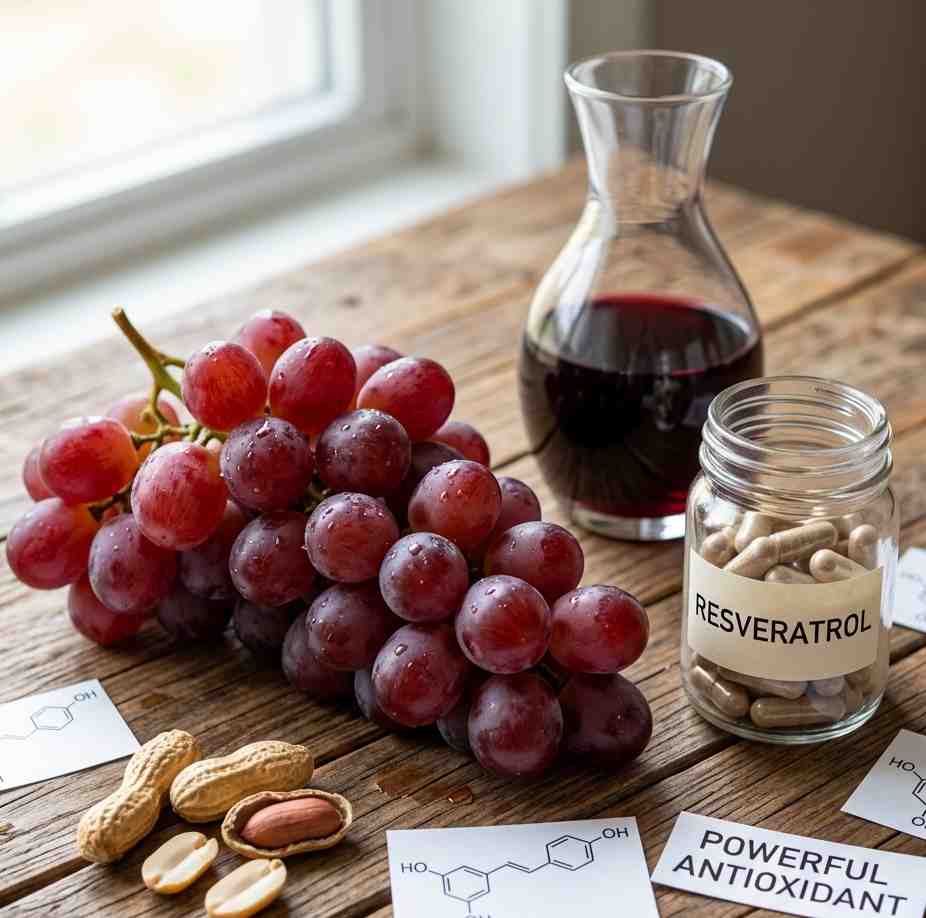
- Synergies: Resveratrol (activates SIRT1 — the enzyme that uses the NAD+ you are replenishing) and pterostilbene are commonly combined with NMN/NR for this synergistic mechanism. Magnesium and B3 (niacin) support NAD+ biosynthesis through complementary pathways
- Safety: Both NMN and NR are well-tolerated in human trials at doses up to 2g/day without significant adverse effects. Long-term safety beyond 12 months has not been established in large RCTs
- What to look for: Third-party purity testing (NAD+ precursor supplements vary enormously in quality); refrigerated storage for NMN; sublingual or liposomal formulations for enhanced bioavailability
References & Further Reading
- Trammell SA, et al. (2016). Nicotinamide riboside is uniquely and orally bioavailable in healthy humans. Nature Communications, 7, 12948.
- Martens CR, et al. (2018). Chronic nicotinamide riboside supplementation is well-tolerated and elevates NAD+ in healthy middle-aged and older adults. Nature Communications, 9, 1286.
- Yoshino M, et al. (2021). Nicotinamide mononucleotide increases muscle insulin sensitivity in prediabetic women. Science, 372(6547), 1224–1229.
- Kim M, et al. (2022). Nicotinamide mononucleotide improves muscle function in older adults. npj Aging, 8, 5.
- Yi L, et al. (2023). NMN supplementation reduces biological age by epigenetic clocks. GeroScience, 45(4), 2573–2586.
- Sinclair DA & Guarente L. (2014). Small-molecule allosteric activators of sirtuins. Annual Review of Pharmacology and Toxicology, 54, 363–380.