Resveratrol and Quercetin: Senolytic Supplements That Target Aging Cells
What Are Senescent Cells — and Why Do They Matter?
Cellular senescence is a state in which cells permanently stop dividing but refuse to die. Senescent cells accumulate progressively with age — in fat tissue, the liver, kidneys, lungs, and brain — and were long thought to be merely dormant and harmless. The past decade has completely overturned this view. Senescent cells are not passive: they actively secrete a complex mixture of pro-inflammatory cytokines, chemokines, matrix metalloproteinases, and growth factors collectively called the senescence-associated secretory phenotype (SASP). The SASP creates a chronically inflamed microenvironment that:
- Disrupts the function of neighbouring healthy cells
- Suppresses tissue stem cell regeneration
- Promotes the spread of senescence to adjacent cells (paracrine senescence)
- Drives the development of age-related diseases including atherosclerosis, osteoarthritis, fibrosis, neurodegeneration, and cancer
In landmark animal experiments, genetically eliminating senescent cells extended healthy lifespan by 25–35% and reduced the incidence of multiple age-related diseases simultaneously. This established senescent cell clearance — senolytics — as one of the most promising anti-aging strategies in contemporary geroscience.
The Human Senolytic Trial: Quercetin + Dasatinib
The first human trial of a senolytic intervention was published in Nature Medicine in 2019 (Kirkland et al., Mayo Clinic). Fourteen older adults with idiopathic pulmonary fibrosis (IPF) — a progressive age-related lung disease driven by senescent cell accumulation — received intermittent doses of dasatinib (a chemotherapy drug) plus quercetin (a plant flavonoid) for 3 weeks. The results were striking:
- 30% reduction in senescent cells in skin and fat biopsies — the first direct demonstration of senescent cell clearance in living humans
- Significant reductions in multiple SASP factors in blood and adipose tissue — including MMP-9, MMP-12, and several inflammatory cytokines
- Improvements in functional outcomes: improved 6-minute walk distance, gait speed, and chair stand performance within 3 weeks of treatment
This trial established proof-of-concept for senolytic therapy in humans and demonstrated that quercetin — a commonly available plant compound — is a functionally active senolytic at appropriate doses when combined with dasatinib. Subsequent Mayo Clinic trials have extended these findings to diabetic kidney disease and frailty in older adults, consistently showing senescent cell clearance and SASP reduction.
Quercetin as a Standalone Senolytic
While the landmark trial combined quercetin with dasatinib, quercetin has independent senolytic mechanisms:
- BCL-2 and BCL-XL inhibition: Senescent cells survive by upregulating anti-apoptotic proteins (BCL-2, BCL-XL, BCL-W) that prevent them from undergoing programmed cell death. Quercetin inhibits these proteins — selectively reactivating apoptosis in senescent cells while sparing normal cells that are less dependent on these survival pathways
- PI3K/AKT pathway inhibition: Quercetin suppresses the PI3K/AKT survival signalling that senescent cells rely on for their aberrant longevity
- NF-kB suppression: Reduces the inflammatory SASP output from senescent cells even where clearance is incomplete
A Phase I safety and tolerability trial confirmed quercetin is safe and produces measurable reductions in senescence markers when taken at higher therapeutic doses (500–1,000mg daily). Quercetin is also a flavonoid with broad anti-inflammatory and antioxidant activity independent of its senolytic properties.
Resveratrol: SIRT1 Activation and the Longevity Gene Connection
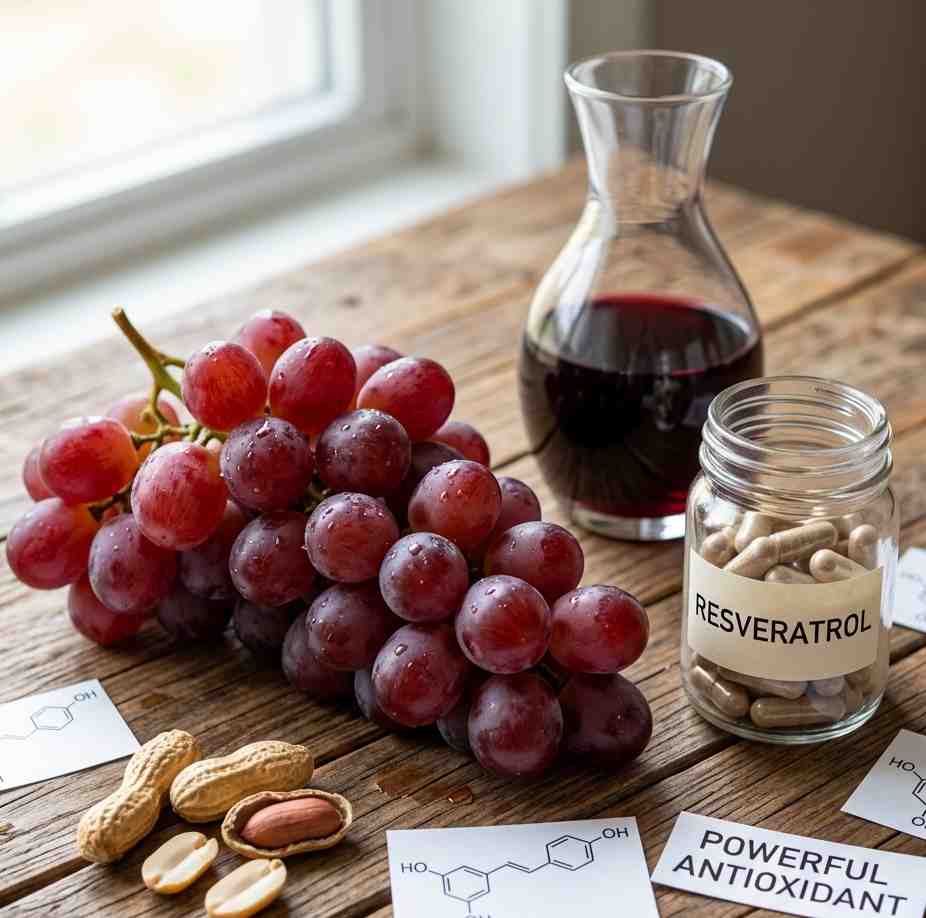
Resveratrol is a stilbene polyphenol found in the skin of red grapes, blueberries, and peanuts — and is the compound most associated with the French Paradox hypothesis (the observation that French populations with high red wine consumption had lower cardiovascular disease rates than expected from their diet). Its longevity biology is centred on SIRT1 activation:
- SIRT1 activator: Resveratrol was identified in 2003 by David Sinclair as a potent activator of SIRT1 — the sirtuin most directly linked to caloric restriction and longevity gene expression. This connection generated enormous research interest and a Harvard spin-out company (Sirtris Pharmaceuticals, acquired by GlaxoSmithKline for $720 million)
- AMPK activation: Resveratrol activates AMPK — the cellular energy sensor that promotes mitochondrial biogenesis, fat oxidation, and autophagy when cellular energy is low. This mimics some effects of caloric restriction at the molecular level
- NF-kB inhibition: Resveratrol suppresses chronic inflammation through multiple NF-kB pathway points
- Nrf2 activation: Upregulates the body's antioxidant defence systems
Resveratrol Human Clinical Evidence
The human clinical evidence for resveratrol is substantial but more mixed than the compelling animal data:
- Cardiovascular: Multiple RCTs show resveratrol improves endothelial function (flow-mediated dilation), reduces LDL oxidation, and modestly lowers blood pressure in at-risk populations
- Metabolic: A meta-analysis of 21 RCTs in type 2 diabetics found resveratrol significantly improved fasting blood glucose, HbA1c, insulin resistance, and blood pressure — consistent, meaningful effects
- Cognition: A 2017 RCT found resveratrol (200mg/day for 26 weeks) improved cerebrovascular function and memory performance in older adults, with changes in hippocampal functional connectivity on fMRI
- Bioavailability challenge: Standard resveratrol has poor oral bioavailability — first-pass liver metabolism converts most absorbed resveratrol to inactive conjugates. Micronised resveratrol, liposomal formulations, and pterostilbene (a resveratrol analogue with significantly better bioavailability) address this limitation
Quercetin Bioavailability: The Phytosome Solution
Standard quercetin also has limited bioavailability — absorbed at approximately 17–24% with conventional supplements. Two strategies significantly improve this:
- Quercetin phytosome (Quercefit): Quercetin complexed with sunflower lecithin phospholipids — human bioavailability studies show 20-fold improvement versus standard quercetin
- Quercetin with bromelain: Bromelain (pineapple enzyme) enhances quercetin absorption and adds independent anti-inflammatory activity
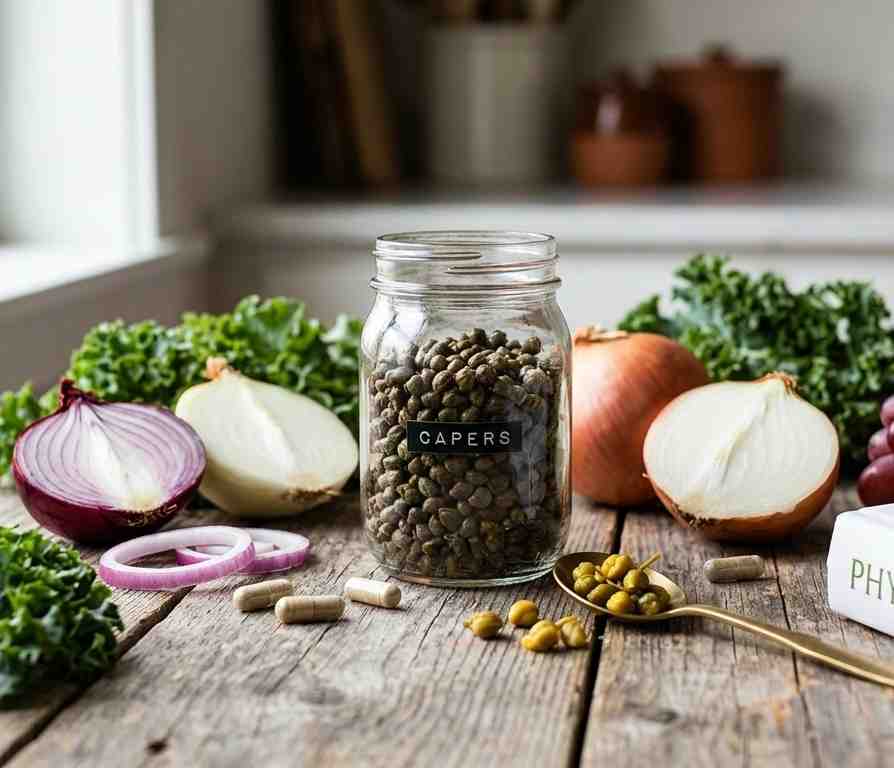
- Food sources: Quercetin is found at highest concentrations in capers, red onions, kale, and apples — regular consumption provides a meaningful dietary dose
Practical Senolytic Protocol
- Quercetin daily supplementation: 500mg quercetin phytosome daily for anti-inflammatory and antioxidant effects; for senolytic protocols, the intermittent approach used in clinical trials (2 days on, rest for several weeks) at higher doses may be more appropriate than daily low doses
- Resveratrol: 150–500mg micronised or pterostilbene daily. Pterostilbene (50–100mg) achieves comparable SIRT1 activation with 4x better oral bioavailability than trans-resveratrol
- With NMN/NR: Combining resveratrol with NMN or NR provides synergistic sirtuin activation — NMN supplies the NAD+ substrate, resveratrol activates the SIRT1 enzyme that uses it
- With fat: Both resveratrol and quercetin are fat-soluble — absorption improves significantly when taken with a fatty meal
References & Further Reading
- Kirkland JL & Tchkonia T. (2020). Senolytic drugs: from discovery to translation. Journal of Internal Medicine, 288(5), 518–536.
- Justice JN, et al. (2019). Senolytics in idiopathic pulmonary fibrosis — first human trial. EBioMedicine, 40, 554–563.
- Baur JA, et al. (2006). Resveratrol improves health and survival of mice on a high-calorie diet. Nature, 444, 337–342.
- Haghighatdoost F & Hariri M. (2018). Effect of resveratrol on lipid profile: meta-analysis of 21 RCTs. Nutrition Reviews, 76(12), 936–944.
- Turner RS, et al. (2015). A randomised, double-blind, placebo-controlled trial of resveratrol for Alzheimer disease. Neurology, 85(16), 1383–1391.
- Williamson G, et al. (2018). Quercetin absorption and bioavailability in humans. Molecular Nutrition and Food Research, 62(1), 1700782.