Saffron for Depression and Mood: The Evidence Behind Nature's Most Studied Antidepressant Spice
Saffron — the most expensive spice in the world — has accumulated one of the strongest clinical evidence bases in natural medicine for depression. With 18 randomised clinical trials, a WFSBP/CANMAT "++" provisionally recommended rating, and multiple trials showing equivalence to pharmaceutical antidepressants, it occupies a serious position in the natural mood support landscape. Here is what the evidence actually shows — and where its limits are.
Active Compounds and Mechanism
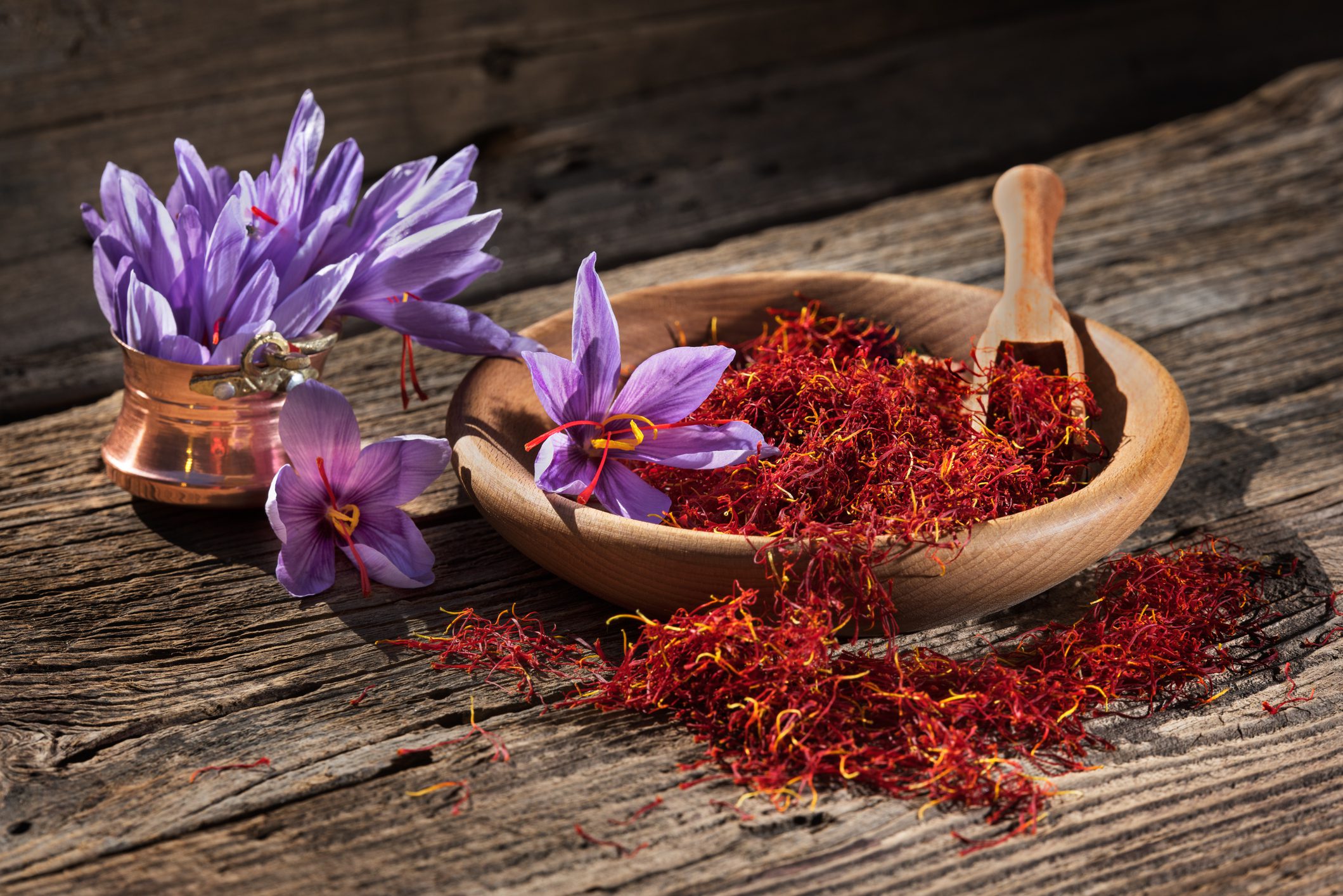
Saffron (Crocus sativus) stigma contains several bioactive compounds that collectively produce antidepressant effects through multiple mechanisms:
- Crocins: The carotenoid pigments responsible for saffron's intense colour — the primary antidepressant compounds. Crocin inhibits serotonin reuptake (the same mechanism as SSRIs like fluoxetine) with a selectivity profile that includes noradrenaline and dopamine reuptake inhibition as well — effectively a natural multi-reuptake inhibitor
- Safranal: The volatile compound responsible for saffron's distinctive aroma — has GABA-A receptor agonist activity (anxiolytic) and antioxidant effects in the brain
- Kaempferol: An anti-inflammatory flavonoid — reduces neuroinflammation that amplifies depressive symptoms
- NMDA receptor modulation: Saffron compounds modulate glutamate NMDA receptors — similar to some fast-acting antidepressants (ketamine), though with vastly weaker and slower effect
The combination of serotonin/noradrenaline/dopamine reuptake inhibition, GABA-A agonism, anti-inflammatory activity, and NMDA modulation gives saffron a mechanistic profile broader than most single-compound antidepressants — which may explain why clinical results have been competitive with SSRIs in some trials.
Clinical Evidence: Key Trials
Versus Placebo: 8 Positive Trials
The 2025 scoping review found 8 positive versus 3 negative placebo-controlled trials for saffron in depression. The positive trials consistently used 30mg/day of standardised saffron extract (stigma or petal) for 6–8 weeks. The patient populations ranged from MDD (major depressive disorder) to postpartum depression, type 2 diabetes with depression, and cardiovascular disease with depression — suggesting broad applicability.
Versus Antidepressants: Equivalence in 6 Studies
Six trials compared saffron directly to pharmaceutical antidepressants — predominantly fluoxetine (Prozac) and imipramine. Six found equivalent antidepressant efficacy; two found differential effects by saffron preparation. The most frequently cited comparison: saffron 30mg/day versus fluoxetine 20mg/day for 6 weeks — both producing similar HAM-D (Hamilton Depression Rating Scale) score reductions with saffron showing a consistently better side effect profile.
Postpartum Depression RCT
A notable Iranian RCT in 60 breastfeeding mothers with postpartum depression — a population where pharmacological options are particularly constrained by infant safety concerns — found saffron 30mg/day (15mg twice daily) for 8 weeks produced clinical response (BDI-II ≤10, no longer meeting clinical depression criteria) in 23 of 30 saffron participants versus significantly fewer in the placebo group.
WFSBP/CANMAT "++" Rating
The 2022 international psychiatric guidelines from WFSBP and CANMAT gave saffron a "++" provisionally recommended rating for both adjunctive (add-on to antidepressants) and monotherapy use in depression — placing it above most natural interventions and on par with probiotics and methylfolate as second-tier evidence-based options.
Where Saffron Evidence Is Nuanced
The honest picture includes important caveats — consistent with the ScienceDaily 2025 review of the evidence:
- Most positive saffron trials were conducted by a small number of Iranian research groups — independent replication from diverse research centres is needed. This limitation is acknowledged in the WFSBP guidelines and the Frontiers review
- Sample sizes are small: Most saffron trials enrolled 30–80 participants — larger trials are needed to confirm effect sizes
- A 2024 RCT in healthy adults with subclinical depressive symptoms (Frontiers in Nutrition; 51 participants, 6 weeks) found no significant effect on the primary composite outcome measure — suggesting saffron may not be effective for very mild/subclinical symptoms in well-nourished healthy adults
- Standardisation varies: Clinical trials used extracts standardised to either safranal or crocin isomers — retail products vary widely in active compound content
Who Is Most Likely to Benefit
- Mild-to-moderate depression — the population where evidence is strongest
- Postpartum or perinatal depression — where pharmaceutical options are limited by infant safety
- Depression with concurrent anxiety — saffron's GABA-A agonism (safranal) addresses both
- Depression with inflammatory markers — anti-inflammatory mechanism particularly relevant
- As adjunct to antidepressants in people with partial response — WFSBP "++" adjunctive rating
Practical Guide
- Dose: 30mg/day of standardised extract (stigma preferred; standardised to safranal or crocin isomers). Most trials used this dose split as 15mg twice daily
- Form: Supplement form only — culinary saffron contains insufficient active compounds. Affron® (Pharmactive Biotech Products) is the most clinically studied branded extract
- Onset: 4–6 weeks for meaningful antidepressant effect — consistent with pharmaceutical antidepressant timelines
- Safety: Well tolerated at 30mg/day; side effect rate lower than SSRIs in comparison trials. At very high doses (200mg+) — outside the recommended range — GI side effects and rare bleeding issues reported. Avoid in pregnancy at supplemental doses
- Note: Anyone considering saffron for clinical depression should do so with professional guidance — depression is a serious condition requiring proper assessment and monitoring
References
- Frost R, et al. (2025). OTC products for depression: scoping review of 209 trials. Front Pharmacol.
- Sarris J, et al. (2022). WFSBP/CANMAT nutraceutical guidelines. World J Biol Psychiatry.
- ScienceDaily. (2025). Science tested 64 natural remedies for depression.
- Frontiers in Psychiatry. (2024). Phytochemicals in treatment of depression: systematic review.
- Nutraceuticals World. (2025). Review examines clinical studies on supplements for depression.