Elderberry for Colds and Flu: The Clinical Trial Evidence, Active Compounds and How to Use It
Elderberry (Sambucus nigra) has been used medicinally for respiratory infections for centuries across European and Indigenous North American traditions. It is now one of the most commercially successful natural immune supplements globally — and one of the relatively few to have a meaningful clinical trial evidence base, including a meta-analysis, behind it. Understanding that evidence base — including its genuine strengths and its unresolved conflicts — is essential for using elderberry intelligently.
What Is Elderberry?
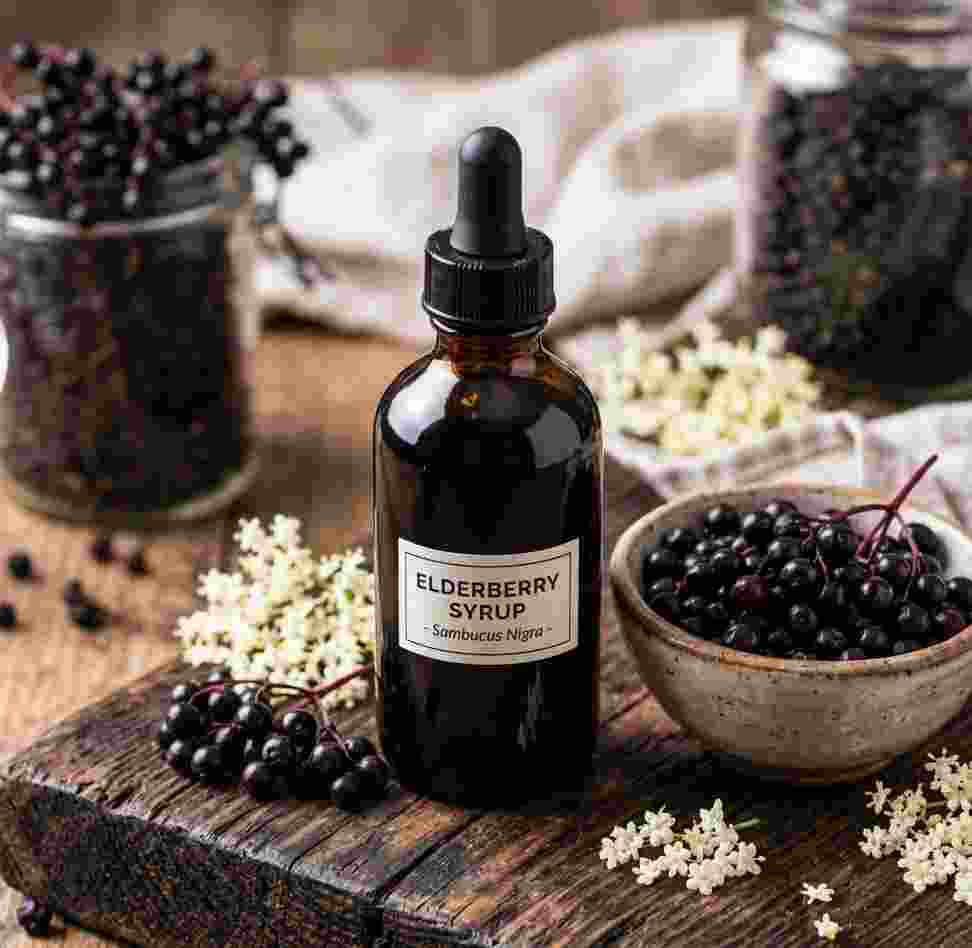
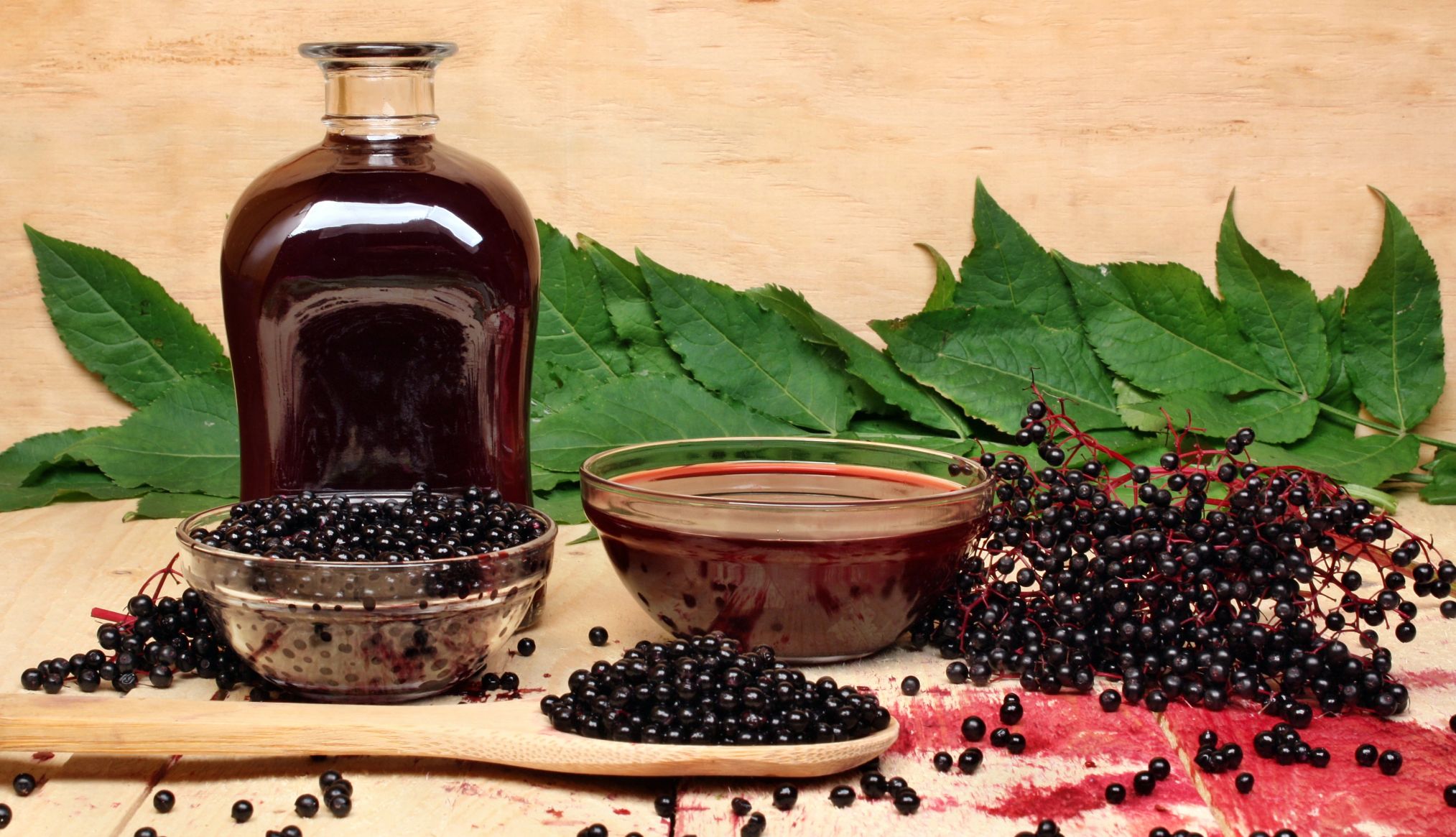
Black elderberry (Sambucus nigra) is a species of flowering plant native to Europe, North Africa, and western Asia. The ripe dark purple-black berries contain a distinctive profile of anthocyanins — primarily cyanidin 3-glucoside and cyanidin 3-sambubioside — which are responsible for both the intense colour and the documented immune-relevant biological activity. The berries also contain flavonols (quercetin, kaempferol, rutin), vitamin C, zinc, and phenolic acids, all of which contribute to the overall immune-supportive profile. Raw or unripe elderberries contain sambunigrin, a cyanogenic glycoside that causes nausea — all commercial elderberry products use processed berries that eliminate this compound.
The Antiviral Mechanism: How Elderberry Works
Unlike many "immune-boosting" foods that work through non-specific antioxidant or anti-inflammatory activity, elderberry anthocyanins have demonstrated specific antiviral mechanisms in multiple laboratory studies:
- Neuraminidase inhibition: Cyanidin 3-glucoside binds to neuraminidase — the surface enzyme influenza viruses use to escape from infected cells and spread to new host cells. This is the same enzyme targeted by the prescription antiviral oseltamivir (Tamiflu). Elderberry's anthocyanins inhibit neuraminidase activity at a specific binding site not shared by other NA inhibitors
- Viral glycoprotein blocking: Elderberry extract prevents influenza viruses from attaching to and penetrating host cell membranes by binding directly to viral surface glycoproteins — most effective in the post-infection phase once virus particles are already present
- Secretory IgA stimulation: Animal studies found elderberry juice increased secretory IgA (the mucosal antibody that provides the first line of defence at respiratory mucosal surfaces) — an effect not seen with Tamiflu
- Cytokine modulation: Standardised elderberry extract has been shown to reduce pro-inflammatory TNF-α and IFN-γ secretion while shifting immune response toward Th2 — reducing the severity of the inflammatory symptoms (fever, aches, congestion) without suppressing the antiviral response
The Clinical Evidence
The Meta-Analysis (2019)
A meta-analysis published in Complementary Therapies in Medicine (Hawkins et al., 2019) analysed four randomised controlled trials in 180 participants and found elderberry supplementation substantially reduced upper respiratory symptoms compared to placebo, with a large mean effect size (Cohen's d = 1.717). Moderator analysis confirmed the effect was consistent regardless of vaccination status and across both cold and influenza pathologies.
The Norway Influenza RCT (Zakay-Rones et al., 2004)
The most-cited individual trial enrolled 60 adults with laboratory-confirmed influenza-like illness within 48 hours of symptom onset, randomised to elderberry syrup (15ml four times daily) or placebo for 5 days. Symptoms resolved on average 4 days earlier in the elderberry group vs placebo, and use of rescue medication (paracetamol, decongestants) was significantly lower. The study concluded elderberry was an efficient, safe, and cost-effective treatment for influenza.
The Air-Travel RCT (Tiralongo et al., 2016)
312 long-haul air travellers were randomised to 600mg elderberry extract (10 days pre-travel) then 900mg daily during travel, or placebo. Those who developed colds in the elderberry group had a total of 57 cold episode days compared to 117 days in the placebo group — a 51% reduction. Cold severity scores were also significantly lower in the treatment group.
The Conflicting ER Trial (Macknin et al., 2020)
A 2020 RCT in 87 emergency room patients with PCR-confirmed influenza found no significant difference in symptom duration between elderberry and placebo groups. This is an important finding that prevents overstating the evidence. Notable limitations: the study was conducted in an ER setting where patients may have had more severe illness, and many patients also received oseltamivir alongside the study treatment, creating a confounded comparison. The systematic review published in 2021 (Wieland et al.) rated the overall evidence as "uncertain" — supportive but not definitive for either treatment or prevention of viral respiratory illness.
What the Evidence Supports (Honestly)
The honest summary: elderberry has plausible, mechanistically coherent antiviral activity. Multiple RCTs show clinically meaningful reductions in cold and flu duration and severity. One reasonably-powered RCT found no benefit. The overall evidence is encouraging but not as definitive as pharmaceutical antivirals. Elderberry appears most consistently effective when started at symptom onset (within 24–48 hours) rather than as a prevention strategy, and in otherwise healthy adults rather than severely ill hospital patients.
How to Choose and Use Elderberry
- Standardisation: Look for products standardised to ≥15% anthocyanins — this is the minimum threshold associated with clinical activity in the evidence base
- Form: Syrup (used in most clinical trials), capsules, and lozenges all show benefit; gummies typically have much lower anthocyanin content due to heat processing and sugar dilution
- Timing: Most evidence supports starting at first symptom onset. For prevention during high-risk periods (travel, winter, close contact with sick individuals): 600mg extract daily provides a consistent maintenance dose
- During acute illness: Clinical trials used 600–900mg/day of extract for 5–7 days; some protocols used higher acute doses (900mg+) for the first 2–3 days
- Combination: Elderberry pairs well with zinc (inhibits viral RNA replication at a different stage), vitamin C (supports epithelial barrier and neutrophil function), and vitamin D3 (immune cell regulation) for comprehensive cold/flu season support
References
- Hawkins J, et al. (2019). Elderberry meta-analysis: large effect size on upper respiratory symptoms. Complement Ther Med, 42:361–365.
- Zakay-Rones Z, et al. (2004). Elderberry syrup for influenza: 4-day reduction RCT. J Altern Complement Med. PubMed 15080016.
- Tiralongo E, et al. (2016). Elderberry for air-travellers: 312 participant RCT. PMC 4848651.
- Macknin M, et al. (2020). Elderberry ER trial: no significant benefit. PubMed 32929634.
- Wieland LS, et al. (2021). Elderberry for viral respiratory illness: systematic review. PubMed 33827515.
- Torabian G, et al. (2019). Cyanidin 3-glucoside: neuraminidase inhibition mechanism. J Funct Foods.